
Weton vs Zodiak: Which truly resonates more with your soul? Compare astrologies from the East (Javanese Weton) with Western and modern systems to find your life’s roadmap.
Time Is More Than Just Seconds
“We read zodiacs on screens,
but our names were read by ancestors with the counting of skies and days.
Between the Western sky and the Javanese sky,
which truly resonates more with your soul?”
— Ky Tutur
Amidst the modern astrology trends—from daily horoscopes, love zodiacs, to *shio* (Chinese zodiac) analyses and human design—many young people seek self-identity through the cosmos. Nevertheless, behind the bustling content of zodiacs and star signs, there is an ancient system from this land that is nearly forgotten: weton Jawa (Javanese birth calendar system). This is the primary context for the Weton vs Zodiak comparison.
Weton (a traditional Javanese birth calculation system combining the seven-day week with the five-day Pasaran cycle) is not merely a prediction or fleeting entertainment. Instead, it is an inner birth map read not by modern algorithms, but by rasa (a profound Javanese concept that transcends mere emotion or feeling; it refers to an inner sense, a deeper understanding, intuition, and spiritual awareness), time, and ancestral *pitutur* (wisdom or advice). Behind the combination of your birth days lie character, life challenges, potential prosperity, and spiritual direction that was once studied not just for amusement, but to arrange *laku* (spiritual practice, discipline, or conscious conduct) and achieve life’s harmony. This is the core of the profound Weton vs Zodiak comparison.
But is weton truly deeper than zodiacs? Or is zodiac more relevant today? What about the Chinese *shio*, Indian astrology (Jyotish), or modern systems like human design? These questions often arise when we begin to compare these various systems. Therefore, this article will comprehensively compare them all. Our goal is not to find which is the “most correct,” but to help us rediscover the way home to our respective spiritual roots, understanding the diversity of wisdom that exists in the world.
What Is Weton Jawa?
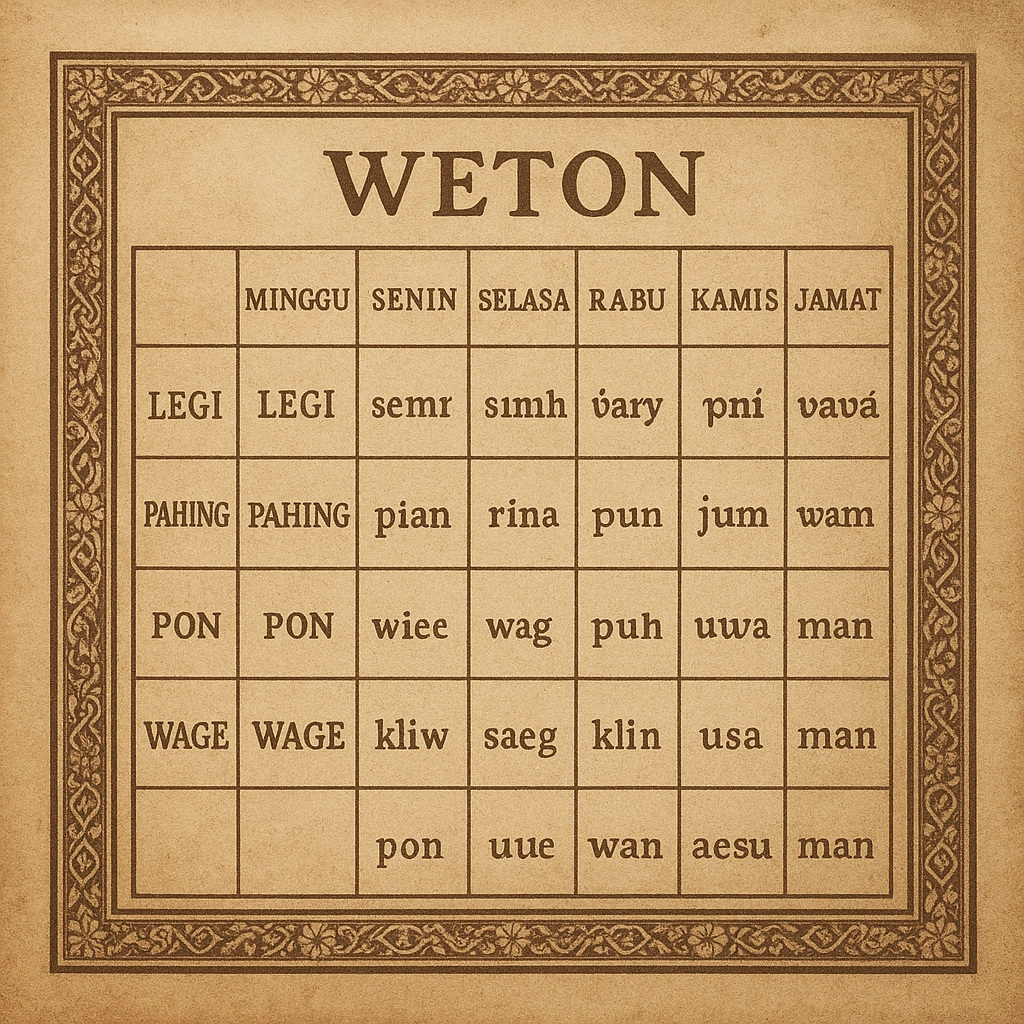
Weton Jawa: Rooted Nusantara Astrology
Weton is a traditional Javanese astrological system that calculates a person’s character based on their birth date. It is a combination of *saptawara* (the 7-day week: Sunday to Saturday) and *pancawara* (the 5 Javanese market days: Legi, Pahing, Pon, Wage, Kliwon). The result is 35 unique weton combinations believed to form a person’s birth energy pattern. Each of these combinations has a numerical value called *neptu* (a numerical value assigned to each day of the Javanese calendar, used in *weton* calculations), which forms the basis for further calculations. Thus, weton provides a deep understanding of oneself. This is the foundation of the Weton vs Zodiak comparison.
Unlike zodiacs that follow constellations or *shio* that are based on the birth year, weton is very personal and deeply rooted in Javanese culture and philosophy. It is used for various aspects of life, far beyond mere personality descriptions:
- Knowing Inner Temperament and Character: Weton provides a deep insight into one’s inherent tendencies, strengths, and weaknesses, helping individuals understand themselves.
- Determining Compatibility in Relationships and Prosperity: Weton calculations are often used to assess potential harmony in romantic relationships and predict the most suitable path to prosperity.
- Analyzing Auspicious Days and Prihatin Practices: Weton also forms the basis for determining auspicious days to commence important endeavors, and suggests *laku prihatin* (spiritual practices involving self-restraint or austerity) to balance life.
Weton is not just a passive prediction or divination. It is a *kaweruh* (Javanese knowledge or wisdom, often related to esoteric or spiritual understanding)—the knowledge to recognize oneself, then to harmonize with the universe. Most importantly, it does not stop at describing characteristics, but continues with *laku* (concrete actions) to cultivate oneself and achieve balance. This is one of the key points in the Weton vs Zodiak comparison that differentiates it.
What Is Western Zodiac?
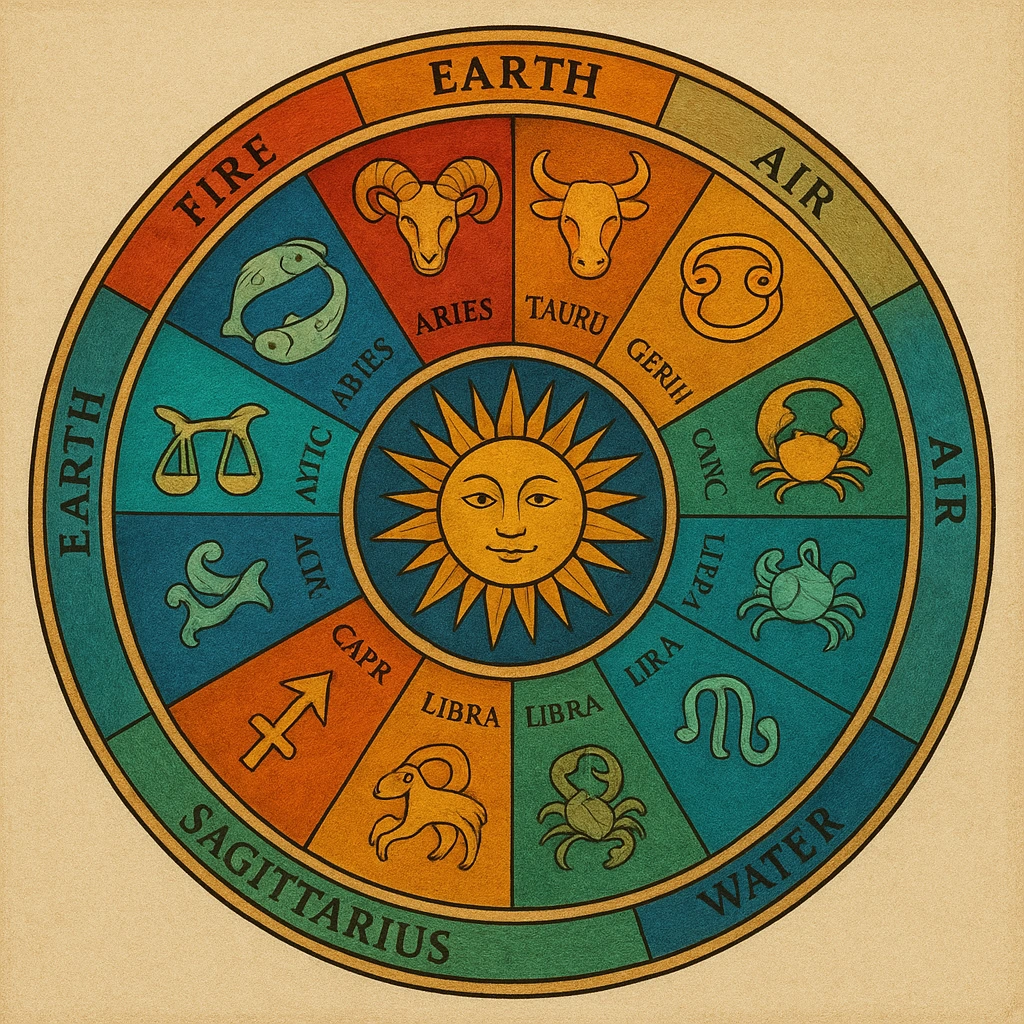
Western Zodiac: Popular Astrology that Captures Attention
The Zodiac or Western astrology originates from ancient Greco-Babylonian systems that have evolved over thousands of years. This system groups personalities based on the sun’s position at one’s birth, divided into 12 constellations: Aries, Taurus, Gemini, Cancer, Leo, Virgo, Libra, Scorpio, Sagittarius, Capricorn, Aquarius, and Pisces. Each zodiac sign has associated symbols, characteristics, and elements (fire, earth, air, water).
The main focus of Western zodiac is on:
- Basic Personality: Describes general traits such as introvert-extrovert, dominant-sensitive, analytical-intuitive, and others.
- Relationship and Love Patterns: Provides guidance on compatibility between zodiac signs in romantic relationships and friendships.
- Social Dynamics: Offers insights into how one interacts in social and professional environments.
Zodiac is globally more popular for several reasons. First, its format is light and easily accessible through daily, weekly, or monthly horoscopes in mass media. Second, it is very personal and often provides descriptions that feel “fitting” to oneself. Third, it aligns with the modern instant lifestyle, where people seek quick answers without the need for deep practice. This makes Weton vs Zodiak an interesting comparison for many.
Nevertheless, its weakness lies in often being detached from value systems that direct concrete *laku* (conduct) or social ethics. Zodiac tends to be entertainment without significant inner transformation, unlike Eastern astrological systems which often include spiritual practices. Therefore, it is important to understand this fundamental difference when discussing Weton vs Zodiak.
What Are Chinese Shio, Indian Jyotish, and Human Design?
Other Astrological Systems: From East to Modern
In addition to the Weton vs Zodiak comparison, the world also knows various other astrological systems that are equally interesting and possess their own complexities and purposes. Let’s take a look at some of them:
Chinese Shio
Chinese *Shio* (Chinese zodiac, based on birth year, represented by a cycle of 12 animals) is an astrological system based on the birth year, divided into a cycle of 12 animals (Rat, Ox, Tiger, Rabbit, Dragon, Snake, Horse, Goat, Monkey, Rooster, Dog, Pig). Furthermore, this system also incorporates 5 elements (Earth, Metal, Water, Wood, Fire) that interact with the *shio* animals, creating a complete 60-year cycle. *Shio* is used for:
- Determining lucky years and potential fortunes.
- Analyzing compatibility with partners and family dynamics.
- Understanding the balance of body and natural elements for health and harmony.
*Shio* is popular in Chinese culture for family planning, business, and important events. For example, many life decisions are based on *shio*.
Jyotish (Vedic/Indian Astrology)
Jyotish is an ancient Indian astrological system that is very complex and profound. It is based on a very precise date, time, and place of birth to create a birth chart (*kundali*). Jyotish focuses on past karma, the impact of *graha* (planets) on one’s life, and life periods (*dasa–bhukti*) that indicate phases of luck or challenges. Therefore, it is often used as part of spiritual consultations and life guidance.
Jyotish is considered a divine science that helps individuals understand karmic destiny and how to process it. This is a very detailed system and often requires an expert for accurate interpretation. Essentially, Jyotish offers a deep perspective on fate.
Human Design
*Human Design* is a relatively new modern system, emerging in the late 20th century. It is a unique synthesis of various ancient systems, including Western astrology, Chinese I Ching, Jewish Kabbalah, and even quantum physics. The result is a “body graph” unique to each individual, showing an energy blueprint, decision-making strategy, and internal authority.
This system is popular among modern spiritual circles for discovering one’s energy body design and self-potential. However, unlike weton or Jyotish, *Human Design* does not have strong cultural roots or a tested tradition of spiritual practice spanning thousands of years. It is primarily used as a tool for self-reflection and life strategy guidance. Thus, it offers a different approach.
Philosophical Comparison: The Ultimate Goal of Each Astrological System
Weton vs Zodiak and Others: Understanding the Ultimate Goal of Each System
Each astrological system, whether from East or West, has different ultimate goals and core values. Understanding these differences can help us choose which resonates most with our needs and spiritual journey. Let’s compare the ultimate goals of Weton vs Zodiak and other systems:
Comparison of Metaphysical Systems
| System | Ultimate Goal | Core Values |
|---|---|---|
| Weton Jawa | Finding inner harmony & arranging life’s conduct | Balance, *tirakat* (spiritual practices), rasa, *eling lan waspada* (mindful and vigilant) |
| Western Zodiac | Recognizing personality and social dynamics | Self-reflection, understanding relationships, identity |
| Chinese Shio | Adapting to natural cycles & seeking good fortune | Harmony, prosperity, elements, luck |
| Jyotish India | Reading karma and guiding the spiritual path | Spirituality, *dharma*, reincarnation, karma processing |
| Human Design | Discovering body energy design & personal life strategy | Self-potential, modern exploration, authenticity |
The fundamental difference between Weton vs Zodiak lies in their orientation. Western Zodiac tends to help us look inward to understand personality and relationship patterns. Conversely, weton not only describes but also directs us to act outwardly with the correct attitude (*laku*), teaching how to cultivate oneself amidst destiny. This is an essential difference worth highlighting.
Jyotish guides us through the complexities of karma. Nevertheless, weton teaches us to accept destiny and continue to arrange our rasa—a concept that is deeper and more practical in daily life. Therefore, each system has unique qualities and values we can glean. This enriches our perspective on ourselves, and its relevance in the Weton vs Zodiak comparison becomes clear.
Relational Dimension: Between Love, Jodoh, and Compatibility
Comparing Relational Dimensions: Weton vs Zodiak in Love & Compatibility
Almost all astrological systems, including Weton vs Zodiak, touch upon relationships: who is a suitable partner (*jodoh* – a Javanese term for destined soulmate or life partner), how love dynamics will unfold, and what to avoid in a relationship. Nevertheless, the approach can be very different, reflecting their respective cultural philosophies.
Western Zodiac in Matchmaking
Western Zodiac focuses on personality and basic elemental compatibility (fire, earth, air, water) between individuals. For instance, Aries (fire element) is often said to be compatible with Leo (fire) due to similar spirits, or Cancer (water) with Pisces (water) due to similar emotional depth. Western astrology prioritizes emotional *chemistry*, shared hobbies, and communication styles. The goal is to find a partner who “clicks” instantly and has basic compatibility.
Weton Jawa in Matchmaking: More Than Just Compatibility
The weton Jawa system in matchmaking is far more complex than just suitable-or-not. It considers: what happens when two neptu weton (numerical values of *weton* days) energies meet? How will potential conflicts and harmony manifest in married life? For example, Selasa Wage meeting Jumat Kliwon could lead to inner clashes or potential heavy karma if there is no *tirakat* (spiritual practice to balance energies) from one or both partners. This means, weton not only predicts but also provides guidance on solutions in the context of Weton vs Zodiak.
The solution? It doesn’t mean you should immediately change partners if there’s an incompatibility. Instead, weton Jawa teaches to change one’s *laku* (behavior and spiritual practice). If there is potential for conflict, weton will suggest certain *tirakat*, maintaining communication, or understanding each other’s character. This is a more pragmatic and long-term solution-oriented approach, not just labeling. This shows a profound difference between Weton vs Zodiak.
“Weton Jawa teaches that compatibility is not just about initial feeling,
but about the soul’s readiness to cultivate destiny together,
and the patience to arrange rasa in every life’s trial.”
— Ky Tutur
Thus, weton Jawa provides a more comprehensive roadmap for couples to navigate married life, teaching them to support each other in facing challenges, and adapting to each other’s inherent energies. Therefore, it is important to study it.
The Dimension of Laku: Do These Systems Change How We Live?
Weton vs Zodiak in Changing Life’s Conduct
One of the most significant differences between various astrological systems is the extent to which they direct or even demand concrete changes in one’s way of life—a dimension called “laku” (spiritual practice/conduct).
Western Zodiac and Human Design: More Towards Reflection
Western Zodiac and *Human Design* are often used as tools for self-reflection and personality understanding. They provide deep descriptions of who you are and how you interact with the world. Nevertheless, they rarely directly dictate concrete life changes. For example, there are no specific spiritual practices, fasts, or social ethics demanded in response to your zodiac analysis results. They are more informative than transformative. As a result, behavioral changes entirely depend on individual initiative.
Jyotish and Weton Jawa: Encouraging Spiritual Laku
Conversely, systems like Jyotish and weton Jawa strongly emphasize the dimension of *laku* (spiritual practice/conduct). They not only describe who you are but also provide guidance on what you must do to balance inherent energies or process karma. In weton Jawa, individuals with *weton* deemed “heavy” or having certain potential challenges are often advised to perform specific *tirakat* (spiritual practices involving self-restraint or austerity):
- Monday–Thursday Fasting (Puasa Senin–Kamis): Often recommended to balance emotions or cleanse oneself.
- Lelakon Malam Jumat Kliwon: Spiritual practices performed on this sacred night (*Malam Jumat Kliwon* – the mystical eve of Friday Kliwon in Javanese calendar) to strengthen the inner self or seek guidance.
- Avoiding Conflict on Certain Days: Understanding the energy of specific days in weton can also guide one to be more cautious in interactions or decision-making on days considered vulnerable.
The fundamental difference lies in the orientation. Zodiac might say: “You are sensitive, so avoid harsh people.” This is defensive advice. However, weton Jawa says: “You are indeed sensitive, so you must learn to *nerimo* (accept with sincerity and surrender) and cultivate your rasa so your soul grows, even in the face of harsh people.” This is an invitation to transformation and inner growth. Therefore, the *laku* dimension makes Weton vs Zodiak very different and unique.
Thus, weton Jawa and Jyotish are more than just analytical tools. They are holistic guides for a balanced and conscious life, involving not only the mind but also actions and spirituality.
The Relevance of Weton in the Global Era: Finding Roots Amidst the Current
The Relevance of Weton in the Global Era: Finding Roots Amidst the Modern Current
In the era of globalization, where cultures interact, zodiac has become part of global culture, and that is not wrong. We can get to know ourselves through anything, from wherever it originates. However, when we are too engrossed with what comes from outside and forget that our ancestors have long understood the rasa of the sky, the vibrations of the days, and the inner life map through the weton system, we lose an important root in life. This is a crucial point in the Weton vs Zodiak debate.
Weton is not to be blindly believed as dogma. Instead, it is a science of the soul (*ilmu jiwa*) that can guide us in a more positive direction. It helps us accept ourselves more, be more sensitive to the flow of prosperity, more aware of the dynamics of relationships with partners, and stronger in facing every life challenge. Thus, weton offers a holistic dimension of self-understanding. Therefore, its relevance continues to increase.
In a modern context, weton can be a powerful tool for self-reflection. It not only tells “who I am” but also “how I can become the best version of myself, in harmony with universal energy and ancestral wisdom.” This is a significant added value compared to systems that only focus on description.
If you have ever felt touched or gained insight from reading a zodiac, we invite you to take the next step. Try to re-open your weton. Not to predict or seek miracles, but to re-hear the silent voice of your own land, from the wisdom that flows in your blood. Therefore, exploring weton is an important step in the journey of self-discovery. This is an invitation to all.
“Zodiac teaches who you are.
However, weton Jawa teaches how to live with yourself, in harmony with nature and your inner self.”
— Ky Tutur
Opening oneself to weton means appreciating a rich cultural heritage and rediscovering a source of inner strength that may have been forgotten. This is a way to bring Eastern wisdom into modern life, creating a more harmonious balance.
Reflective Conclusion: Returning to One’s Own Sky
Weton vs Zodiak: A Choice to Find True Self-Identity
The debate of Weton vs Zodiak or other astrological systems does not need to find a winner. The sky belongs neither to the West nor the East. However, the way we read it, the way we interpret it, reflects where we stand and what we seek in life. Each system offers a window into the self, but the depth and direction offered can be very different.
When we are too busy with external analysis and predictions, we might forget that our ancestors have long had a map of the soul hidden in the counting of days and market days. This map, weton, not only provides descriptions but also invites us to *laku*—a concrete action to cultivate oneself and achieve harmony.
Thus, if you are looking for a deeper understanding, one that touches not only the mind but also the heart and actions, weton Jawa might be the answer you seek. It offers a path home to spiritual roots, to a wisdom that has stood the test of time.
May this Weton vs Zodiak comparison be your first step to finding the wisdom that resonates most with your soul.
See also other related Kaweruh Jawa articles:
- Check Weton Jawa & Neptu Kelahiran (birth numerical value in Javanese calendar)
- Weton and Javanese Numerology: The Numbers that Record Your Life’s Path
- Pawukon Jawa (an ancient Javanese calendar system based on a 210-day cycle, divided into 30 wuku): The Oldest Calendar of the Nusantara that Holds the Human Soul
- Rasa Jawa: When Consciousness Grows Through Stillness
External References:
- Weton – Wikipedia
- Astrology – Wikipedia
- Zodiac – Britannica
- Chinese Zodiac – Britannica
- Human Design Official Site
This content is presented for educational purposes and to foster understanding of Javanese culture. The comparison of Weton vs Zodiak is part of exploring rich local wisdom.
FAQ – Weton vs Zodiak
Q: What is the difference between Weton and Zodiac?
A: Weton Jawa combines the Javanese 7-day week and 5-day Pasaran cycle to reveal personality, destiny, and spiritual guidance, while the Western Zodiac is based on the sun’s position at birth, focusing mainly on personality and relationships.
Q: Which one is more accurate, Weton or Zodiac?
A: Both offer valuable insights. Zodiac provides quick personality reflections, but Weton gives deeper guidance with practical spiritual practices (laku) for achieving harmony in life.
Q: Can Weton be used for love compatibility?
A: Yes. Weton analyzes neptu (numerical birth values) to see harmony or challenges in relationships and suggests solutions like tirakat (spiritual discipline) instead of just labeling couples as “compatible” or “not.”
Q: Is Weton still relevant today?
A: Definitely. While Zodiac is globally popular, Weton offers a unique cultural and spiritual compass, helping modern people reconnect with ancestral wisdom and balance in daily life.
Q: Can I combine Weton, Zodiac, and other astrology systems?
A: Yes. Many explore multiple systems such as Weton, Zodiac, Chinese Shio, and Human Design. However, Weton resonates more deeply for those who want spiritual roots and cultural connection.
About the Author
This wisdom is delivered by Ky Tutur — a symbolic figure representing noble Javanese values, such as wisdom, simplicity, and compassion. These writings are compiled by the KaweruhJawa.com team, consisting of cultural researchers, academics, and spiritual practitioners dedicated to preserving and translating Javanese local wisdom into a language relevant for the present generation.
We believe that ancestral heritage is not just a relic, but also a compass for life. Each article is written through a process of research, cross-generational discussion, and deep contemplation, in order to maintain the accuracy and nobility of the values contained within.
Learn more about our writing team and philosophy →