The Lost Art of Subtle Thinking
Come, my child… The legendary boxer Mike Tyson once said, “Everybody has a plan until they get punched in the mouth.”
I will say the same thing about our way of thinking. Everyone feels they are the most logical, the most modern, the most rational, until they are struck by a reality that is far more complex, deeper, and more subtle than they ever imagined.
The word ‘Klenik’ is that knockout punch.
It is a word deliberately misunderstood, a term that has become a weapon for the intellectually lazy to judge what they do not comprehend. This article is my invitation to you not to dodge that punch, but to receive it with an open heart. Because it is this painful blow that will shatter the arrogance of shallow thinking and awaken your consciousness.
Diagnosis: How ‘Klenik’ Became a Dirty Word
Before we proceed, let us be honest with ourselves. Today, the word “klenik” has fallen into a dark abyss of meaning. It has become the twin of superstition, an ally of black magic, and a neighbor to heresy. Even modern dictionaries record it as a secret shamanistic activity with negative connotations.
This is its “illness.” A noble word has been so contaminated in its meaning that it has become toxic. But to heal it, we must first know its healthy form. We must return to its roots.
Digging for Gold at the Root: The True Essence of ‘Nglimeti’
My child, forget for a moment that narrow, modern definition. In the true Javanese language and rasa (intuitive feeling), “klenik” has nothing to do with ghosts or spirits. It is rooted in adjectives that describe a sublime quality:
Alus:
Subtle, refined, not coarse, not immediately visible.
Alit:
Small, minute, paying attention to the tiniest of details.
Rumit & Njlimet:
Complex, layered, interconnected, requiring diligent thought and patience to unravel.
Therefore, “ngèlmu klenik” is not “the science of the occult.” It is **”The Science of Subtle Complexity.”** It is the antithesis of “gebyah uyah” (to overgeneralize), a discipline of honoring every detail and nuance.
Gallery of the ‘Klenik’ Masters: The Pinnacle of Javanese Civilization
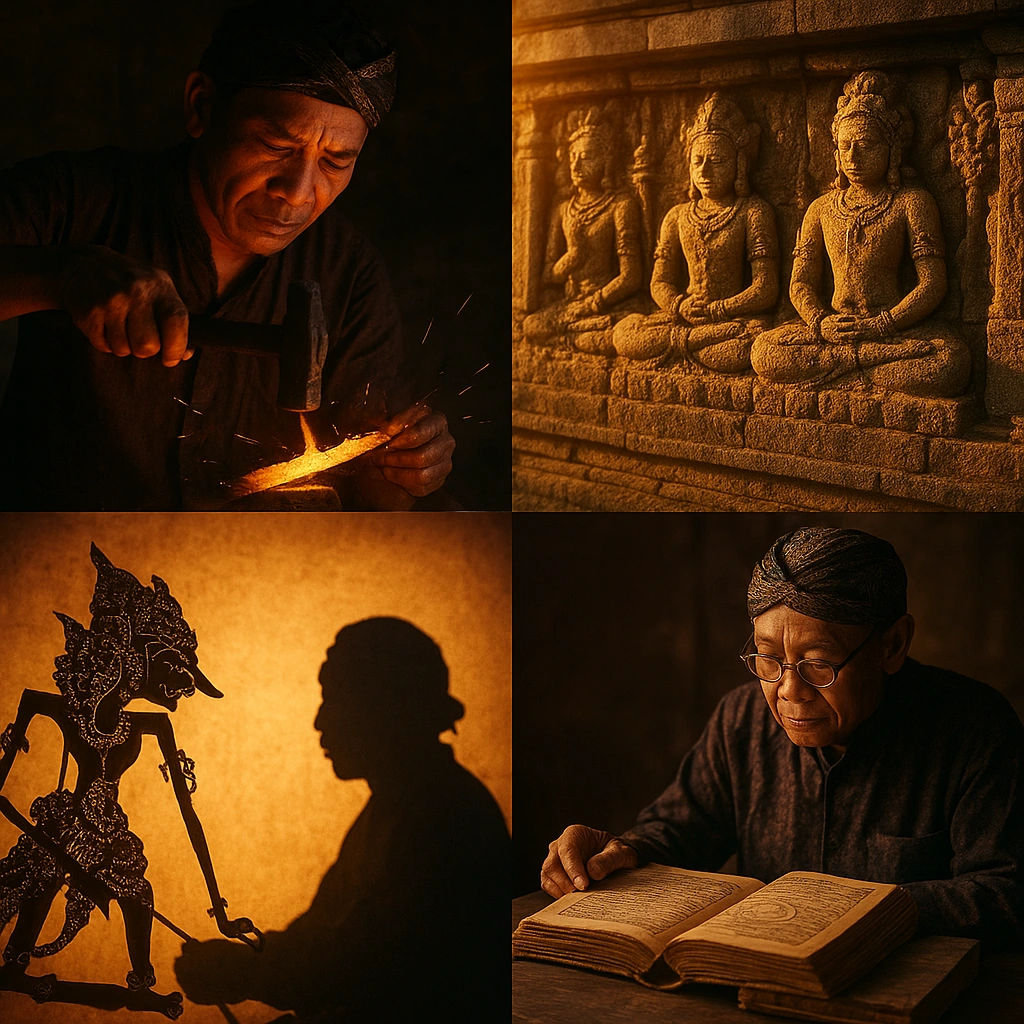
It was this “klenik” expertise that gave birth to the greatest masterpieces of Javanese civilization. Look at these masters:
- The Empu Keris (Master Kris-Maker): To him, a keris is not a dead object. He can “feel” the difference in character between a pamor (damascene pattern) of beras wutah and kulit semangka. He performs njlimet calculations for the auspicious day to begin forging. He unites metal with “rasa,” not just with the heat of the fire. That is high-level klenik science.
- The Architect of Borobudur Temple: He did not just pile stones. Every relief, every stupa, every level is the result of incredibly complex cosmological calculations. There are layers upon layers of Buddhist philosophy, a detail that can only be read by those with “klenik” sensitivity.
- The Dalang Wayang Kulit (Puppet Master): He is not merely a puppeteer. He is a psychologist, a philosopher, and a director. He understands a thousand subtle meanings behind every dialogue of the Punakawan characters, every hand gesture of Arjuna.
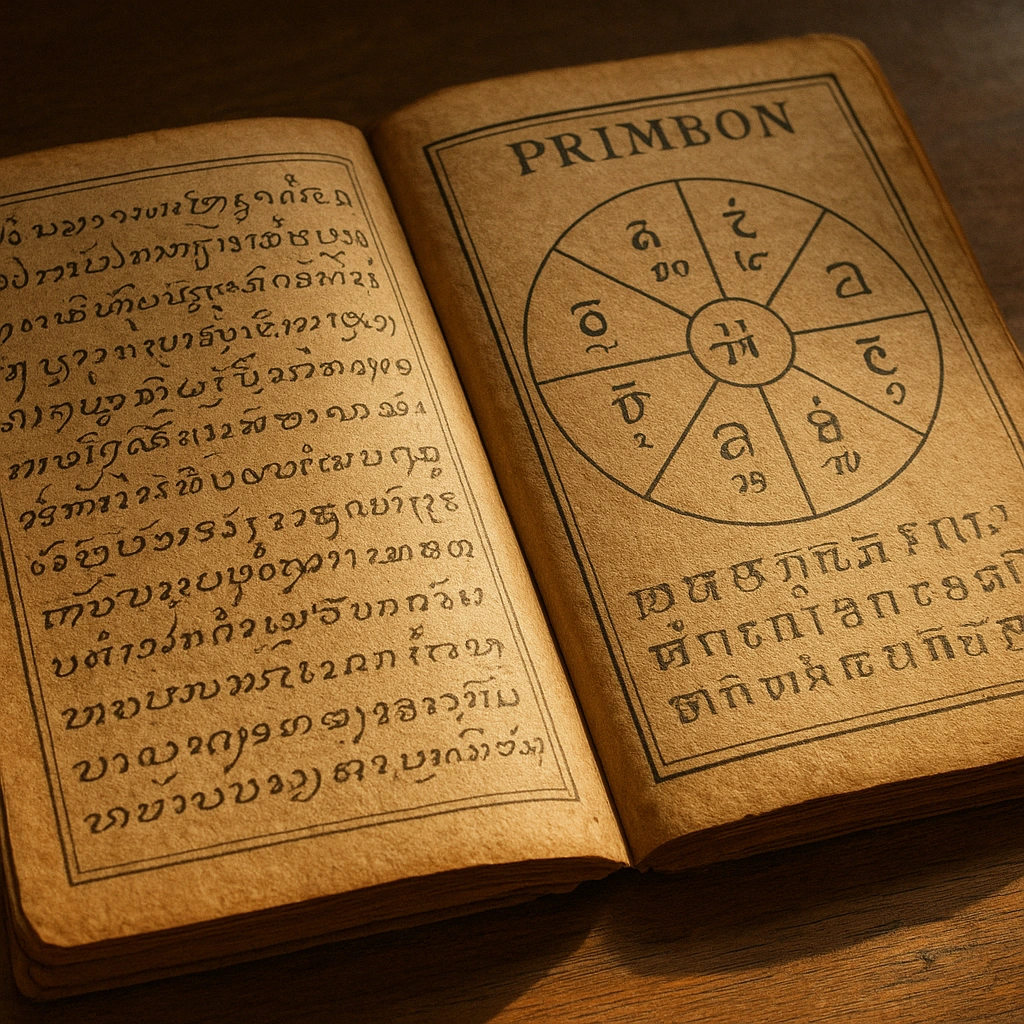
- The Primbon Expert (of KaweruhJawa): And of course, us. Reading the Self-Map from the 210 combinations of Weton and Wuku is the pinnacle of klenik science. We do not foretell the future; we unravel the njlimet mathematics of energy to present a deep character analysis.
The Greatest Crime: The Sin of Shallow Thinking
So why is such a magnificent wisdom now negatively labeled? The answer is simple, my child.
Because we live in an age that glorifies speed and simplicity. We want instant answers in a single
sentence, conclusions in a 15-second video.
To call “klenik” something “occult” or “heretical” is an act of intellectual laziness.
It is a shortcut taken by a mind unwilling to put in the effort to understand complexity.
It is easier to apply the label “mystical” than to try to understand the mathematical
calculations behind the Pawukon calendar.
It is easier to say “it makes no sense” than to train the “rasa”
to comprehend a philosophy. This is the true meaning of “shallow thinking,” and it is the greatest
crime against the intellectual heritage of our ancestors.
FAQ about Klenik
Q: What does the word “Klenik” really mean in Javanese culture?
A: In its true essence, klenik does not mean black magic or superstition. It comes from the Javanese concepts of alus (subtle), alit (small, precise), and njlimet (complex). It is the art of subtle and detailed thinking, a science of refined perception.
Q: Why is “klenik” often misunderstood as something negative?
A: Over time, the word has been distorted and associated with superstition or heresy. In reality, ngèlmu klenik refers to wisdom that values detail, subtlety, and complexity in thought—not the occult.
Q: How does klenik relate to Javanese civilization?
A: Many great achievements, such as the forging of the keris, the architecture of Borobudur, and the philosophy of wayang kulit, are rooted in klenik thinking—deep, layered, and subtle knowledge.
Q: Can we apply “klenik thinking” in modern life?
A: Yes. Practicing rasa klenik means embracing depth and detail in everything—reading between the lines of information, sensing the subtle in human interaction, and valuing complexity instead of seeking shallow shortcuts.
A Calling of the Soul: Awaken Your ‘Rasa Klenik’
My child, the punch from the word “Klenik” may hurt our ego, which feels it is already the smartest. But this punch is essential. It serves to wake us from the deep slumber of shallow thought.
So, I challenge you. Begin to practice your “rasa klenik” in your life. When you read the news, don’t just swallow the headline; search for the nuance behind it. When you listen to music, try to hear each instrument separately. When you interact with others, try to “feel” what they are not saying.
Do not be afraid of complexity. Embrace the ‘njlimet’. Because it is within those details that true wisdom resides. Be a deep thinker. Be ‘klenik’.
Mugi Rahayu Sagung Dumadi.
(May peace and well-being be upon us all.)
About the Author
This wisdom is conveyed by Ky Tutur—a symbolic figure representing noble Javanese values such as wisdom, simplicity, and **welas asih** (Javanese for “compassion” or “empathy”). These writings are compiled by the KaweruhJawa.com team (a platform dedicated to preserving and translating Javanese cultural wisdom), composed of cultural researchers, academics, and spiritual practitioners dedicated to preserving and translating Javanese local wisdom into a relevant language for the current generation.
We believe that ancestral heritage is not merely a relic, but a compass for life. Every article is written through a process of research, discussion across generations, and deep contemplation, to ensure the accuracy and sublimity of the values contained within.
Learn more about our writing team and philosophy →