Javanese Astrology: Mapping the Cosmos and the Soul
A Tale of Two Compasses: Western and Eastern Wisdom
Angger, my child…
Let us pause for a moment from the hustle and bustle of life and be honest with ourselves. We are the most connected generation in human history. In our hands, we hold luminous rectangular portals that broadcast the pulse of the entire world. Through them, we can follow fashion trends from Tokyo, feel the political tension from Washington, and learn authentic recipes from a grandmother in Sicily. We have become incredibly informed, feeling ourselves a part of a vast, global village.
Yet, beneath this facade of limitless connectivity, a strange paradox creeps into our inner world. The more time we spend doomscrolling, the more we feel empty and isolated. Many of us are trapped in a “hustle culture” that demands relentless productivity, only to end in a soul-draining burnout. Consequently, many find themselves caught in a quarter-life crisis, a fog of confusion that calls every life choice into question.
Searching for a Compass in the Wrong Place
In our search for an answer, we reflexively adopt the self-diagnostic tools of popular culture. We open horoscope apps, seeking guidance from Mediterranean constellations. We take the Myers-Briggs (MBTI) personality test and proudly declare, “I’m an INFJ; that explains everything.” We search for our identity, our character, even our soulmate, within frameworks created by other nations.
Have we ever paused, looked up at the same night sky that shelters the magnificent temples of this land, and sincerely asked: “What wisdom was left behind by the heavens above my own head? Did my ancestors, who could align Borobudur with the movement of the stars, not possess a science for reading time and the soul?”
The answer, Angger, is not just that they “possessed” it. They created and bequeathed a system so rich, layered, and precise that it makes modern pop astrology look like a one-page summary of a thick encyclopedia. The time has come for us to reopen that great Javanese primbon (ancestral book of knowledge): Javanese Astrology.
Pawukon & Weton: Unpacking the Javanese Cosmos
To begin to understand Javanese Astrology, we must first release our linear perspective. Our ancestors understood the cosmos as a grand symphony of various interlocking cycles of energy. From thousands of years of diligent observation, a “ilmu titen”—a science of observation—was born, which we now know as the Pawukon system.
Weton (The Soil of Your Soul)
This term is far deeper than “birthday.” A weton is the result of the sacred “marriage” between the 7-day cycle (*Saptawara*) and the 5-day market cycle (*Pancawara*). This combination forms the foundational “soil” where your soul is planted, determining your core temperament and innate potential.
Wuku (The Climate of Your Soul)
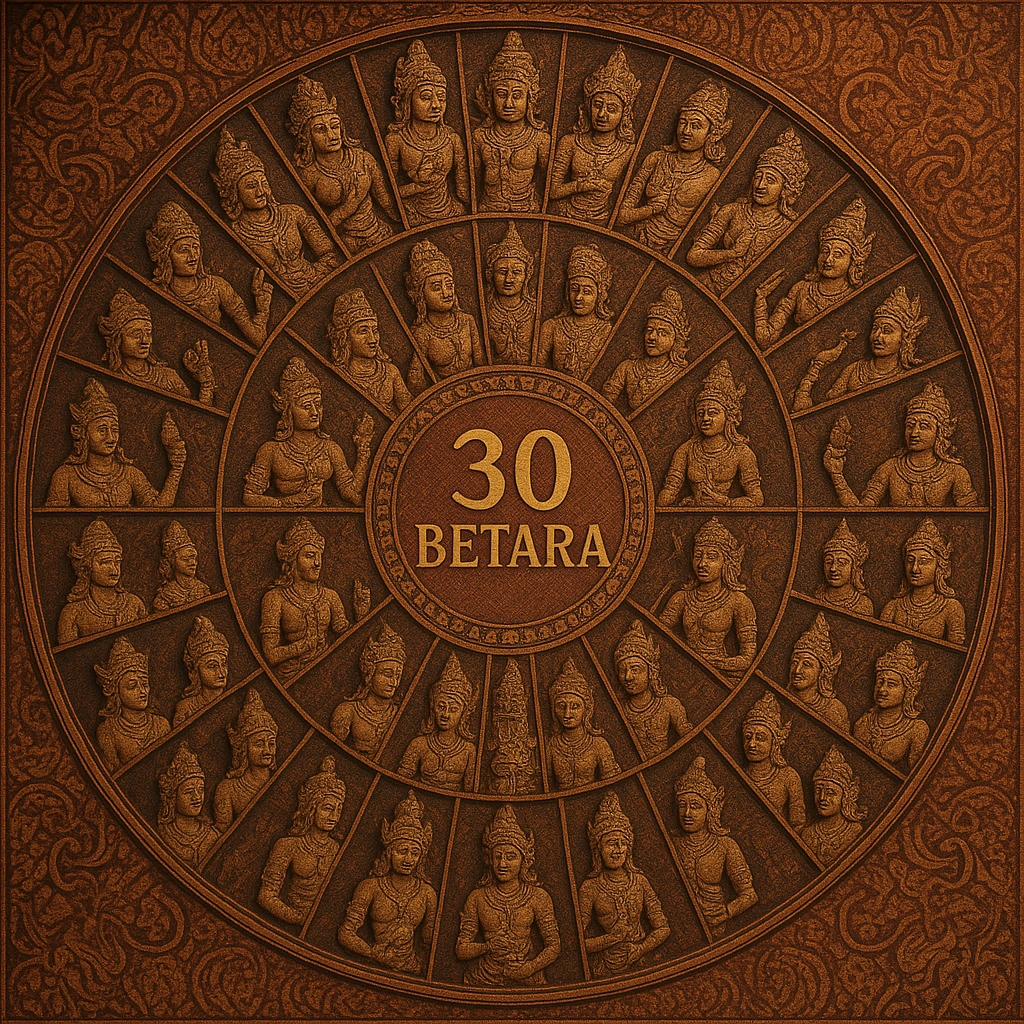
If the weton is the soil, then the wuku is the climate that shelters it. Our ancestors divided one great 210-day cycle into 30 periods called wuku. Each is presided over by a different Betara (Deity) and possesses its own energetic atmosphere, giving nuance to your life path.
The Origin of the Wuku: The Epic Tale of King Watugunung
Behind every name in the Pawukon system, an echo of the past resides.
It is not a name without meaning, but an eternal prasasti (inscription) carved in time,
born from an epic tale of love, pride, and redemption.
The Beginning of the Tragedy
In the Kingdom of Gilingwesi, lived the powerful King Watugunung. His life seemed perfect until his queen, Dewi Sinta,
discovered a scar that revealed a horrifying truth: the king was her own long-lost son.
The Queen’s Stratagem & War Against the Heavens
Her heart shattered, she devised a plan to end their incestuous union by asking for impossible tasks.
Blinded by pride, the king attempted them all, ultimately declaring war on the heavens to capture a celestial nymph for her.
In the cosmic battle that followed, the great god Batara Guru defeated the king.
The Birth of the Pawukon Cycle
After King Watugunung, his queens, and 27 sons all perished, Batara Guru transformed them into markers of time and energy as an eternal lesson.
The king, his queens, and his sons became the 30 wuku that form the 210-day cycle,
each a chapter in their epic tale.
The 30 Wuku and Their Guardian Betara
1. Sinta: Bethara Yamadipati
2. Landep: Bethara Mahadewa
3. Wukir: Bethara Mahayekti
4. Kurantil: Bethara Langsur
5. Tolu: Bethara Bayu
6. Gumbreg: Bethara Cakra
7. Warigalit: Bethara Asmara
8. Warigagung: Bethara Maharesi
9. Julungwangi: Bethara Sambu
10. Sungsang: Bethara Gana
11. Galungan: Bethara Kamajaya
12. Kuningan: Bethara Indra
13. Langkir: Bethara Kala
14. Mandasiya: Bethara Brama
15. Julungpujud: Bethara Guritna
16. Pahang: Bethara Tantra
17. Kuruwelut: Bethara Wisnu
18. Marakeh: Bethara Surenggana
19. Tambir: Bethara Siwa
20. Medangkungan: Bethara Basuki
21. Maktal: Bethara Sakri
22. Wuye: Bethara Kuwera
23. Manahil: Bethara Citragotra
24. Prangbakat: Bethara Bisma
25. Bala: Bethari Durga
26. Wugu: Bethara Singajanma
27. Wayang: Bethari Sri
28. Kulawu: Bethara Sadana
29. Dukut: Bethara Sakri
30. Watugunung: Bethara Antaboga
Zodiac vs. Wuku: Two Oceans of Wisdom
An ID Card vs. A Medical Record
Imagine this metaphor: The **Zodiac** is your ID card. It shows your face and provides essential data. On the other hand, **Javanese Astrology** is your complete medical record. It doesn’t just say, “This is you.” It explains the “soil” (weton) and “climate” (wuku) of your birth, complete with potential obstacles and the best ways to grow.
Reclaiming the Crown of Nusantara’s Wisdom
Why did we abandon this masterpiece for so long? The answer is a deep historical wound from centuries of “mental colonization,” which labeled our local wisdom as “superstition.” But the wheel of time keeps turning. Today, there is a global awakening, a return to roots in search of authentic wisdom.
The Tangible Act of Pride
Pride means relearning: The intellectual act of reopening old texts with a critical eye.
Pride means purifying: The spiritual responsibility to separate the essence of wisdom from the shell of dogma.
Pride means sharing: The social practice of becoming a cultural ambassador in the digital age.
From Map to Journey: Using Javanese Astrology as a Compass
Knowledge without laku (action) is futility. Javanese Astrology is not a verdict of fate, but a dynamic compass for self-development. It is designed not to make us passive, but to make us ask, “Alright, this is the map of my condition. Now, how will I navigate it most wisely?”
“Lakuning Geni” (The Way of Fire),
you are invited to channel that fiery energy into productive passion, not destructive anger.
“kena fitnah” (vulnerability to slander),
it is an early warning to be wiser in choosing friends.
“bridge of understanding”
for true harmony.
Frequently Asked Questions (FAQ)
What is Javanese Astrology?
Javanese Astrology is an ancient wisdom system that maps the cosmos and the soul through cycles of weton and pawukon. Unlike Western Zodiac signs, it provides deeper insight into personality, obstacles, and life potential.
What is a weton in Javanese Astrology?
A weton is the spiritual foundation of your birth, formed from the union of the 7-day cycle (Saptawara) and the 5-day Javanese market cycle (Pancawara). It shapes your temperament and inner character.
How is Javanese Astrology different from the Zodiac?
The Zodiac is like an ID card that shows basic traits, while Javanese Astrology is more like a complete record of the soul. It includes weton, wuku, and divine influences that guide personal growth and relationships.
What is the wuku cycle?
The wuku cycle divides 210 days into 30 periods, each ruled by a Betara (deity). This cycle forms the “climate” of your soul, influencing your path, challenges, and destiny.
Discover All the Layers of Your Character
Don’t just know the name of your weton. Understand every spectrum of energy that shapes your unique self.