
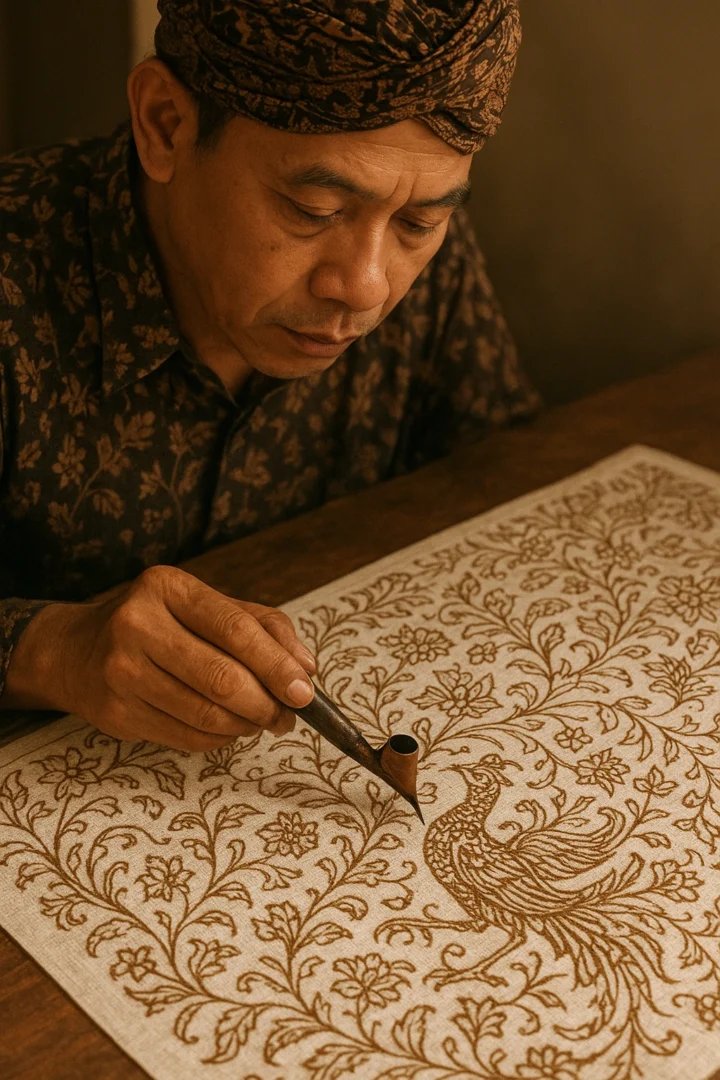
Ever picked up a piece of clothing and felt an instant connection? In Java, that feeling is often tied to Javanese Batik Meanings, where patterns are more than decoration. Each swirl, dot, and color reflects Javanese Batik Meanings that carry stories, hopes, and cultural prayers. Through Javanese Batik Meanings, a garment becomes more than fabric—it becomes identity. Embracing Javanese Batik Meanings turns wearing batik into a way of honoring tradition and purpose.
For the uninitiated, batik may seem like just a beautiful textile, but Javanese Batik Meanings reveal layers of cultural values, status, and spiritual depth. From the royal courts of Yogyakarta and Solo to village workshops, Javanese Batik Meanings have been passed down with purpose for centuries. Some Javanese Batik Meanings were once so sacred they were reserved only for nobles, carrying authority and protection. Even today, Javanese Batik Meanings guide choices, like patterns believed to bring harmony and lasting marriage.
This article is your guide to decoding Javanese Batik Meanings, a silent language woven into fabric. We will journey into the heart of culture to explore how Javanese Batik Meanings reveal hidden symbolism in every motif. By the end, patterns will no longer look random but instead show the depth of Javanese Batik Meanings as living stories. You might even uncover how Javanese Batik Meanings give your own shirt a voice about identity and purpose.
What Exactly is Javanese Batik Meanings? A Tradition in Wax and Dye
Before we dive into the meanings, it’s important to see how Javanese Batik Meanings are rooted in the craft itself. Unlike printed fabrics, Javanese Batik Meanings emerge through the wax-resist dyeing process, where each line reflects patience and precision. The meditative rhythm of creating batik carries Javanese Batik Meanings that go beyond decoration, embodying deep values. Through this practice, Javanese Batik Meanings reveal lessons of patience, harmony, and inner peace.
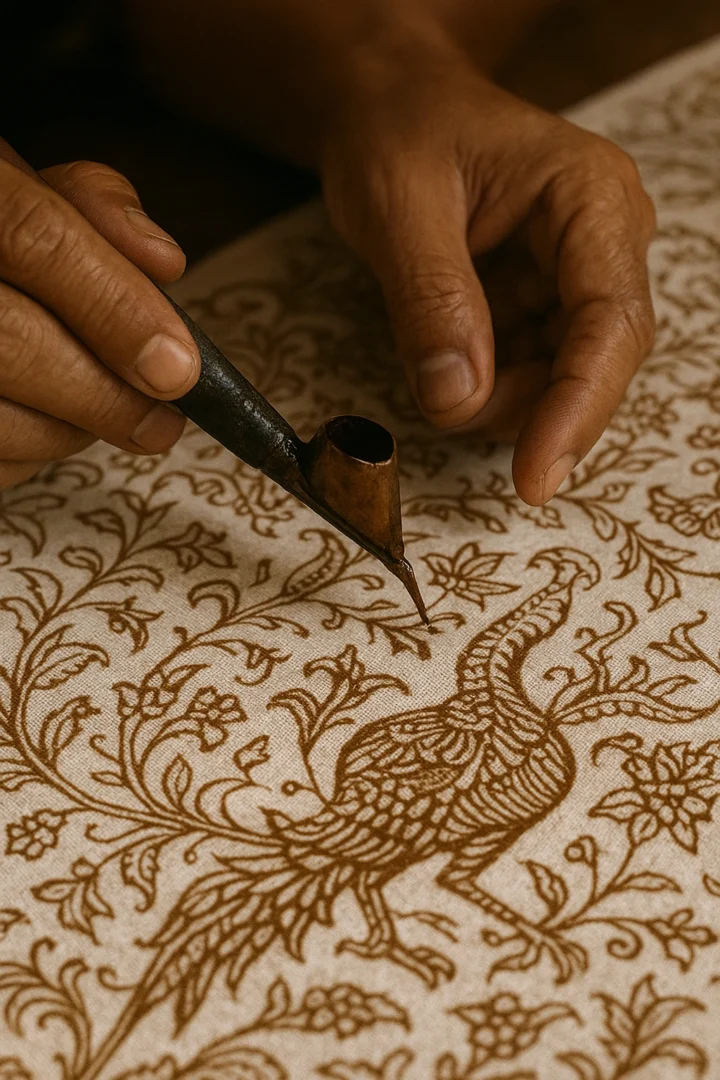
There are two primary forms of traditional batik:
- Batik Tulis (Hand-Drawn Batik): This is the most revered and labor-intensive form. Artisans use a pen-like tool called a canting—a copper spout with a bamboo handle—to draw intricate patterns onto a cloth with hot, molten wax. The process can take weeks, even months, for a single piece. Each line is imbued with the artist’s intention and skill, making every piece of *batik tulis* a unique masterpiece.
- Batik Cap (Stamped Batik): To increase production, artisans developed the *cap*, a copper stamp carved with a motif. The stamp is dipped in hot wax and pressed onto the fabric. While faster than *batik tulis*, it still requires immense skill to align the patterns perfectly. It offers a more accessible entry into the world of authentic batik.
After the wax is applied, the cloth is dipped in dye. The waxed areas “resist” the color. This process is often repeated multiple times to achieve different colors and complex designs. This painstaking method is what earned Indonesian Batik a place on the UNESCO Representative List of the Intangible Cultural Heritage of Humanity.
The Two Hearts of Javanese Batik: Yogyakarta and Solo
At the core of classical Javanese batik are two royal cities: Yogyakarta and Solo (also known as Surakarta). Their distinct styles are a direct result of the 1755 Treaty of Giyanti, which split the powerful Mataram Sultanate in two. This division fostered a cultural rivalry that gave birth to different philosophies reflected in their batik.
Yogyakarta: The Stoic and Symmetrical
Batik from the Sultanate of Yogyakarta often feels bold, powerful, and formal. The designs are typically symmetrical and feature a stark contrast between the dark motifs and a clean, white background (latar pethak). The traditional colors are dark indigo blue, rich brown (sogan), and white.
- Philosophy: Yogyanese batik embodies a more rigid, disciplined, and stoic philosophy. The patterns often represent strength, leadership, and the structured order of the universe and the court. They are earthly and grounded.
- Symbolism: You’ll find powerful, geometric patterns that convey authority and a connection to the kingdom’s martial history.
Solo: The Graceful and Natural
Batik from the Sunanate of Surakarta (Solo) tends to be more fluid, intricate, and subtle. The patterns are often set against a cream or yellowish-brown background (latar cemeng), giving them a warmer, softer feel.
- Philosophy: Solonese batik reflects a philosophy that is more connected to nature, grace, and introspection. The patterns are often seen as more spiritual and refined.
- Symbolism: Designs frequently draw inspiration from flora and fauna, with flowing lines that evoke a sense of calm and organic growth.
Decoding the Language: Iconic Javanese Batik Motifs
Now, let’s unlock the meanings behind some of the most famous and culturally significant Javanese batik patterns. These are more than just designs; they are stories and prayers in visual form.
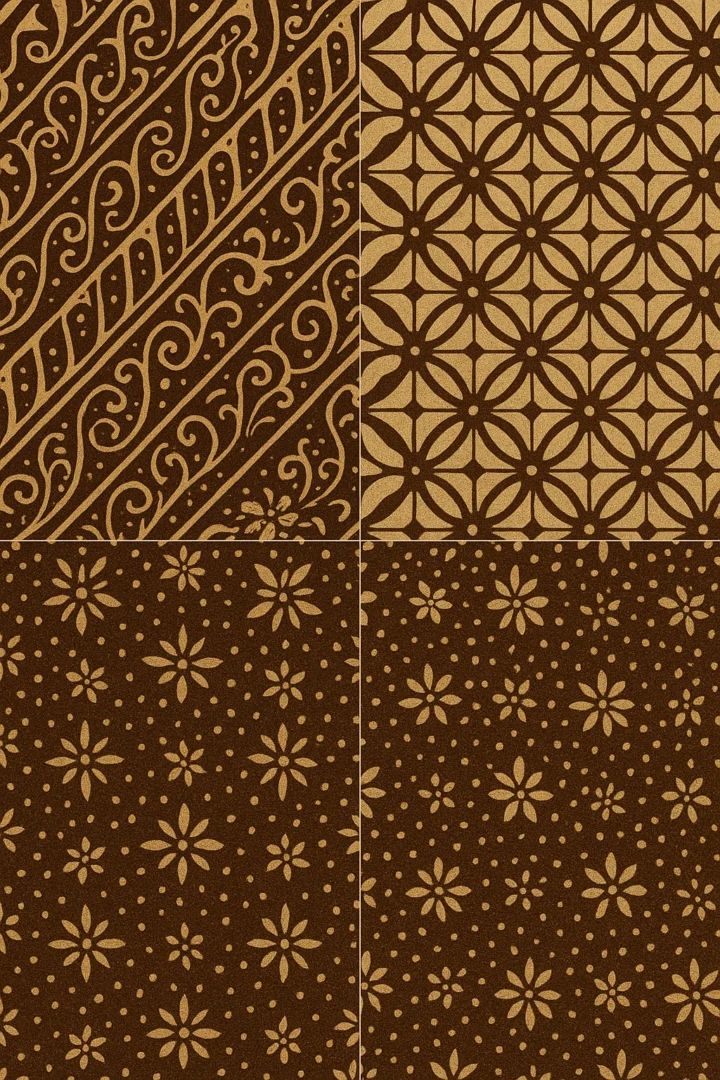
1. Parang: The Blade of Power and Continuity
Perhaps the most recognizable of all batik motifs, the Parang is characterized by its continuous, diagonal lines of S-shaped figures, resembling a slashing knife or the powerful waves of the ocean crashing against a cliff.
- Meaning: The core symbolism of the Parang motif is power, authority, strength, and continuity. The unbroken line represents a continuous struggle to improve oneself and fight against evil. It signifies the unending quest for prosperity and the unbroken lineage of leadership.
- Historical Context: The Parang was one of the larangan or “forbidden patterns,” strictly reserved for the Sultan and his royal family. Wearing it was a direct display of one’s royal blood. Even today, it’s often considered inappropriate to wear a Parang motif when meeting with elders as a sign of respect.
2. Kawung: The Fruit of Purity and Cosmic Order
The Kawung motif is one of the oldest and most profound designs in Javanese batik. It is a simple yet powerful pattern composed of four intersecting circles or ovals, representing the cross-section of the aren (sugar palm) fruit.
- Meaning: The Kawung symbolizes purity, perfection, and the hope for a virtuous life. The four ovals are often interpreted as representing the four cardinal directions, with the center representing the seat of power—the ruler. As a whole, the Kawung is a symbol of cosmic order and the human desire to live a balanced life.
- Historical Context: Like the Parang, the Kawung was also traditionally reserved for royalty. It symbolized the king as the center of his kingdom, bringing order and justice to his people.
3. Truntum: The Guiding Star of Love
The Truntum motif tells a beautiful story of love and devotion. Legend says it was created by a queen of Surakarta who felt neglected by her husband. She poured her sorrow into her batik, drawing small, repeating star-like flowers. The king, seeing the beautiful pattern, felt his love for her blossom anew.
- Meaning: Because of its origin story, the Truntum has become the ultimate symbol of rekindled, unconditional love, loyalty, and harmony. It represents a love that guides and nurtures.
- Modern Usage: This deep symbolism has made Truntum the go-to motif for the parents of the bride and groom at a Javanese wedding. By wearing it, they express their hope that their love will act as a guiding star for the new couple.
4. Ceplok: The Mandala of Harmony
The *Ceplok* family of motifs is based on repeating geometric shapes like squares, circles, and stars, often creating a pattern reminiscent of a mandala or a rosette. This design structure is one of the most ancient in Java.
- Meaning: Inspired by flower buds or cross-sections of fruit, *Ceplok* motifs symbolize order, balance, and cosmic harmony. The structured, repeating nature reflects a well-ordered universe. It’s often worn during ceremonies with the hope of bringing balance and good fortune to the occasion.
- Variations: A famous variation is *Ceplok Grompol*, which means “to gather” or “to unite.” It’s worn during weddings with the hope that the couple will be blessed with many children, good fortune, and a harmonious family life.
5. Udan Liris: The Drizzle of Blessings
Meaning “light rain” or “drizzle,” the *Udan Liris* motif is a classic diagonal pattern composed of various smaller, symbolic motifs arranged in parallel rows. It is a pattern dense with meaning and hope.
- Meaning: Rain is a universal symbol of fertility and prosperity. This motif carries the profound hope for blessings, welfare, and good fortune to rain down upon the wearer. It is a pattern of perseverance and hope.
- Historical Context: Due to its powerful meaning, *Udan Liris* was also once considered a forbidden pattern, reserved for those of high status in the royal court, as it was believed to help them bring prosperity to the kingdom.
Batik in Javanese Society: From Womb to Tomb
In Java, batik is not just clothing; it is a silent companion that marks every significant stage of a person’s life. Its presence is deeply woven into the island’s ceremonies and social fabric.
- Birth and Childhood: During the *mitoni* or seventh-month pregnancy ceremony, the mother-to-be is draped in seven different batik cloths, each with a hopeful meaning, culminating in a pattern that wishes for a smooth birth. Later, a baby is carried in a special batik sling (*gendongan*) with motifs designed to protect the child from harm.
- Marriage: The wedding ceremony is a grand showcase of batik’s richest symbolism. The bride and groom wear matching Sido motifs (*Sidomukti*, *Sidoasih*) as a prayer for their future. Their parents wear *Truntum* to guide them.
- Daily and Formal Wear: The way batik is worn—the long cloth or *kain panjang*—is itself an art. The intricate pleats, known as *wiru* or *wiron*, are folded with precision and their direction can carry meaning. For formal occasions, men pair it with a *beskap* (Javanese jacket) and women with a *kebaya* (blouse).
- Death: In the final rite of passage, certain batik patterns, often ones without living creatures, are used to cover the deceased, symbolizing their return to the divine in a state of purity.
Wearing a Story in the 21st Century
Today, batik is not confined to ceremonial wear but has become a staple of Indonesian fashion, from formal events to casual Fridays at the office. The essence of Javanese Batik Meanings reminds us that each motif carries history and values beyond fabric patterns. While many modern batik designs highlight aesthetics, the depth of Javanese Batik Meanings adds intention to the act of wearing it. By exploring Javanese Batik Meanings, we see clothing as cultural storytelling, and embracing Javanese Batik Meanings turns fashion into a bridge with tradition.
Choosing a batik pattern is no longer just a fashion choice; it becomes a personal statement.
- Wearing Parang to a crucial presentation could be a quiet assertion of your confidence and authority.
- Choosing Sidoasih for an anniversary dinner is a beautiful, unspoken reaffirmation of your love.
- Draping a cloth with a Ceplok Grompol motif can be a personal prayer for family unity and togetherness.
The next time you see a piece of Javanese batik, look closer. See beyond the beautiful patterns and try to read the story within. You are looking at a piece of art that carries centuries of philosophy, prayer, and cultural identity in its threads. You are looking at a language that is meant to be worn. According to Javanese philosophy expert Dr. S.K. Trimulyono from Universitas Gadjah Mada, these motifs represent a “cosmological view where life grows and spreads.”
So, what story will you choose to wear?