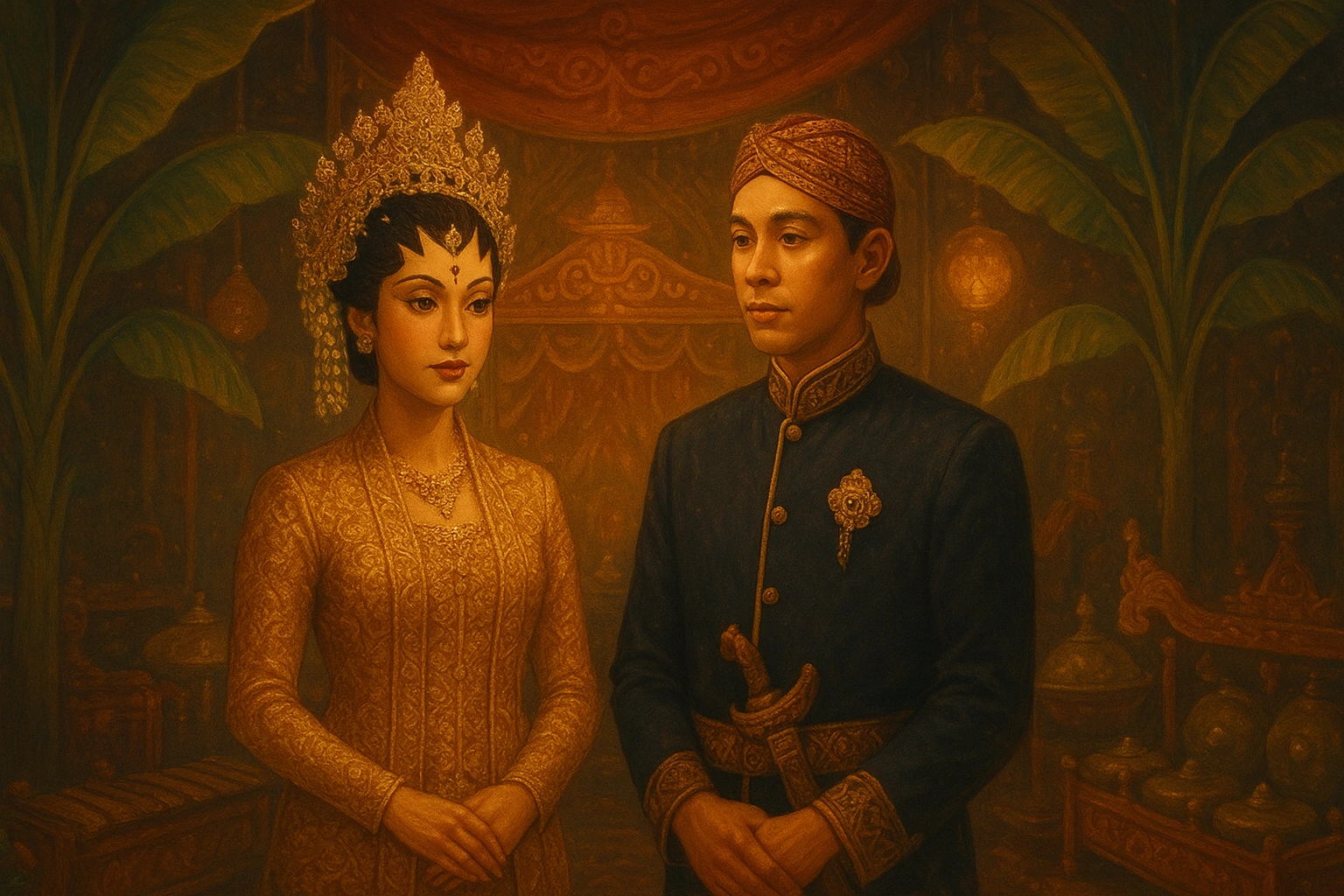
For those unfamiliar, witnessing a Javanese wedding can feel like stepping into a royal court from another era. A Javanese wedding fills the air with the mystical resonance of gamelan music, while the bride and groom are adorned in exquisite attire that tells a story of love, responsibility, and hope for the future. Experiencing a Javanese wedding allows you to see the elegance and meaning behind every detail, from the intricate pre-wedding rituals to the carefully chosen clothing. This guide will help you understand a Javanese wedding, exploring the timeless traditions and the powerful symbolism that make each celebration truly unforgettable.

The Philosophical Heartbeat: Why Javanese Weddings Are So Intricate
To understand a Javanese wedding, one must first appreciate the philosophy behind a Javanese wedding, rooted in the wisdom of Javanese life. The core principle of a Javanese wedding is the pursuit of harmony—harmony with God, with fellow human beings, and with the natural world. A Javanese wedding is seen as a pivotal moment in this journey, a rite of passage that must align with cosmic forces to ensure a blessed and prosperous future. Every aspect of a Javanese wedding reflects this commitment to balance, making each ceremony deeply meaningful and spiritually significant.
This is why the wedding date is not chosen lightly. The Javanese consult an ancient system of numerology called Weton, which calculates the compatibility of the couple and identifies the most auspicious day for the union based on their birth dates. This calculation, involving the 7-day week and the 5-day Javanese market week (*Pasaran*), is a crucial first step. You can discover your own Javanese birth identity using a Javanese Weton Calculator. Getting this right is believed to lay the foundation for a life of happiness and ward off misfortune.
The Journey Begins: Sacred Pre-Wedding Rituals
The path to the wedding day is marked by a series of beautiful and meaningful ceremonies, each preparing the couple and their families for the new chapter.
1. Siraman (The Cleansing Bath)
Held a day before the wedding at their respective homes, the Siraman is an emotional and symbolic cleansing ritual. The bride and groom are bathed by their parents and respected elders with water collected from seven different natural springs, infused with a mix of flowers known as kembang setaman. This act symbolizes the washing away of past impurities, both physically and spiritually, preparing them to enter marriage in a pure state. It’s often a tearful moment, marking the parents’ final act of physical care for their child before they embark on their own life.
2. Midodareni (The Angelic Eve)
The night before the wedding is known as Midodareni, from the Javanese word widodari, meaning angel or goddess. The bride remains in her room, and it is believed that heavenly angels descend to visit her, bestowing upon her an otherworldly beauty for her wedding day. During this time, the groom and his family arrive to deliver the seserahan—a collection of symbolic gifts for the bride that represent his ability to provide for her. The groom is not permitted to see the bride, a practice that builds anticipation and is thought to be a final test of his patience.
3. Pasang Tarub and Tuwuhan (Decorating the Venue)
The wedding venue is adorned with Tarub (decorations made from plaited coconut leaves) and Tuwuhan (symbolic plants). These aren’t mere decorations; they are prayers manifested in nature. You will typically see:
- A pair of banana trees with fruit: Symbolizing prosperity and the hope that the couple will soon have children.
- Sugarcane stalks: Representing the hope for a sweet life full of joy.
- Coconuts: Symbolizing spiritual and physical purity.
Dressed Like Royalty: The Symbolism of Javanese Wedding Attire
Javanese wedding attire is a stunning display of artistry and meaning, transforming the bride and groom into a king and queen for a day (*raja lan ratu sedina*).
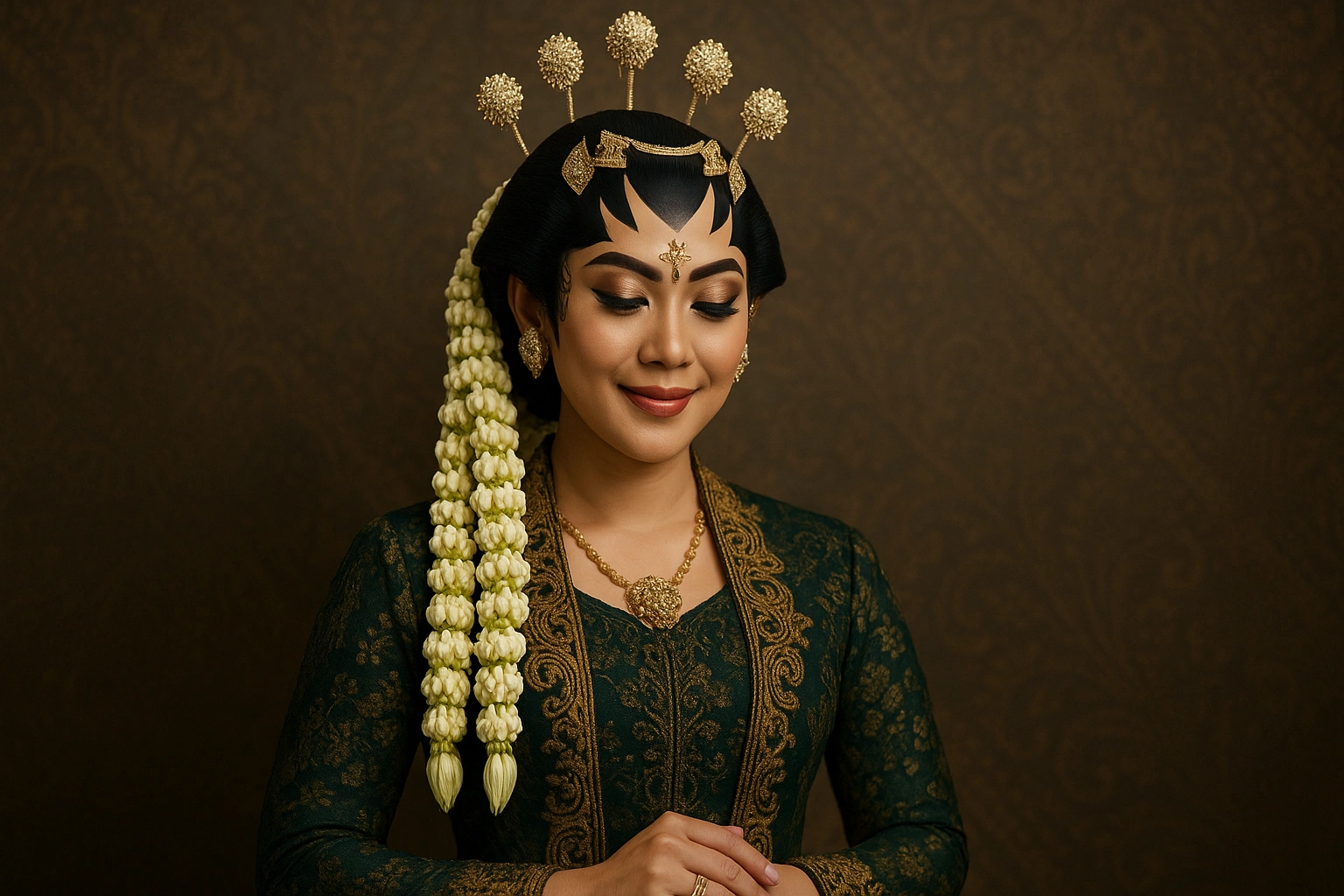
For the Bride: Kebaya, Batik, and Paes
The bride wears an elegant kebaya, a traditional long-sleeved blouse, often made of velvet or brocade and lavishly embroidered. This is paired with a special Batik cloth, or kain. The motifs on the batik are never random; they are chosen for their specific meanings. A popular choice is the Sido Mulyo motif, which represents a prayer for a life of glory and prosperity. Another is Truntum, a pattern of small, star-like flowers symbolizing the rekindling of love and commitment. The meaning behind Javanese batik motifs is a deep and fascinating subject in itself.
Her look is completed with intricate makeup called paes, particularly the patterns drawn on her forehead. The style of paes often signifies whether the tradition is from Yogyakarta or Surakarta (Solo), two major cultural centers of Java.
For the Groom: Beskap, Blangkon, and Keris
The groom looks equally regal in a beskap, a traditional Javanese formal jacket, paired with a matching batik kain. On his head, he wears a blangkon, a traditional Javanese cap, which also varies in style between Yogyakarta and Solo. Tucked into his waist is a keris, a ceremonial dagger that symbolizes masculinity, heroism, and the responsibility to protect his family.
The Main Event: Akad Nikah and the Panggih Ceremony
The wedding day culminates in two core events: the legal-religious vow and the highly symbolic traditional meeting.
1. Akad Nikah (The Marriage Vow)
This is the heart of the wedding, the legally and religiously binding ceremony, usually conducted according to Islamic tradition. The groom, in front of the bride’s father, religious officials, and witnesses, makes his vow of marriage (*ijab qabul*). Once this is completed, they are officially husband and wife.
2. Upacara Panggih (The Meeting Ceremony)
What follows is the Panggih, a beautiful and theatrical ceremony that ritually introduces the bride and groom as a married couple. It unfolds in a series of symbolic acts:
- Balangan Gantal: The bride and groom, from a distance, throw bundles of betel leaves tied with white thread at each other. This symbolizes casting away bad spirits and is a playful representation of two hearts finding their target.
- Ngidak Tigan (Stepping on the Egg): The groom steps on a raw egg. The bride then kneels and washes his foot with flower-infused water. This profound act symbolizes the groom’s readiness to become a responsible father and the bride’s devotion and readiness to serve her husband.
- Sinduran: The couple is draped in a single, large red-and-white cloth, and their parents guide them toward the wedding throne. This signifies their union as one and the parental support they will always have.
- Kacar-Kucur: The groom pours a mixture of coins, rice, and seeds into a cloth held by the bride. This symbolizes his commitment to provide for the family, and her role as the careful manager of their household finances and well-being.
- Dahar Klimah (Eating Together): The bride and groom feed each other small balls of rice, symbolizing their commitment to share everything in life, both joys and sorrows.
The Soulful Soundtrack: The Role of Gamelan Music
No Javanese wedding is complete without the enchanting sound of the gamelan. This traditional orchestra, composed mainly of percussion instruments like metallophones, gongs, and drums, provides a mystical and majestic atmosphere. The music is not mere entertainment; it is an essential element that elevates the ceremony to a sacred level. Specific compositions are played to accompany different parts of the ritual, creating a soundscape that is both serene and spiritually uplifting. To learn more, you can explore the mesmerizing instruments of the gamelan. As noted by UNESCO, which recognizes gamelan as an Intangible Cultural Heritage of Humanity, the music is “an integral part of Javanese life from cradle to grave.”
A Timeless Union
A Javanese wedding is a profound cultural experience, a testament to a philosophy that values harmony, family, and deep spiritual meaning. Every intricate detail, from choosing a lucky wedding date based on Weton secrets to following proper Javanese etiquette, is a prayer for the couple’s future. It is a beautiful reminder that a marriage is not just a single event, but the beginning of a sacred journey, supported by generations of wisdom and tradition.