By Ky Tutur, Javanese Culturalist • Published on
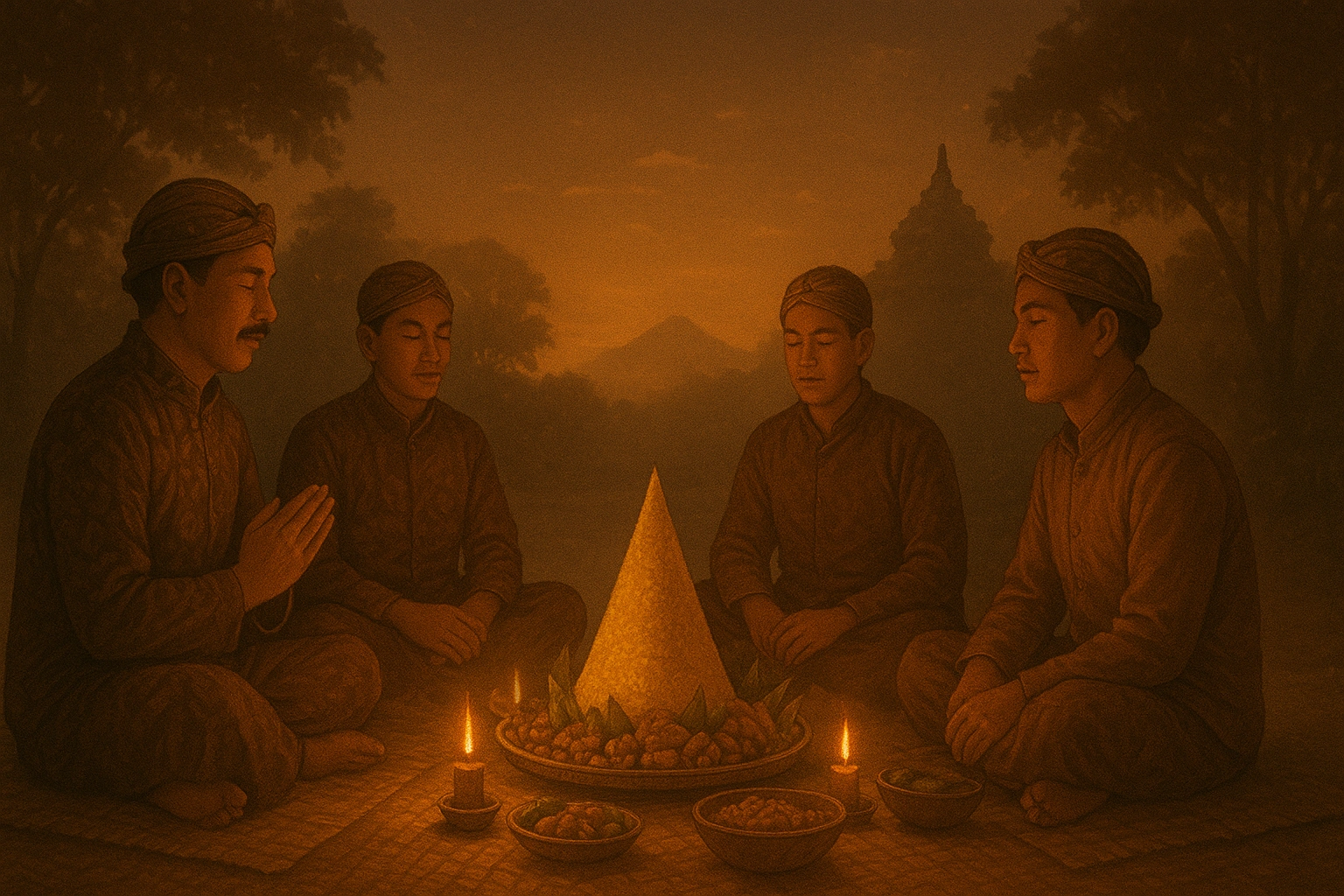
Imagine this: you’re walking through a quiet Javanese village as dusk settles. The air is fragrant with jasmine and cooking fires. From a neighbor’s house, you hear a low, melodic murmur of prayers, followed by the sight of men emerging with small, neat packages of food. You’ve just witnessed the heart of Javanese social and spiritual life: the Slametan. It’s more than just a meal; it’s the very fabric of the community made visible.
For an outsider, this quiet ceremony can be puzzling. It isn’t a party, yet there’s food. It isn’t a formal religious service, yet there are prayers. This guide offers a respectful explanation of the Slametan, a core Javanese ritual that embodies the island’s deepest values of harmony, gratitude, and community. Understanding this beautiful tradition is key to understanding the Javanese soul.
The Core Philosophy: The Deep Meaning of “Slamet”
To understand the Slametan, you must first understand its name. It comes from the Javanese word slamet, which is derived from the Arabic *salam*, meaning “peace” or “safety.” In the Javanese context, slamet is a profound state of being: it is tranquility, security, and a state of holistic well-being, free from any kind of disruption, whether physical or spiritual. The purpose of a Slametan is, therefore, to seek or give thanks for this state of slamet.
This pursuit of harmony is a cornerstone of the Javanese worldview, often encapsulated in the principle of rukun (social harmony). As noted by cultural anthropologists like Clifford Geertz in his seminal work “The Religion of Java,” the Slametan acts as a key mechanism for maintaining this balance, smoothing over social frictions and reinforcing a sense of shared destiny.
The Many Faces of Slametan: When Is It Held?
The Slametan is a remarkably versatile ritual, adaptable to almost any occasion, big or small. It marks transitions and milestones, acting as a spiritual buffer and a communal expression of hope or gratitude. It is held for:
- Life Cycle Events: From before birth (*Tingkeban*, a ceremony at seven months of pregnancy) to long after death (commemorations on the 3rd, 7th, 40th, 100th, and 1000th days after passing). It marks births, first steps (*Tedhak Siten*), circumcisions, and weddings.
- Major Undertakings: Before building a new house, starting a business, going on a long journey, or even buying a new vehicle. The ritual seeks blessings for a smooth and safe process.
- Community & Agricultural Events: The annual *Bersih Desa* (“village cleansing”) is a large-scale Slametan to purify the community and give thanks for the harvest.
- Personal Milestones & Crises: It can be held for something as joyful as a child passing an exam or as serious as a recovery from illness.
This adaptability is why the Slametan has remained so central to Javanese life. It provides a spiritual and communal framework for navigating all of life’s uncertainties and celebrations.
The Anatomy of a Slametan: What Actually Happens?
While the scale can vary, most Slametan follow a beautifully simple and consistent structure.
1. The Invitation and Gathering
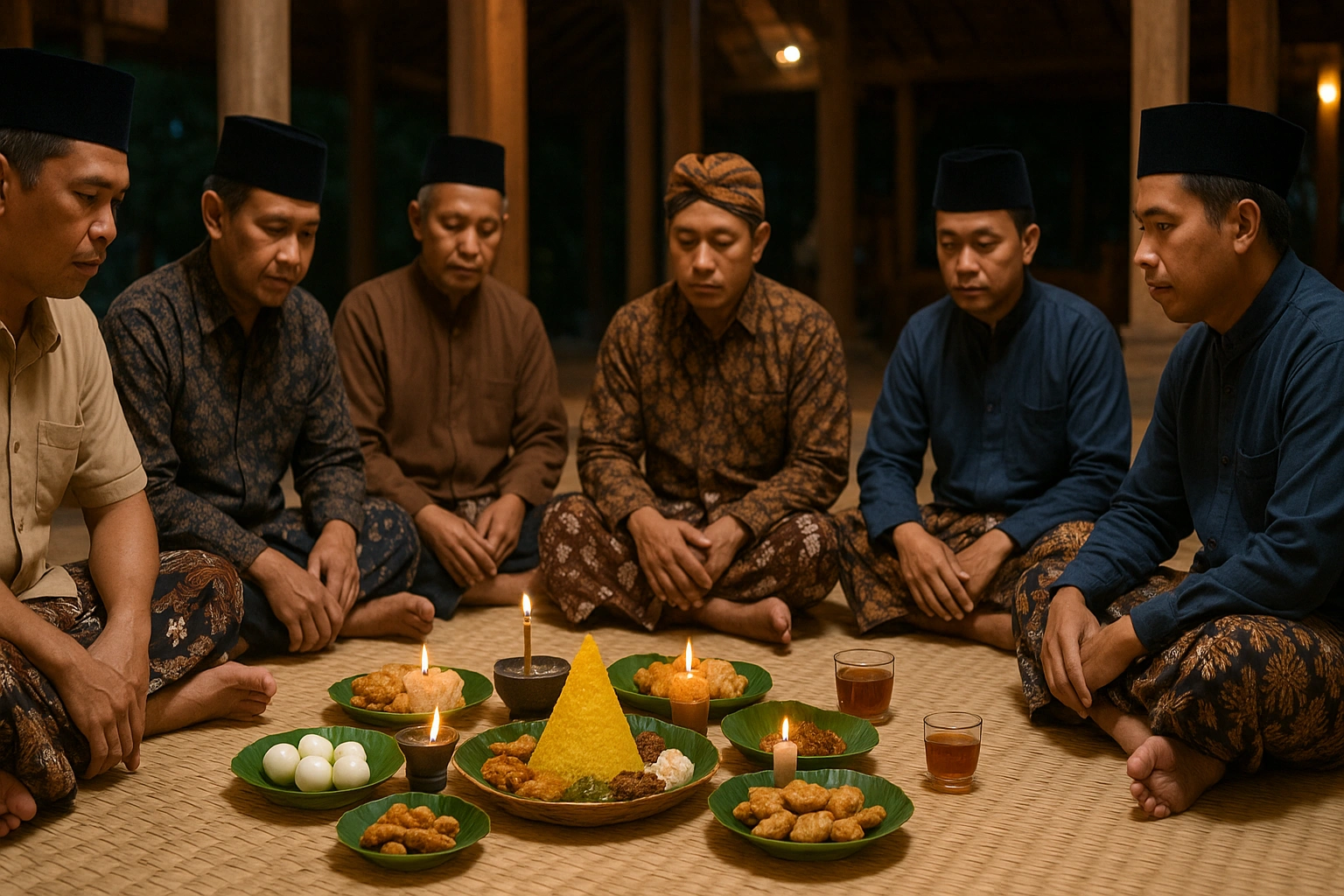
Invitations are typically informal and delivered in person, reinforcing the close-knit nature of the neighborhood (*kampung*). The gathering itself is modest. Traditionally, only men attend the core ritual, sitting in a circle on woven mats (*klasa*) on the floor of the host’s home. The atmosphere is one of serene focus, not festivity.
2. The Symbolic Food (Ubarampe)
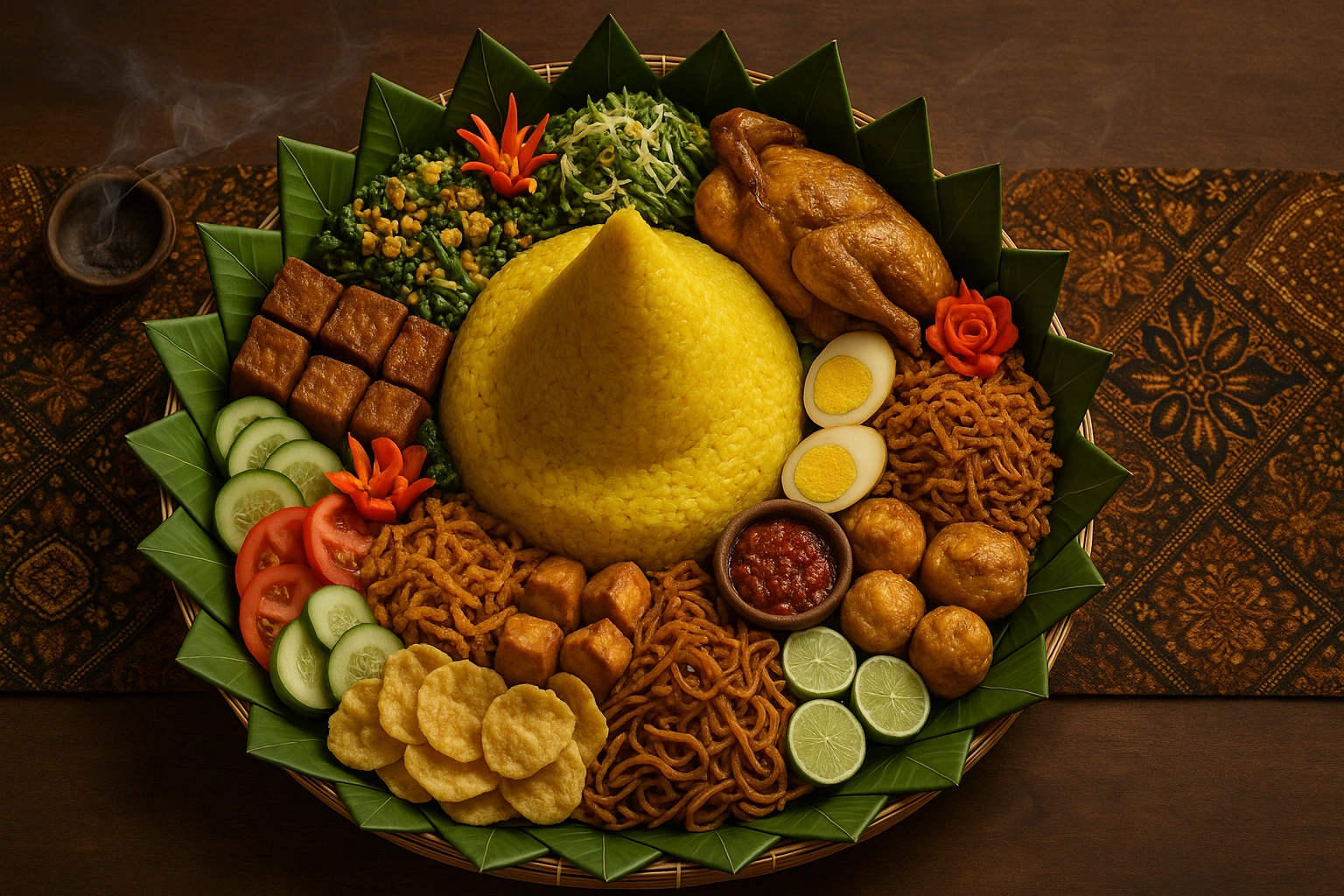
At the center of the circle is the food, known as *ubarampe* or *sajen* (offerings). This is not just a meal; every dish is a symbol, a prayer made edible. The composition of the food is the most vital part of the ritual. Key elements include:
- Nasi Tumpeng: A cone-shaped mountain of rice, representing the cosmic mountain, the abode of the divine. It symbolizes gratitude to God. The rice is often yellow (*nasi kuning*), signifying gold and prosperity.
- Ingkung: A whole chicken cooked with head and feet intact, positioned as if in prostration (*sujud*). It symbolizes total submission and sincerity in one’s prayer to the Almighty.
- Gudhangan or Urap: A mix of boiled vegetables with spiced grated coconut. The different vegetables represent the diversity of the community, brought together in harmony by the coconut dressing.
- Jajan Pasar (“Market Snacks”): An assortment of traditional sweets and savories made from rice flour, glutinous rice, and coconut. These represent the bounty of the earth and the various facets of life.
3. The Prayer (Donga)
Once everyone is gathered, a community elder or local religious leader (*Kyai* or *Modin*) leads the prayer (*donga*). This is a beautiful example of Javanese syncretism. The prayer often begins with verses from the Qur’an, followed by prayers in Javanese that may include invocations to local spirits, ancestors, and the Prophet Muhammad. The purpose is to bless the food and convey the host’s specific intention (*hajat*) for holding the Slametan.
4. The Sharing of Blessings (Berkat)
This is arguably the most important step. After the prayers, the food is considered blessed. Instead of being eaten on the spot, the entire spread is quickly and efficiently divided into small portions. These are packed into bamboo containers (*besek*) or simple boxes and given to each guest to take home. This package is called a *berkat*, meaning “blessing.”
The act of taking the food home to share with one’s family ensures that the blessing of the prayer and the community’s goodwill is distributed throughout the entire neighborhood. It is a profound act of social and spiritual sharing.
The Deeper Significance: Why the Slametan Endures
“Gotong royong, rukun, lan slamet.” (Mutual cooperation, harmony, and well-being.) This Javanese proverb could well be the motto of the Slametan.
The Slametan’s endurance comes from its powerful function as the social glue of the community. It is a physical manifestation of *gotong royong* (mutual cooperation), where neighbors support each other through life’s pivotal moments. It reaffirms that no one is alone in their joy or sorrow.
Spiritually, it is a practice of active harmony-making. The Javanese believe that life is fraught with potential spiritual imbalances. The Slametan is a tool to actively restore that balance, to appease unseen forces, honor ancestors, and petition for divine grace. It is a tradition that acknowledges the interconnectedness of the social, natural, and spiritual worlds.
Conclusion: A Tradition of Shared Hope
The next time you hear the quiet prayers of a Slametan, you’ll know what it represents. It is a sophisticated Javanese ritual that elegantly weaves together spirituality, social solidarity, and profound gratitude. It is a shared meal where the main course is community, and the blessing is meant to be shared by all.
This beautiful tradition reminds us that in the pursuit of safety and well-being (*slamet*), the greatest strength lies not in individual effort, but in the simple, powerful act of gathering together and sharing a blessing.