
By Ky Tutur, Javanese Culturalist • Published on September 27, 2025
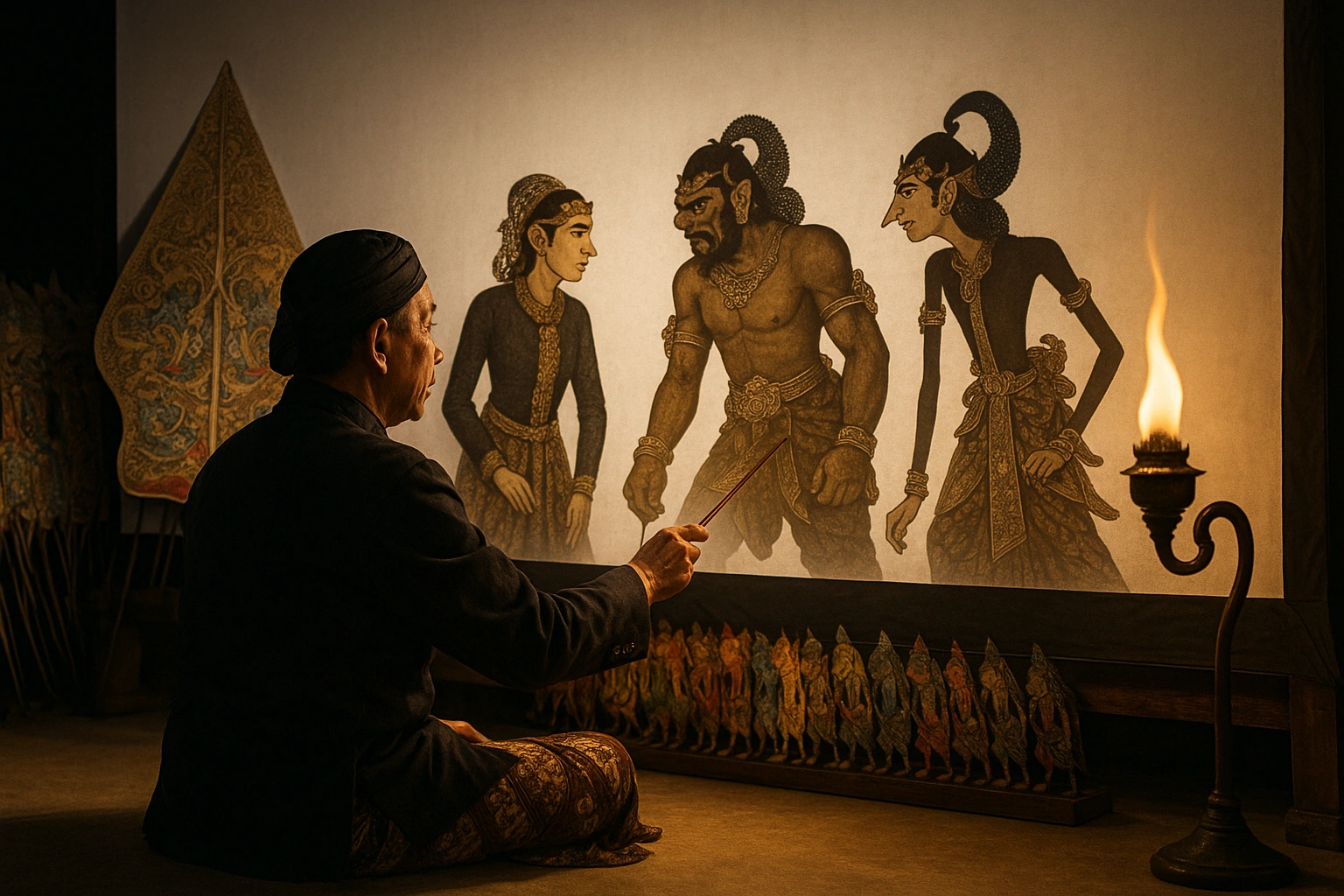
Iron Man’s suit, Captain America’s shield, Thor’s hammer. These are the icons of modern mythology, admired by millions worldwide. The Marvel Cinematic Universe rules contemporary storytelling, but what if these heroes, with all their powers and struggles, are just modern reflections of timeless figures? What if the ideas behind Earth’s Mightiest Heroes were already alive centuries ago in the glow of a Wayang Kulit performance, guided by a skilled Javanese dhalang, and echoed through the stories of wayang and ancient Javanese myth?
This isn’t a stretch. This is the power of wayang archetypes. Long before the first comic book was printed, the ancient art of *Wayang Kulit* (shadow puppetry) was exploring the very same universal character models that make Marvel’s stories resonate so deeply. The struggles of gods and mortals, the burden of power, and the definition of a hero are central to this cornerstone of Javanese mythology.
Prepare to have your perspective on modern superheroes completely re-framed. We’re about to explore five direct, one-to-one comparisons between Javanese heroes and Marvel icons that reveal a shared, timeless DNA of great storytelling. The parallels are so clear, you’ll wonder if Stan Lee had a Javanese *dhalang* (puppet master) whispering in his ear.
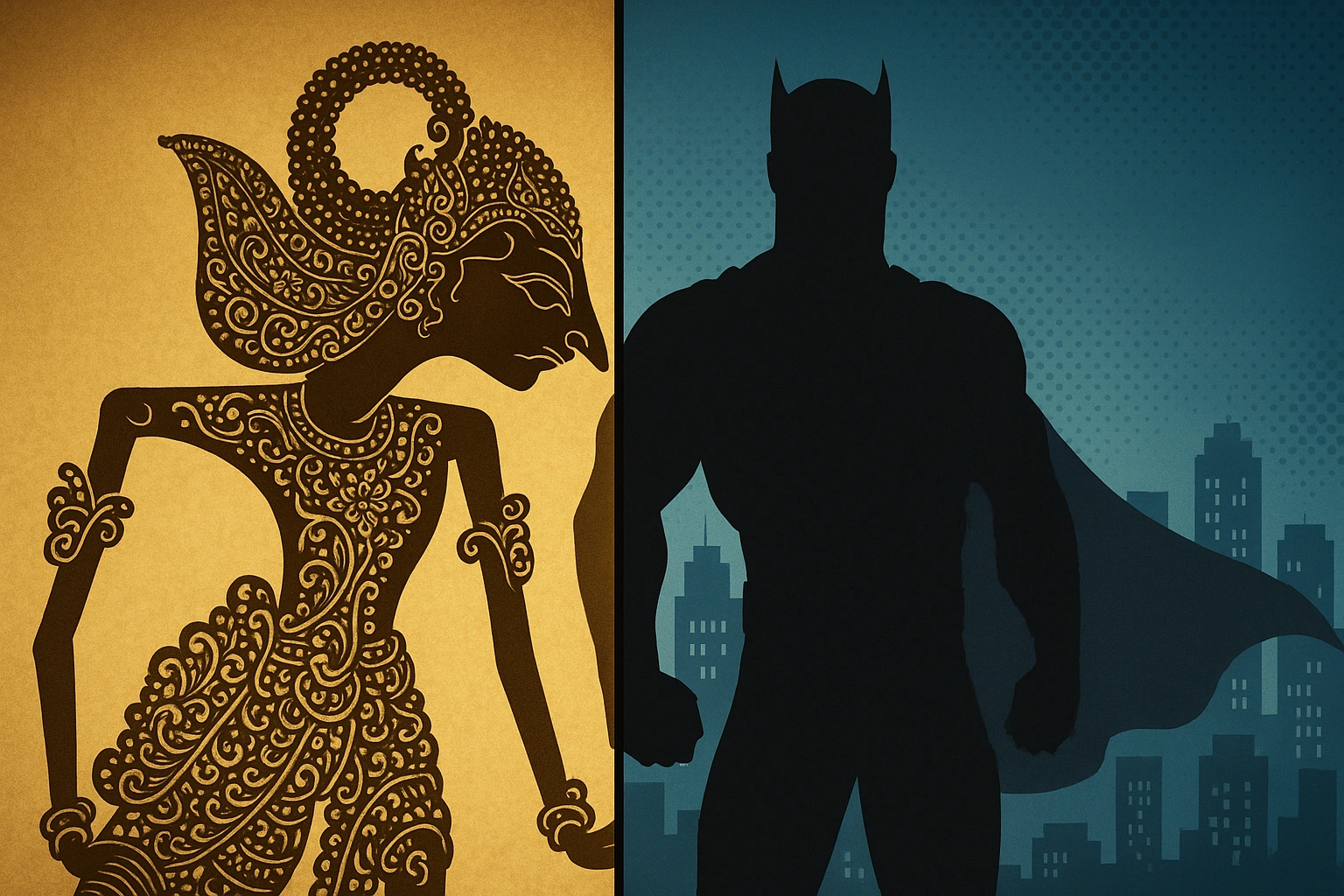
First, What Are Archetypes? The Universal Language of Story
Before we draw the lines between Yogyakarta and New York, it’s crucial to understand what an archetype is. Popularized by psychologist Carl Jung, an archetype is a universally understood symbol, character, or pattern of behavior. It’s a kind of “factory setting” for the human imagination. Think of The Mentor, The Trickster, The Noble Hero, The Shadow Self. These figures appear in stories across every culture and era because they represent fundamental aspects of the human experience.
Marvel’s success isn’t just about explosions and CGI; it’s also a masterclass in using timeless archetypes. Wayang, one of the world’s most intricate storytelling traditions, has been exploring these patterns for over a thousand years. In wayang performances, the heroes of the Mahabharata and Ramayana take on shapes and lessons that echo through Javanese culture. These wayang figures are the original Avengers, proving that the essence of heroism has traveled from ancient shadow plays to modern screens.
The 1:1 Mappings: Ancient Shadows, Modern Heroes
Here are five of the most compelling parallels between the wayang archetypes and the heroes that dominate our box offices today. Each comparison reveals a deeper truth about what it means to be a hero.
1. The Paragon of Virtue: Arjuna & Captain America
The Archetype: The Perfect Knight. This hero is the moral compass. He is not necessarily the strongest, but he is the most righteous, disciplined, and unwaveringly good. His true power is his character.
Wayang’s Arjuna: The third of the five Pandawa brothers, Arjuna is considered the ideal warrior-knight (*ksatriya*). He is handsome, a master archer, and deeply introspective. He famously hesitates before the great Baratayuda war, questioning the morality of fighting his own kin, a moment of profound philosophical depth captured in the Bhagavad Gita. His power comes from divine weapons (*pasopati*) earned through intense meditation and self-control, not just brute force.
Marvel’s Captain America: Steve Rogers, a man deemed worthy of the Super Soldier Serum not for his strength but for his heart. He consistently puts the mission and the welfare of others before himself. His iconic line, “I can do this all day,” speaks to his indomitable spirit. Like Arjuna, his greatest weapon isn’t physical—it’s his unshakeable moral certainty, which allows him to lead the Avengers and even wield Thor’s hammer.
2. The Sacred Brute: Bima (Werkudara) & The Hulk
The Archetype: The Noble Savage. A figure of immense, almost uncontrollable physical power, who operates on instinct and raw emotion. Beneath the fearsome exterior lies a core of fierce loyalty and a surprisingly pure heart.
Wayang’s Bima: The second Pandawa brother is a giant of a man, possessing the strength of a thousand elephants. He is brutally direct, eschews the flowery language of court etiquette (using the informal Ngoko speech level even to gods), and is terrifying in battle. Yet, he is utterly devoted to his family and is considered the most spiritually pure of the brothers because his actions and intentions are always one. His signature weapon is his own thumbnail, the *Pancanaka*, proving his power is innate.
Marvel’s Hulk: “Hulk smash!” is the ultimate expression of Bima’s directness. Dr. Bruce Banner’s alter ego is a being of pure rage and power. While often seen as a monster, the Hulk is almost always heroic, protecting the innocent and his friends in the Avengers. His loyalty to allies like Black Widow is absolute. Both Bima and Hulk must learn to integrate their immense power with their inner self to reach their full potential.
3. The Divine Strategist: Prabu Kresna & Doctor Strange
The Archetype: The Architect. A supremely intelligent and powerful being who sees the bigger picture. They operate on a cosmic level, often manipulating events and people for a perceived greater good, even if their methods are morally ambiguous.
Wayang’s Kresna: An incarnation of the god Vishnu, Kresna serves as the advisor and charioteer for the Pandawas. He is a master of diplomacy and strategy (*cakra*). Kresna understands the grand cosmic design and orchestrates the entire Baratayuda war to ensure dharma (cosmic order) is restored. He is not above deception or trickery to achieve his goals, making him one of the most complex figures in the mythology.
Marvel’s Doctor Strange: As the Sorcerer Supreme, Stephen Strange is the guardian of reality. In *Infinity War*, he views 14,000,605 possible futures to find the one path to victory, a perfect parallel to Kresna’s divine oversight. He makes morally grey decisions—like handing over the Time Stone to Thanos—because he sees the ultimate outcome. Both are playing a cosmic chess game while others are just playing checkers.
4. The Female Warrior: Dewi Srikandi & Black Widow
The Archetype: The Amazon. A woman who excels in the traditionally masculine world of combat. She refuses to be defined by her gender and earns her place among the greatest warriors through sheer skill and determination.
Wayang’s Srikandi: One of Arjuna’s wives, Srikandi is no damsel in distress. She is a master archer trained by Arjuna himself and a fierce warrior in her own right. She plays a pivotal role in the Baratayuda war, as she is the only one who can defeat the mighty sage Bisma, due to a celestial prophecy. She represents female empowerment and the idea that skill, not gender, defines a warrior.
Marvel’s Black Widow: Natasha Romanoff stands shoulder-to-shoulder with gods and super-soldiers with no superpowers of her own. She is a master spy and martial artist whose intellect and skill make her one of the most valuable Avengers. Her sacrifice in *Endgame* is the pivotal moment that allows the heroes to win, a direct echo of Srikandi’s crucial role in defeating an “invincible” foe.
5. The Hidden God: Semar & The Watcher
The Archetype: The Divine Guardian. A cosmic being of immense power who takes on a humble form to guide and protect humanity. They rarely intervene directly but offer wisdom and aid at critical moments, serving as the ultimate safety net for the heroes.
Wayang’s Semar: This is perhaps the most unique and important Javanese addition to the Indian epics. Semar appears as a short, fat, and comical servant to the Pandawas, along with his clownish sons (*punakawan*). But he is, in fact, the most powerful god in the Javanese pantheon, Sang Hyang Ismaya, tasked with guiding humanity. His wisdom is profound, and in moments of absolute crisis, he can reveal his true form and set things right. He embodies the Javanese value of humility and the idea that true power doesn’t need to be flaunted.
Marvel’s The Watcher: Uatu, a member of an ancient cosmic race, is sworn only to observe and record pivotal moments in the universe. However, he often bends the rules to help heroes like the Fantastic Four when the threat is great enough. The animated series *What If…?* explores his role perfectly as a guide and narrator who is deeply connected to the fate of the multiverse but is bound by a code of non-interference—a code he, like Semar, is willing to break when all hope seems lost.
What Modern Storytelling Can Learn from Wayang
The parallels are fascinating, but the Javanese storytelling tradition offers a layer of philosophical depth that modern superhero tales often lack. The concept of a *ksatriya* in Wayang is not just about fighting ability. It is about controlling one’s inner desires (*nafsu*), achieving spiritual harmony, and understanding one’s place in the cosmic order. The greatest battles are often internal.
While Marvel heroes grapple with trauma and responsibility, the Wayang narrative is fundamentally about a journey towards enlightenment. A hero like Arjuna earns his ultimate weapon not by lifting a heavy object, but through deep meditation and mastering his own spirit. This fusion of action and spiritualism is a powerful lesson for any story, reminding us that the greatest power comes from within.
The Enduring Power of Myth
From the shadow-draped screens of Java to the silver screens of Hollywood, the same stories are being told. The names and costumes change, but the core truths—the wayang archetypes—remain because they are reflections of ourselves. They are the heroes we wish to be, the flaws we struggle with, and the wisdom we seek.
The next time you watch an Avengers movie, look beyond the spectacle. See the Perfect Knight in Captain America, the Sacred Brute in the Hulk, and the Divine Strategist in Doctor Strange. And know that you are watching a story that has been captivating human hearts for thousands of years, a testament to the timeless and universal power of myth.