
Have you ever looked at your birth date and felt a hidden code was waiting to be cracked? In exploring Weton vs Numerology, humanity across cultures and centuries has shared a deep-seated belief that numbers hold the key to our identity, character, and destiny. From the mystical mathematicians of ancient Greece to the spiritual courts of Javanese sultans, Weton vs Numerology have guided people in seeking meaning. Both reveal how numbers shape our sense of self, and Weton vs Numerology together highlight the timeless quest to understand life’s hidden patterns.
In the West, we have Numerology, a system that distills our entire birth date into a single “Life Path Number.” In Java, there is Weton, an intricate calendrical system that assigns a numerical value, or Neptu, to our birth day to understand our place in the cosmic cycle. This raises a fascinating question: when we analyze a person using both Weton vs Numerology, do these ancient systems tell the same story? Looking at Weton vs Numerology side by side reveals layers of insight that go beyond surface meaning. In practice, Weton vs Numerology may align in surprising ways, yet Weton vs Numerology also highlight powerful differences in how cultures guide self-discovery.
What is Weton? The Javanese Soul Number
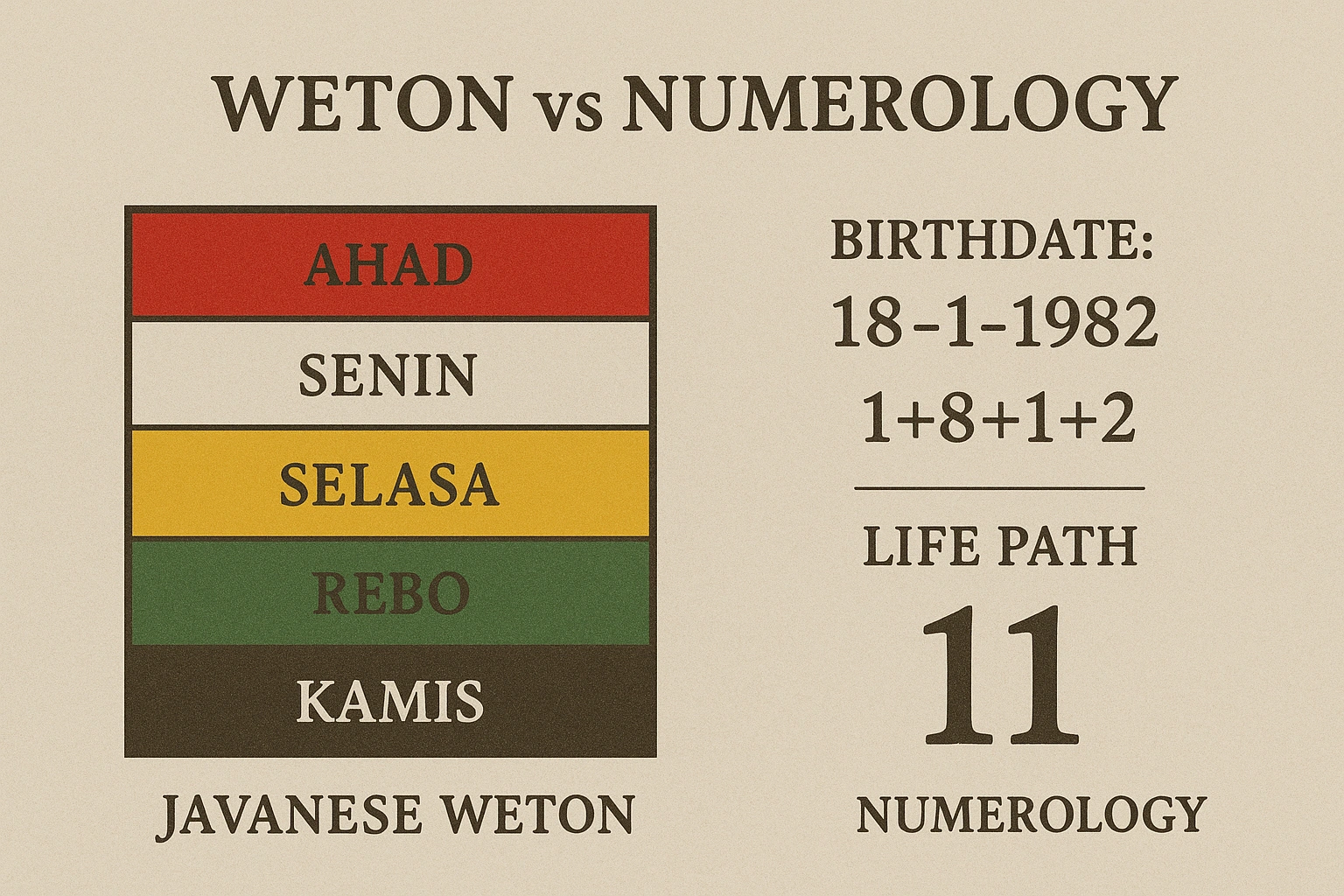
Weton is far more than just a birthday. It is the cornerstone of Javanese divination, a complex system that determines your character, potential marriage compatibility, and even auspicious days for major life events. Its foundation lies in the intersection of two calendars:
- The Saptawara Cycle: The familiar 7-day week (Sunday to Saturday) inherited from Hindu-Buddhist traditions.
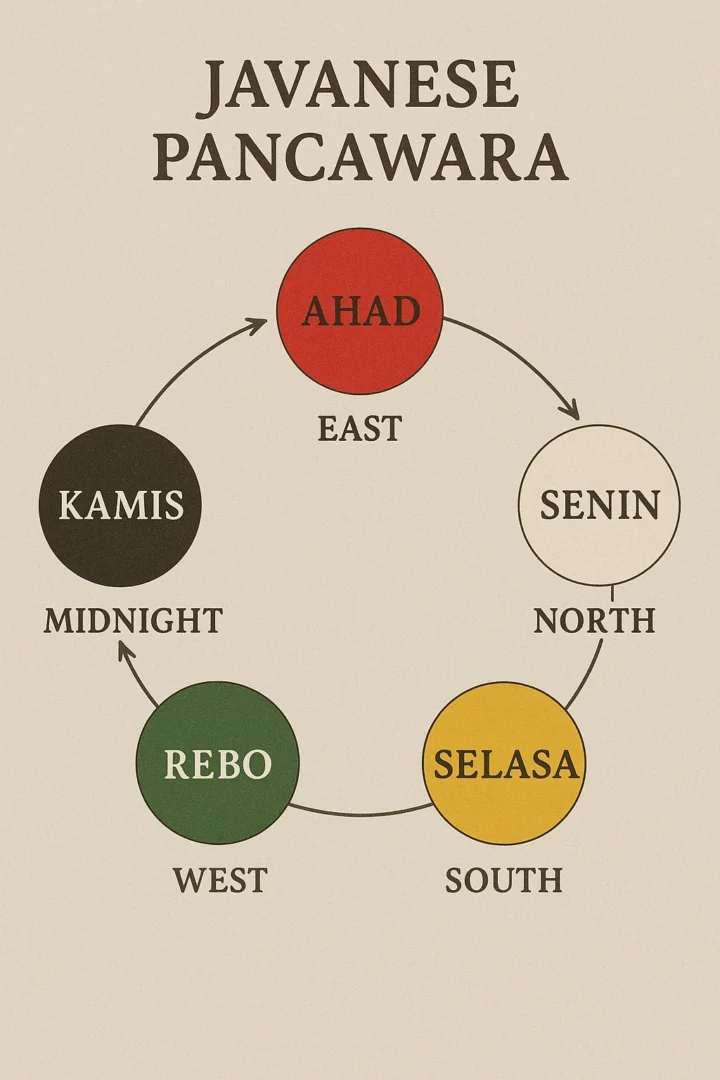
- The Pancawara Cycle: The 5-day Javanese market week: Legi, Pahing, Pon, Wage, and Kliwon.
These two cycles run concurrently, and your Weton is the specific combination of these two days on your date of birth (e.g., Senin Pon or Jumat Kliwon). This combination repeats every 35 days (7 x 5), creating a personal cycle known as a *Wetonan*.
The key to understanding your Weton is its *Neptu*, a numerical value assigned to each day. By adding the Neptu of your Saptawara day and Pancawara day, you arrive at your core Weton number.
Calculating Your Neptu
| Saptawara (7-Day Week) | Pancawara (5-Day Week) | ||
|---|---|---|---|
| Minggu (Sunday) | 5 | Legi | 5 |
| Senin (Monday) | 4 | Pahing | 9 |
| Selasa (Tuesday) | 3 | Pon | 7 |
| Rabu (Wednesday) | 7 | Wage | 4 |
| Kamis (Thursday) | 8 | Kliwon | 8 |
| Jumat (Friday) | 6 | ||
| Sabtu (Saturday) | 9 | ||
Beyond the Numbers: The Philosophy of Neptu
The Neptu values are not random. They are deeply embedded in Javanese cosmology, reflecting a person’s position relative to cosmic forces. Each total Neptu has a specific title, or *laku* (walk/path), that describes the innate character of the individual. Here is a summary of the interpretations:
- Neptu 7 (Lakuning Bumi): The Walk of the Earth. Grounded, protective, calm, but can be stubborn.
- Neptu 8 (Lakuning Geni): The Walk of Fire. Passionate, emotional, secretive, holds grudges.
- Neptu 9 (Lakuning Angin): The Walk of the Wind. Energetic, easily influenced, adaptable, no fixed abode.
- Neptu 10 (Wasesa Segara): The Authority of the Ocean. Wise, forgiving, great potential but can be commanding.
- Neptu 11 (Lakuning Setan): The Walk of the Spirit. Tenacious, not a team player, follows their own path, often misunderstood.
- Neptu 12 (Lakuning Kembang): The Walk of the Flower. Loves peace, charming, puts others first but can be taken advantage of.
- Neptu 13 (Lakuning Lintang): The Walk of the Star. Immense charm, a loner at heart, wise but distant.
- Neptu 14 (Lakuning Mbulan): The Walk of the Moon. An enlightener, charismatic, provides guidance to others.
- Neptu 15 (Lakuning Geni): The Walk of Fire (similar to 8 but with more intensity). Passionate, authoritative, sometimes seen as arrogant.
- Neptu 16 (Lakuning Bumi): The Walk of the Earth (similar to 7 but with more depth). Orderly, protective, follows the rules.
- Neptu 17 (Lakuning Gunung): The Walk of the Mountain. Quiet, wise, thoughtful, but can be moody and stubborn.
- Neptu 18 (Lakuning Paripurna): The Walk of Perfection. Dominating, power-hungry, but also very generous to those they favor.
What is Numerology? The Western Life Path
Western Numerology, especially the Pythagorean system, teaches that everything reduces to a single-digit number, each carrying its own vibration and meaning. In Weton vs Numerology, both traditions show how numbers guide life beyond mere symbols. The core of Numerology is the Life Path Number, while Weton vs Numerology reveal harmony between universal vibration and cultural rhythm. Seen together, Weton vs Numerology offer two paths pointing to the same search for meaning.
This number is derived from your full birth date (day, month, and year) and, in the lens of Weton vs Numerology, is believed to reveal your greater purpose. Weton vs Numerology both suggest that numbers outline the opportunities, challenges, and lessons you will encounter in this lifetime. In practice, Weton vs Numerology turn these numbers into a kind of blueprint for your personal journey. Reading Weton vs Numerology side by side helps you see how destiny unfolds through both universal patterns and cultural wisdom.
Calculating and Understanding Your Life Path Number
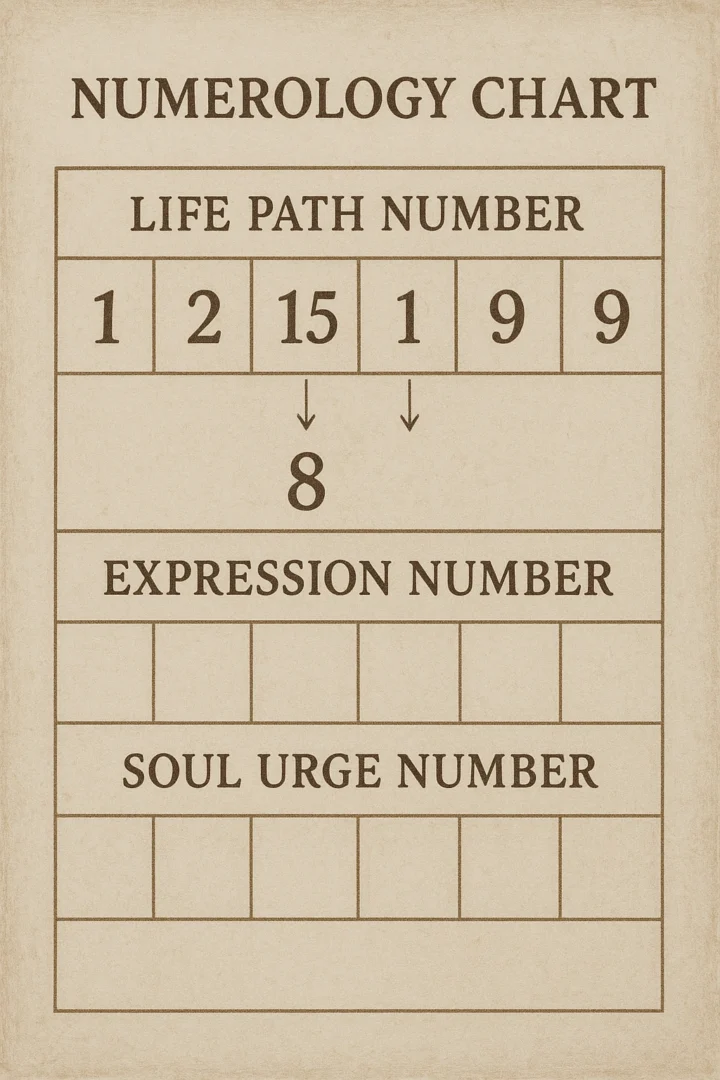
The process involves reducing your day, month, and year of birth to single digits and then adding them together. Here’s a quick summary of what each Life Path number represents:
- 1: The Leader. Independent, innovative, pioneering.
- 2: The Peacemaker. Diplomatic, cooperative, sensitive.
- 3: The Communicator. Creative, expressive, social, joyful.
- 4: The Builder. Stable, hardworking, practical, disciplined.
- 5: The Adventurer. Freedom-loving, versatile, dynamic.
- 6: The Nurturer. Responsible, loving, community-oriented.
- 7: The Seeker. Analytical, spiritual, introspective, wise.
- 8: The Powerhouse. Ambitious, authoritative, successful.
- 9: The Humanitarian. Compassionate, idealistic, selfless.
- Master 11: The Visionary (a more intuitive and spiritual 2).
- Master 22: The Master Builder (a more powerful and practical 4).
- Master 33: The Master Teacher (a more impactful and loving 6).
Practical Applications: Destiny, Compatibility, and Timing
Both systems extend far beyond mere personality profiling. They are practical tools used to navigate life’s major decisions. Here’s how they are applied.
Weton’s Power in Javanese Life
In traditional Javanese society, Weton calculations are indispensable for major life events, especially marriage. The compatibility of a couple (*jodoh*) is determined by adding their individual Neptu values and analyzing the result using specific formulas. The most common method involves dividing the sum by 9. The remainder points to one of several outcomes:
For example, if a man with Neptu 13 marries a woman with Neptu 12, their total is 25. When divided by 9, the remainder is 7, which corresponds to *Topo* (Asceticism). This predicts significant hardship in the early years of marriage, which they must overcome to achieve happiness later in life. This kind of calculation is taken very seriously and can influence a family’s decision to approve a union.
Numerology for Career and Personal Growth
Numerology is often used as a guide for personal and professional development. A Life Path 8, for instance, would be encouraged to pursue roles involving leadership, finance, or entrepreneurship. They are advised to embrace their natural ambition. Furthermore, numerology uses “Personal Year Cycles” to understand the theme of a given year. By adding your day and month of birth to the current year, you find your Personal Year Number (from 1 to 9). A “1” year is for new beginnings, while a “9” year is for endings and release. This helps individuals align their actions with the energy of the time.
Case Studies: Do The Numbers Align?
Now for the ultimate test. Let’s analyze three different birth dates using both systems and see how the interpretations compare, contrast, and complement each other.
Case Study 1: September 28, 2025
- Weton Calculation: The day is Minggu Kliwon. Neptu = 5 (Minggu) + 8 (Kliwon) = 13.
- Weton Interpretation (Neptu 13, Lakuning Lintang): A charming loner with quiet wisdom. Not easily influenced and prefers solitude, like a distant star.
- Numerology Calculation: (9) + (2+8) + (2+0+2+5) = 9 + 10 + 9 = 28 -> 2+8=10 -> 1+0=1. Life Path 1.
- Numerology Interpretation (Life Path 1): The Leader. Independent, pioneering, and driven to forge their own path.
- The Verdict: A strong agreement. Both systems point to profound individuality. Weton’s “loner” aligns perfectly with Numerology’s “independent pioneer.” They describe the same core trait from a social (Weton) and motivational (Numerology) perspective.
Case Study 2: May 15, 1990
- Weton Calculation: The day is Selasa Kliwon. Neptu = 3 (Selasa) + 8 (Kliwon) = 11.
- Weton Interpretation (Neptu 11, Lakuning Setan): The Walk of the Spirit. A tenacious individualist who follows their own counsel. A risk-taker, often seen as a lone wolf.
- Numerology Calculation: (5) + (1+5) + (1+9+9+0) = 5 + 6 + 19 = 30 -> 3+0=3. Life Path 3.
- Numerology Interpretation (Life Path 3): The Communicator. Creative, social, expressive, and optimistic. Finds joy in connecting with others.
- The Verdict: A fascinating contrast. Here the systems describe two different aspects of a person. A Life Path 3’s social creativity might be expressed through the tenacious, unconventional methods of a Neptu 11. This could be an artist who breaks all the rules or a speaker whose ideas are radical. The Weton describes the *methodology* (uncompromising, individualistic), while Numerology describes the *output* (creative communication). They don’t contradict but show a complex, multi-layered personality.
Case Study 3: December 12, 1980
- Weton Calculation: The day is Jumat Pon. Neptu = 6 (Jumat) + 7 (Pon) = 13.
- Weton Interpretation (Neptu 13, Lakuning Lintang): The Walk of the Star. Charming and well-liked, but fundamentally a loner who needs solitude to recharge. Wise but distant.
- Numerology Calculation: (1+2) + (1+2) + (1+9+8+0) = 3 + 3 + 18 -> 3 + 3 + 9 = 15 -> 1+5=6. Life Path 6.
- Numerology Interpretation (Life Path 6): The Nurturer. Responsible, community-oriented, and driven by a sense of duty to family and society. Finds purpose in serving others.
- The Verdict: A revealing paradox. How can a community-focused “Nurturer” also be a solitary “Star”? This points to a person who may be a beloved leader, teacher, or parent (Life Path 6) who carries the burden of their responsibilities alone. They are the pillar for others to lean on, but they retreat into solitude (Neptu 13) to find their own strength. The two systems together paint a poignant picture of a public-facing helper with a private, introspective inner world.
Conclusion: Two Lenses, One Truth
The comparison of Weton vs Numerology reveals that there is more than one way to decode the numerical secrets of our birth. Weton vs Numerology places us within both cosmic and personal perspectives, helping us see harmony between self and universe. In Weton vs Numerology, the Javanese cycle defines innate character and social “vibration,” while Numerology traces a personal journey of meaning. Understanding Weton vs Numerology side by side allows us to read life as both collective rhythm and individual mission.
Neither system is superior. Weton vs Numerology instead offer two invaluable lenses through which to view a single, complex truth: you. By exploring Weton vs Numerology together, you can gain a richer, more holistic picture of your strengths, challenges, and the unique path you are destined to walk. Weton vs Numerology show that while your destination might be written in the stars, the road you walk is a blend of cultural rhythm and individual will. In this sense, Weton vs Numerology complement each other as guides to both inner and outer balance.