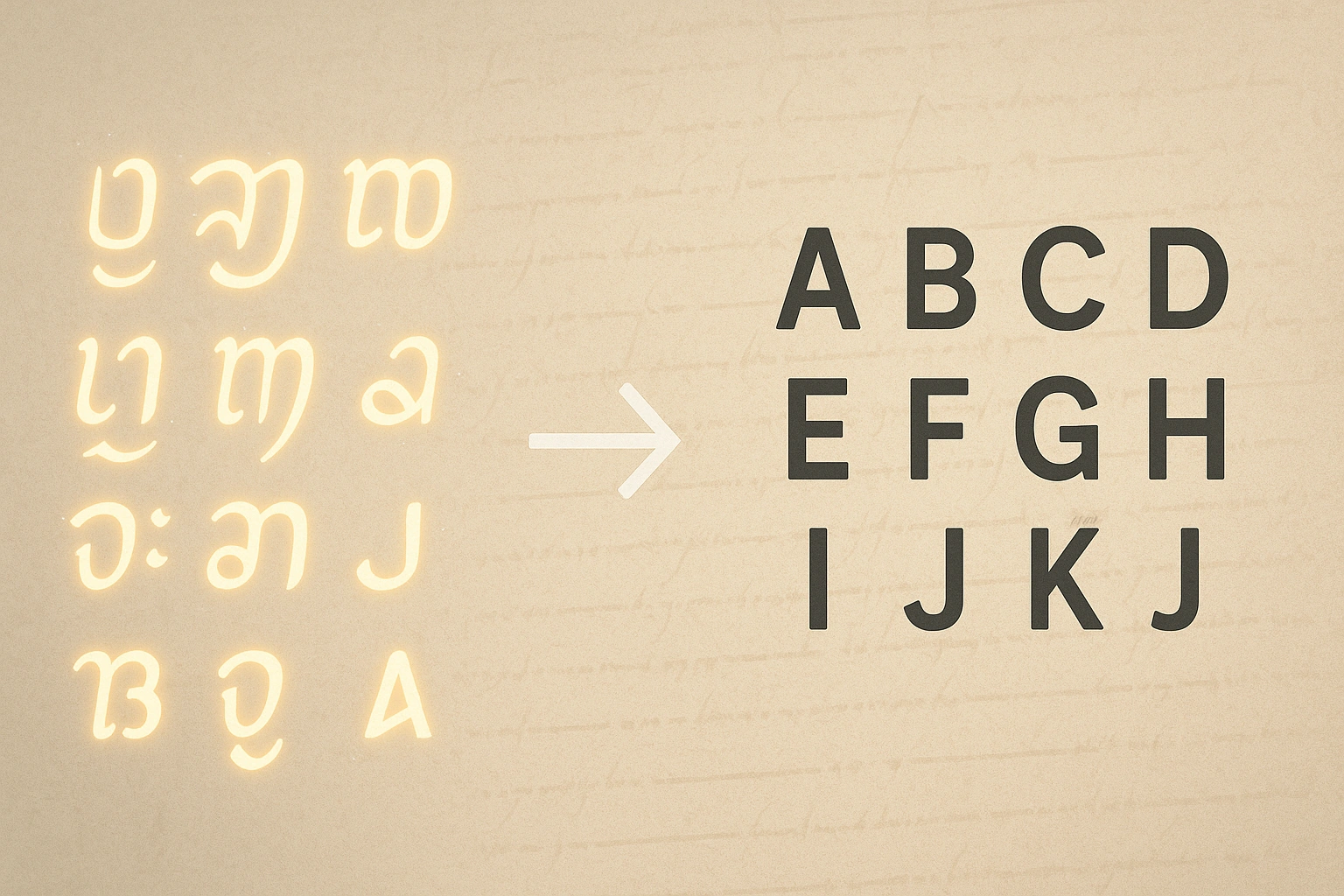
You encounter a line of elegant, flowing Javanese script—perhaps in a historical text, a piece of art, or a modern design. It’s beautiful, mysterious, and utterly unreadable unless you’ve dedicated significant time to learning the 20 base letters, dozens of vowel markers, and complex consonant-stacking rules. What if there was a way to decipher that text, to understand its meaning, without having to master the entire writing system from scratch?
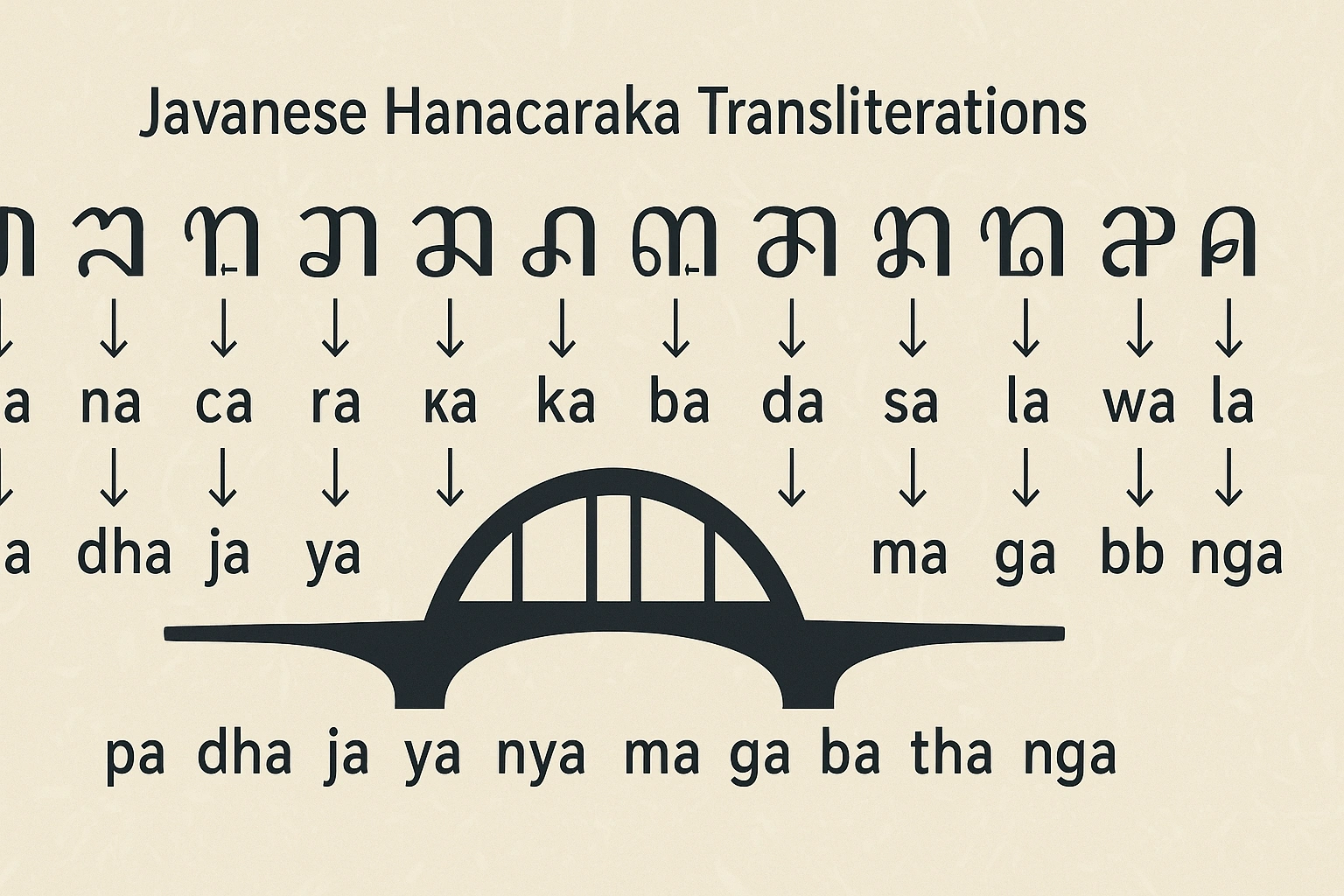
There is. It’s called Javanese romanization, or latinization. This is the process of converting Javanese script (Hanacaraka) into the familiar Latin alphabet we use for English. It’s a bridge that makes the inaccessible accessible. This guide is your complete map to crossing that bridge. We’ll demystify the process of transliteration, provide a comprehensive cheat sheet for every character, and walk you through a real example. By the end of this article, you’ll be able to look at a line of Javanese script and confidently convert it into readable text.
What Exactly is Romanization? Transliteration vs. Transcription
Before we start, it’s important to understand there are two main ways to convert a script, and the distinction is crucial for accurate reading.
- Transliteration: This is a direct, letter-for-letter conversion from one writing system to another. Each Javanese character corresponds to a specific Latin letter or combination of letters. It’s a precise, rule-based system focused on accurately representing the written form. The goal is lossless conversion, meaning you could theoretically convert it back to the original script without any ambiguity. This is what our guide will focus on.
- Transcription: This method focuses on representing the sounds of the language as it’s spoken. It’s about phonetics, not orthography. For example, in spoken Javanese, a word written as “Jawa” might be pronounced closer to “Jowo.” A transcription would write “Jowo” to reflect the pronunciation, while a transliteration would strictly write “Jawa.”
For reading texts, academic research, and digital archiving, transliteration is the most powerful tool. It allows you to reconstruct the original Javanese spelling with perfect accuracy. Official systems for this are often discussed and standardized by linguistic bodies, similar to the efforts documented by the Library of Congress for various scripts.
The Complete Javanese Romanization Cheat Sheet
This is the core of your new skill. Below are the standard transliterations for the Javanese script. We recommend downloading the PDF version to keep as a handy, one-page reference.
Download the Complete Cheat Sheet
Get a high-resolution, one-page PDF of our Javanese Romanization guide.
1. The 20 Base Letters (Aksara Nglegena)
Each of these base letters is an abugida, meaning it represents a consonant with an inherent “-a” vowel sound unless modified by another symbol.
| Script | Romanization | Script | Romanization |
|---|---|---|---|
| ꦲ | ha | ꦥ | pa |
| ꦤ | na | ꦝ | dha |
| ꦕ | ca | ꦗ | ja |
| ꦫ | ra | ꦪ | ya |
| ꦏ | ka | ꦚ | nya |
| ꦢ | da | ꦩ | ma |
| ꦠ | ta | ꦒ | ga |
| ꦱ | sa | ꦧ | ba |
| ꦮ | wa | ꦛ | tha |
| ꦭ | la | ꦔ | nga |
Crucial Note: Pay close attention to the dental vs. retroflex consonants, which are distinct in Javanese. dha (ꦝ) is a soft ‘d’ sound, while da (ꦢ) is a hard ‘d’ (like in English “door”). Similarly, tha (ꦛ) is a soft ‘t’, while ta (ꦠ) is a hard ‘t’ (like in English “top”). This is a common point of confusion for beginners.
2. The Vowel Diacritics (Sandhangan Swara)
These symbols are placed around a base letter to change its inherent “-a” vowel to something else.
| Symbol | Name | Changes Vowel to… | Example (ka) | Result |
|---|---|---|---|---|
| ◌ꦶ | Wulu | i | ꦏꦶ | ki |
| ◌ꦸ | Suku | u | ꦏꦸ | ku |
| ◌ꦺ | Taling | é (as in “say”) or è (as in “get”) | ꦏꦺ | ké / kè |
| ◌ꦼ | Pepet | e (schwa, like the ‘a’ in “about”) | ꦏꦼ | ke |
| ◌ꦺ◌ꦴ | Taling Tarung | o | ꦏꦺꦴ | ko |
3. Ending Consonants & Vowel Killer (Panyigeg Wanda)
These are used to end a syllable with a specific consonant sound, or to nullify the inherent vowel.
| Symbol | Name | Adds… | Example (ka) | Result |
|---|---|---|---|---|
| ◌ꦂ | Layar | -r ending | ꦏꦂ | kar |
| ◌ꦁ | Cecak | -ng ending | ꦏꦁ | kang |
| ◌ꦃ | Wignyan | -h ending | ꦏꦃ | kah |
| ◌꧀ | Pangkon | (Kills the inherent vowel) | ꦏ꧀ | k |
The Pangkon (꧀) is the most important and versatile symbol for transliteration. It signals that a consonant stands alone, without its “-a” vowel. It is the fundamental tool for creating consonant clusters, as we will see with the pasangan.
A Practical Example: Romanizing “Sugeng Rawuh”
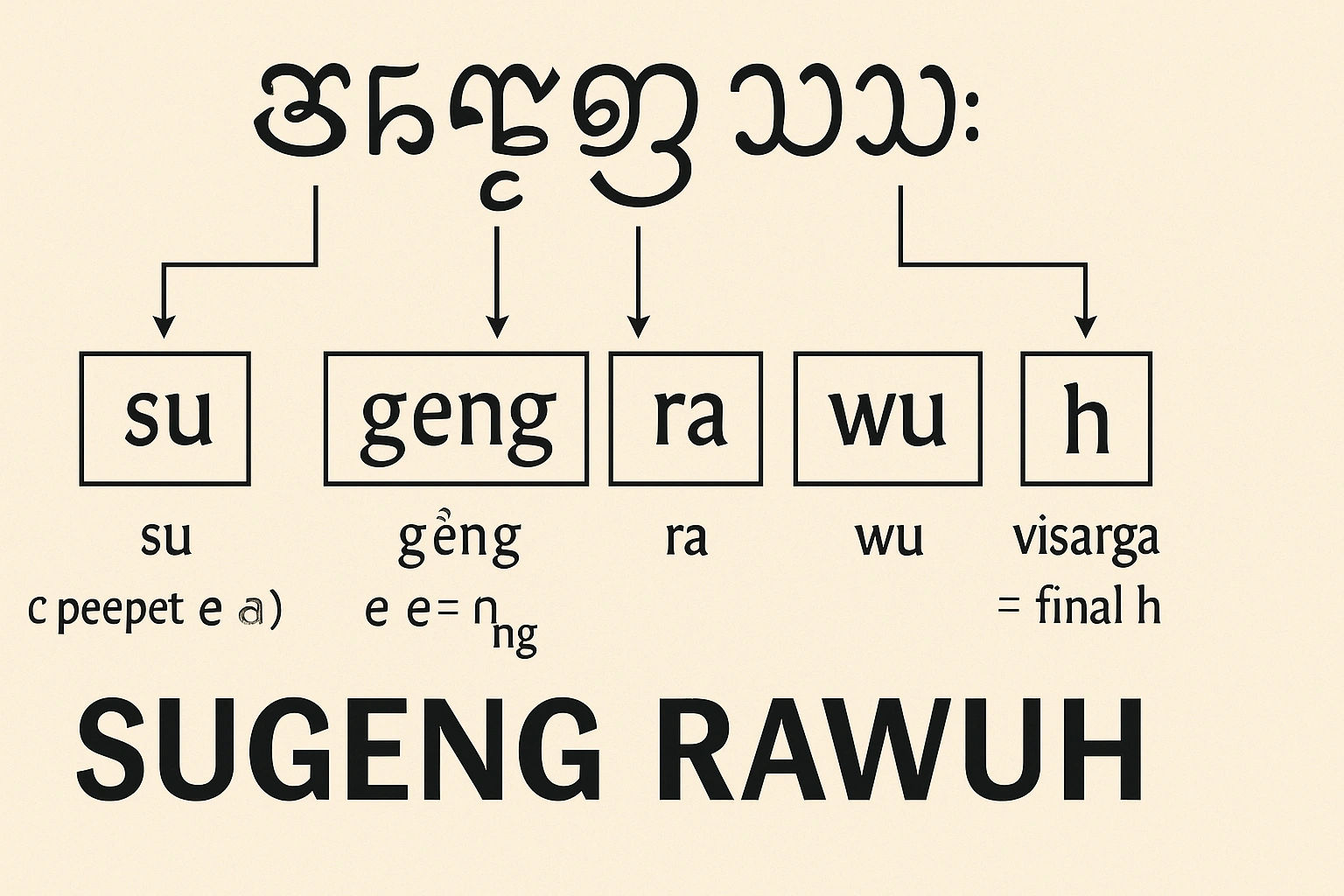
Let’s transliterate the Javanese welcome phrase: ꦱꦸꦒꦼꦁꦫꦮꦸꦃ. We’ll break it down character by character.
- First character: ꦱꦸ
- The base is ꦱ. We look at our cheat sheet: ꦱ = sa.
- It has a ◌ꦸ (Suku) diacritic underneath. Our chart says this changes the vowel to ‘u’.
- So, we replace the ‘a’ in ‘sa’ with ‘u’. Result: su.
- Second character cluster: ꦒꦼꦁ
- The base is ꦒ. From the chart, this is ga.
- It has a ꦼ (Pepet) above it, which changes the vowel to the schwa ‘e’. So, ꦒꦼ = ge.
- It also has a ꦁ (Cecak) above that, which adds an ‘-ng’ ending to the syllable.
- So, ꦒꦼꦁ becomes geng.
- Third character: ꦫ
- This is a simple base letter with no modifiers. Our chart shows ꦫ = ra.
- Fourth character cluster: ꦮꦸꦃ
- The base is ꦮ = wa.
- It has a ◌ꦸ (Suku) underneath, changing the vowel to ‘u’. So, ꦮꦸ = wu.
- It has a ꦃ (Wignyan) after it, which adds a final ‘-h’ sound.
- So, ꦮꦸꦃ becomes wuh.
Putting it all together, we have: su-geng ra-wuh. You’ve just read Javanese!
The Final Challenge: Pasangan (Subscript Letters)
The final piece of the puzzle is the pasangan. This is what allows for complex consonant clusters in the middle of words. When you see a character written below another one, it is a subscript form. Its function is to cancel the inherent ‘-a’ vowel of the character it’s attached to, allowing its own consonant sound to follow immediately. For example, to write “aksara” (ꦲꦏ꧀ꦱꦫ), you write ‘a’ (ꦲ), then ‘ka’ (ꦏ), and then attach the pasangan form of ‘sa’ underneath the ‘ka’. The pasangan for ‘sa’ is ꧀ꦱ. When attached, it looks like this: ꦏ꧀ꦱ. This combination is transliterated as “ksa”.
The rule is simple: The presence of a pasangan is functionally the same as using a pangkon on the character above it. Most modern transliteration systems reflect this simply by writing the consonants next to each other, like “ks”. This aspect is crucial for the digital preservation of manuscripts, a field where organizations like the SEALANG Lab provide valuable resources for researchers.
Pasangan Cheat Sheet
Here is a list of the base letters and their corresponding pasangan forms for your reference.
| Base | Pasangan | Base | Pasangan |
|---|---|---|---|
| ꦲ ha | ꧀ꦲ | ꦥ pa | ꧀ꦥ |
| ꦤ na | ꧀ꦤ | ꦝ dha | ꧀ꦝ |
| ꦕ ca | ꧀ꦕ | ꦗ ja | ꧀ꦗ |
| ꦫ ra | ꧀ꦫ | ꦪ ya | ꧀ꦪ |
| ꦏ ka | ꧀ꦏ | ꦚ nya | ꧀ꦚ |
| ꦢ da | ꧀ꦢ | ꦩ ma | ꧀ꦩ |
| ꦠ ta | ꧀ꦠ | ꦒ ga | ꧀ꦒ |
| ꦱ sa | ꧀ꦱ | ꦧ ba | ꧀ꦧ |
| ꦮ wa | ꧀ꦮ | ꦛ tha | ꧀ꦛ |
| ꦭ la | ꧀ꦭ | ꦔ nga | ꧀ꦔ |
Conclusion: You Can Read Javanese Now
While mastering the Javanese script for writing takes practice, you now possess the key to reading it. Javanese romanization is a powerful skill that unlocks a world of culture, history, and art. By using the transliteration rules and our cheat sheet, you can systematically convert any standard Javanese text into readable Latin letters.
The next time you see Hanacaraka, don’t see it as an obstacle. See it as a puzzle you now have the tools to solve. Now that you can read it, your next step might be to learn how to write it by hand or type it correctly in your documents. The journey into the rich world of Javanese literature and culture is now open to you.