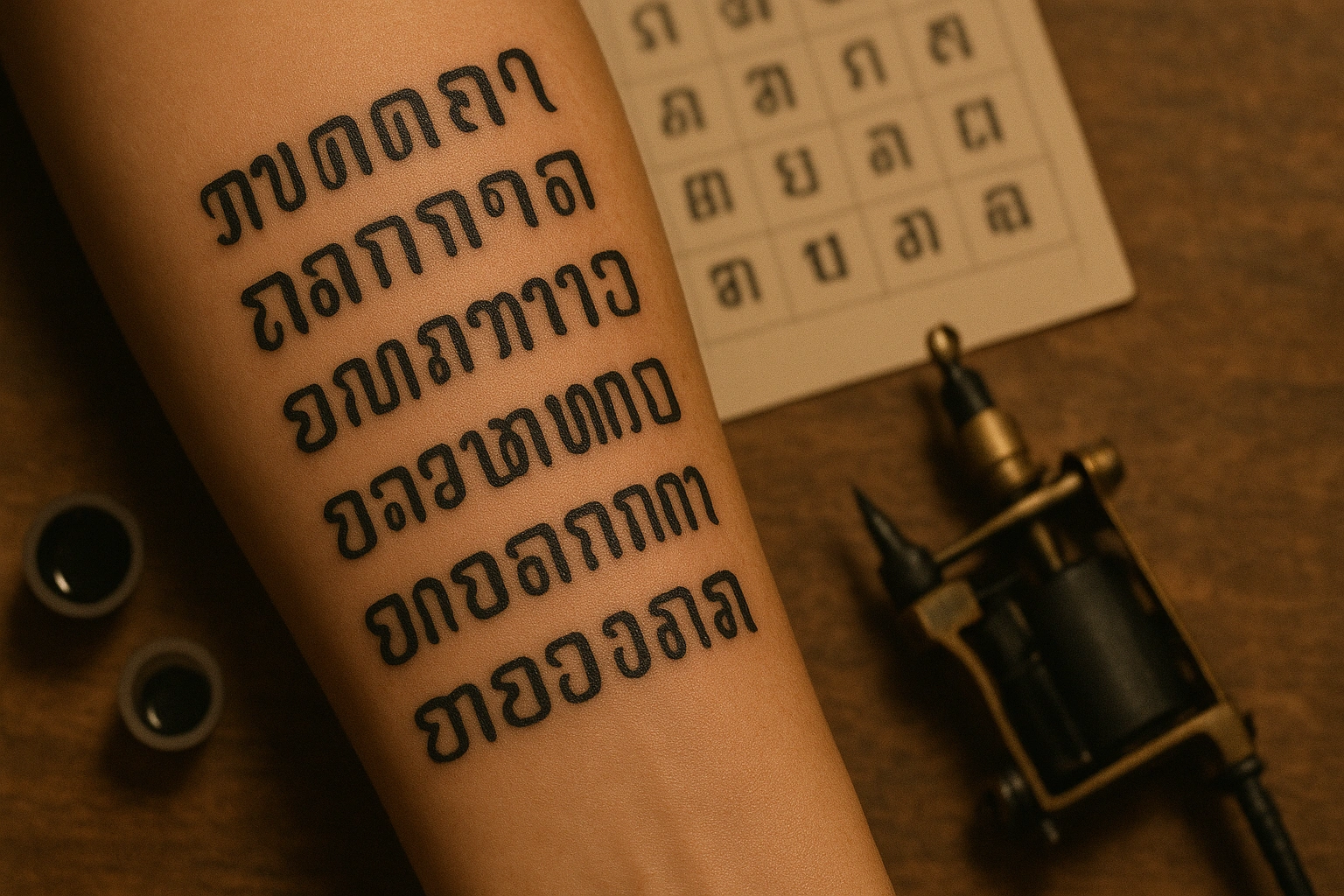
You’ve decided on a phrase that holds deep personal significance. You’ve found a tattoo artist whose work you admire. You’re ready to commit to a Javanese tattoo, a piece of permanent art that connects you to the profound philosophy and beauty of Javanese culture. The Javanese script, or Hanacaraka, is an increasingly popular choice for tattoos due to its graceful, flowing lines and deep cultural roots.
But here lies a dangerous and expensive pitfall: Javanese is an incredibly complex writing system, and getting it wrong is disastrously easy. A Javanese tattoo may look stunning at first glance, but without proper knowledge, even a small mistake can completely alter its meaning. This is why anyone planning a Javanese tattoo must approach the process with both cultural respect and linguistic care.
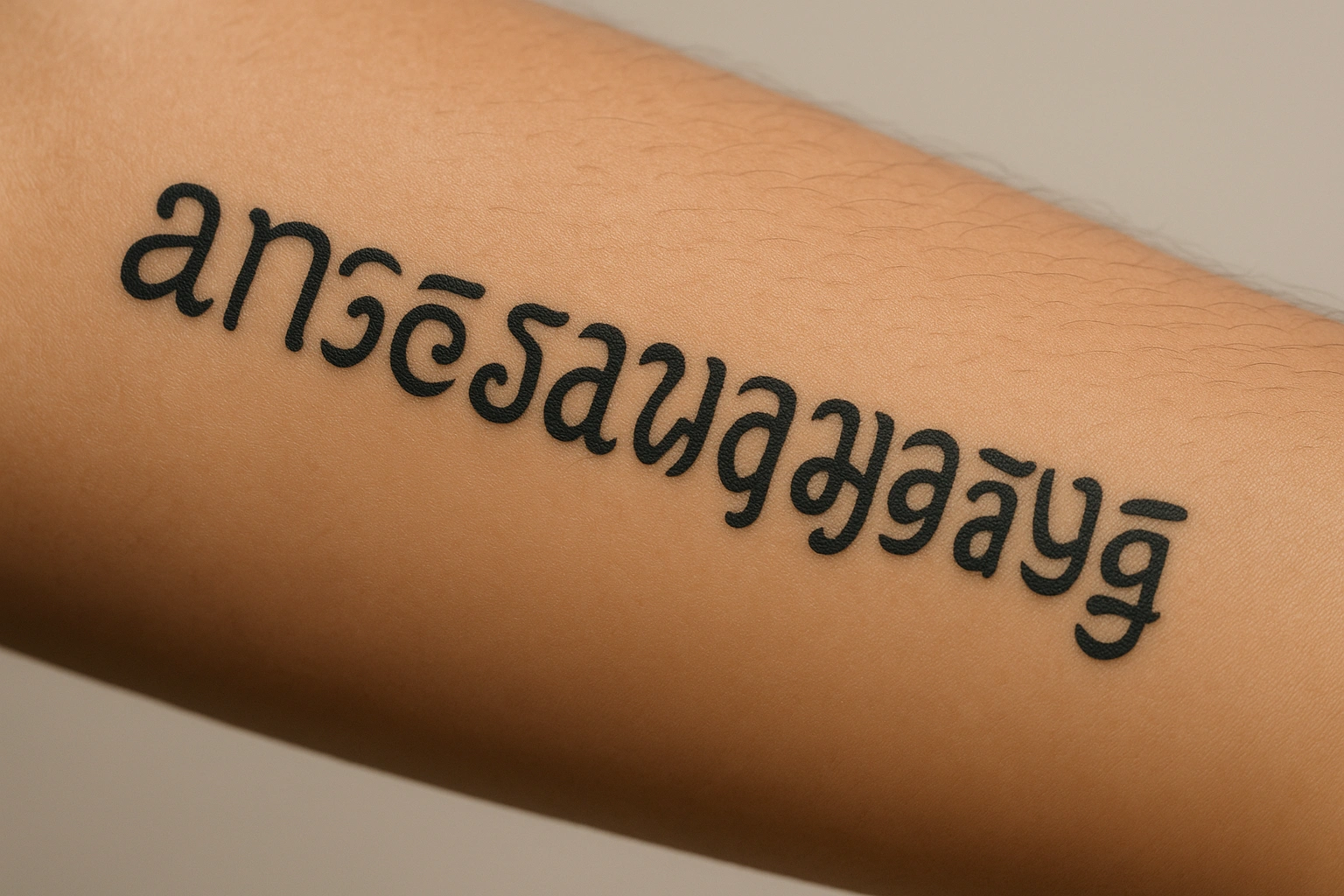
The internet is full of Javanese tattoo mistakes—phrases meant to say “love” end up as nonsense. Hanacaraka’s rules make errors easy, and a simple Javanese tattoo screenshot won’t protect you. Even the best artist isn’t a linguist, and one wrong stroke can ruin the meaning. This guide is your Javanese tattoo checker, showing common errors and a step-by-step review to ensure your Javanese tattoo carries the meaning you truly want.
Why Javanese Script is So Tricky for Tattoos
Understanding why mistakes in a Javanese tattoo are so common is the first step to avoiding them. A Javanese tattoo must follow the exact rules of Hanacaraka, which is not like the Latin alphabet where letters are simply placed side by side. Since a Javanese tattoo uses an abugida system, every character carries its own rules, making precision essential. Without this understanding, even a simple Javanese tattoo can easily lose its intended meaning.
- It’s Not an Alphabet: In an abugida, each base character (like ꦏ, ‘ka’) has an inherent ‘a’ vowel. To change that vowel to ‘i’, ‘u’, ‘e’, or ‘o’, you must add diacritics called *sandhangan*.
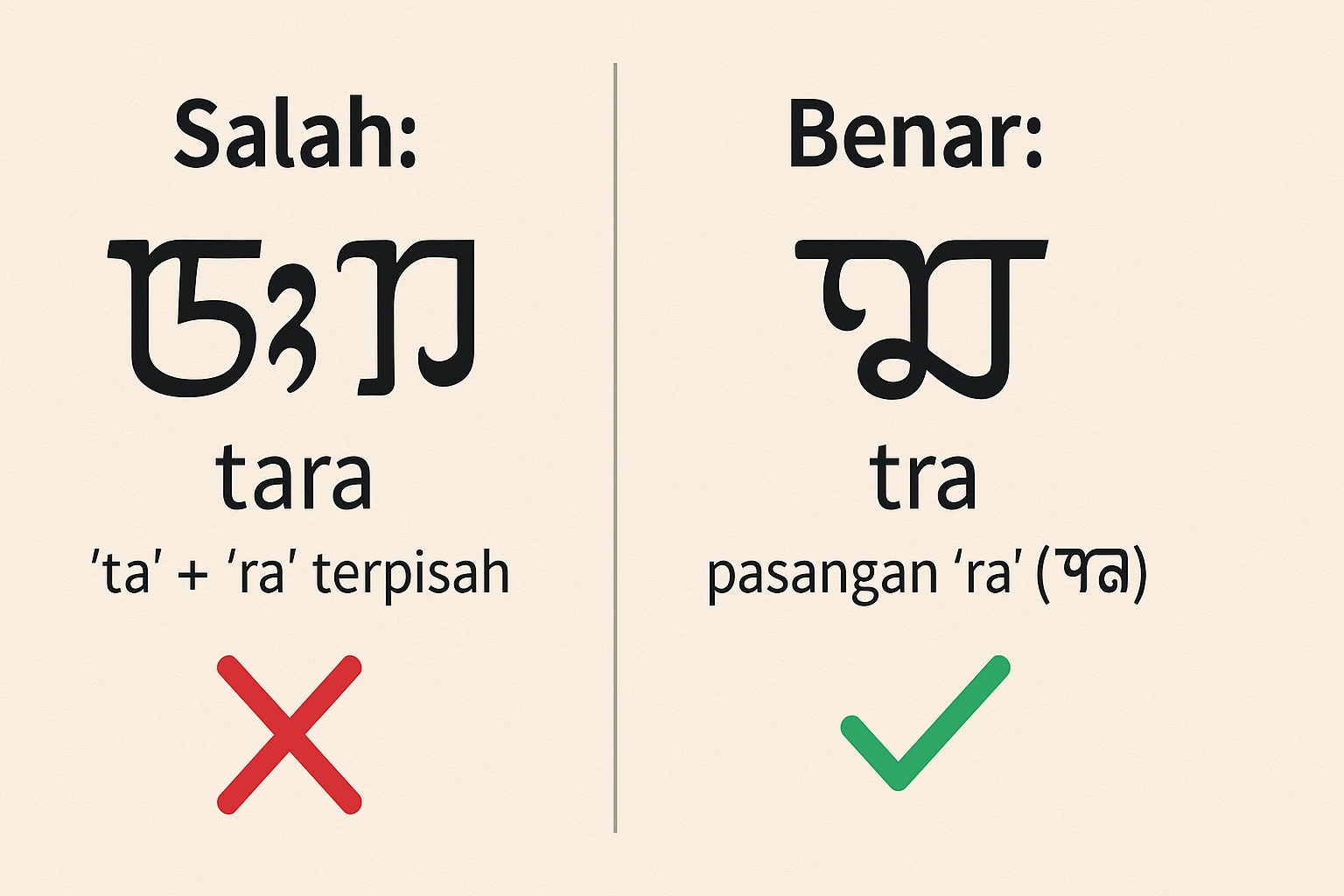
- Consonants Stack, Not Line Up: To write two consonants together (like ‘tr’ in “tresna” – love), you don’t just put two letters next to each other. You must use a special subscript form of the second letter, called a *pasangan*. This is the single biggest source of errors in Javanese tattoos.
- Online Translators Are a Trap: Automated translators are notoriously bad at handling the complex rules of *pasangan*. They often just output the base characters, resulting in a grammatically incorrect and often nonsensical string of syllables.
- Style vs. Substance: Beautiful calligraphic fonts online can be misleading. They often use stylistic ligatures that a tattoo artist, unfamiliar with the script, might misinterpret as part of the letter, leading to errors.
In short, you cannot “eyeball” a Javanese script tattoo. It must be constructed correctly, rule by rule.
The DIY Spell-Check: A 5-Step Verification Process
Before you ever let a needle touch your skin, you must become your own first-line editor. This process will help you spot obvious errors in a design you’ve received.
Step 1: Get the Romanization Right
Start with the Latin letters. The spelling must be based on the Javanese system, not English phonetics. For example, the sound ‘o’ is almost always written with an ‘a’ in Javanese. The word for “love” is spelled “tresna,” not “tresno.” Getting this base spelling correct is crucial. You can use our Javanese Romanization Guide to help.
Step 2: Break it Down into Syllables
Take your correctly spelled word and break it down. For example, “tresna” breaks down into “tres-na.” This helps you identify where you’ll need a consonant cluster.
Step 3: Match the Base Letters (*Aksara Nglegena*)
Using a reliable chart (like the one in our typing guide), match the first letter of each syllable to its base form. For “tresna,” you’d start with ꦠ (‘ta’) and ꦤ (‘na’).
Step 4: The Crucial Consonant Cluster (*Pasangan*)
This is where most errors happen. In “tresna,” you need to combine ‘t’ and ‘r’. You do this by taking the base character for ‘ta’ (ꦠ) and attaching the subscript form (*pasangan*) of ‘ra’ (꧀ꦫ) underneath it. This creates the combined form ꦠꦿ, which correctly reads “tra.”
Step 5: Add Vowels (*Sandhangan*) and Endings
Now, modify the vowels. In our example “tresna,” the ‘e’ sound is made by adding a *taling* diacritic (ꦺ) *before* the character. So, ꦠꦿ becomes ꦠꦿꦺ, which reads “tre.” Then you add the final syllable, ꦱ꧀ꦤ (‘sna’). Putting it all together, you get ꦠꦿꦺꦱ꧀ꦤ (tresna).
Common Tattoo Design Mistakes to Avoid
When you get a design back from a non-expert, look for these specific red flags.
- The “Stacked Letters” Error: As shown above, if the artist has simply placed two Javanese characters next to each other when they should be combined with a *pasangan*, the design is wrong.
- Incorrect Vowel Placement: Vowel diacritics have very specific placement rules (above, below, before, or flanking the consonant). If they are floating randomly, it’s incorrect.
- Using a *Pangkon* in the Middle of a Word: The *pangkon* (꧀) is a “vowel killer” that should only be used at the very end of a sentence or phrase. If you see it used to connect two consonants in the middle of a word, it is almost always wrong and a sign that a *pasangan* should have been used instead.
- Getting the Meaning Wrong: This is more subtle. The word might be spelled correctly, but does it mean what you think it means? “Padhang” can mean “bright,” but it can also mean “savannah.” “Asih” is a deep, compassionate love, while “tresna” is more of a romantic love. Ensure the cultural connotation matches your intention.
Where to Get a Reliable Hanacaraka Design Review
The DIY check is a good first step, but for something as permanent as a tattoo, a second, expert opinion is essential.
- Professional Translation Services: Look for services that specifically list expertise in Indonesian or Javanese and mention that they use human translators, not machines.
- University Language Departments: If there is a university near you with a Southeast Asian Studies or linguistics department, a professor or graduate student may be willing to review your design for a small fee. This is a highly reliable option.
- Online Communities (with caution): Forums like Reddit’s r/translator or specific language-learning communities can be helpful. However, always seek multiple opinions. Do not trust a single anonymous user. Post your design and the intended meaning and ask for a review from several native speakers.
- Cultural Institutions: Contacting cultural centers or Indonesian embassies can also be a good route. They may have staff who can help or can point you to a trusted resource.
Working with Your Tattoo Artist
Once you have a 100% verified design, communication with your artist is key.
- Provide a Clean, High-Resolution Image: Don’t give them a blurry screenshot. Provide a large, clear vector or high-resolution PNG of the final design. Using a proper font, like the one in our Hanacaraka font pack, is ideal for creating this master copy.
- Explain the Rules: Briefly explain to your artist that this is a script where every single dot and line has a specific meaning and placement. It’s not like a drawing that allows for artistic liberties with the strokes.
- Check the Stencil Meticulously: This is your final chance to catch an error. When the artist applies the stencil to your skin, compare it line-for-line with your master copy. Is a diacritic missing? Is a *pasangan* connected correctly? Do not be afraid to speak up if something looks even slightly off.
Conclusion: Ink with Confidence
A Javanese tattoo is a beautiful and profound way to carry a meaningful message with you forever. But its permanence is exactly why being careful is so important. By treating the Javanese tattoo process with respect—understanding the basics of the script, reviewing it carefully, and getting expert verification—you can avoid costly mistakes. Using a trusted Javanese tattoo checker ensures that your design becomes a true source of pride. In the end, a Javanese tattoo should be both artistically stunning and culturally accurate, giving you confidence for a lifetime.
Your tattoo is a commitment. Honor that commitment by ensuring it is not just artistically beautiful, but also culturally and linguistically perfect.