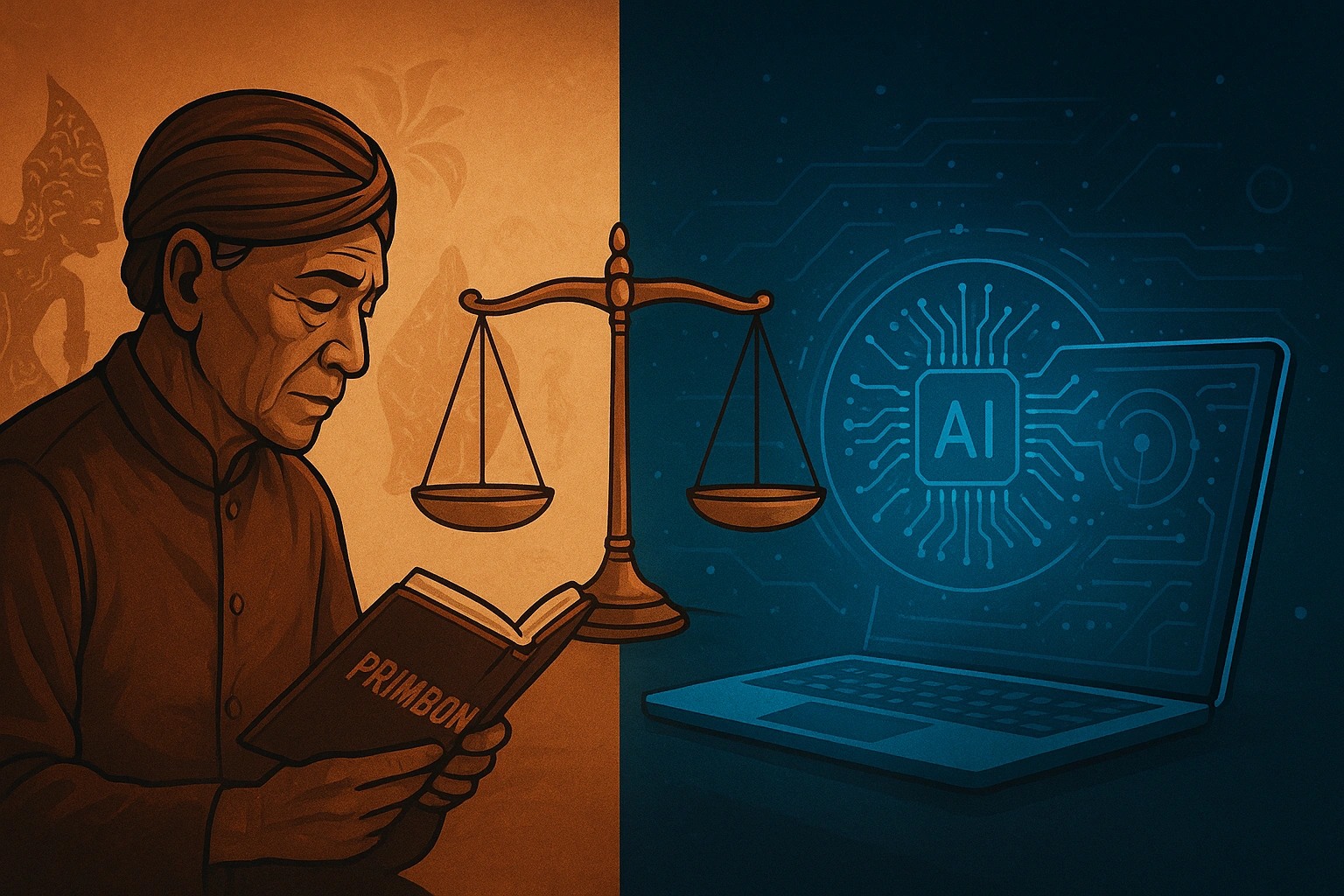
Today, with a few clicks on a screen, an **AI Weton calculator** can generate the same raw data in seconds. This stark collision of **tradition vs. tech** raises a fascinating and urgent question: can an algorithm, no matter how sophisticated, truly replicate the wisdom of an elder? This article explores the capabilities, limitations, and pressing **ethics** of AI in the sacred space of Javanese divination, comparing the cold logic of the silicon brain with the warm, beating heart of a grandparent’s guidance.
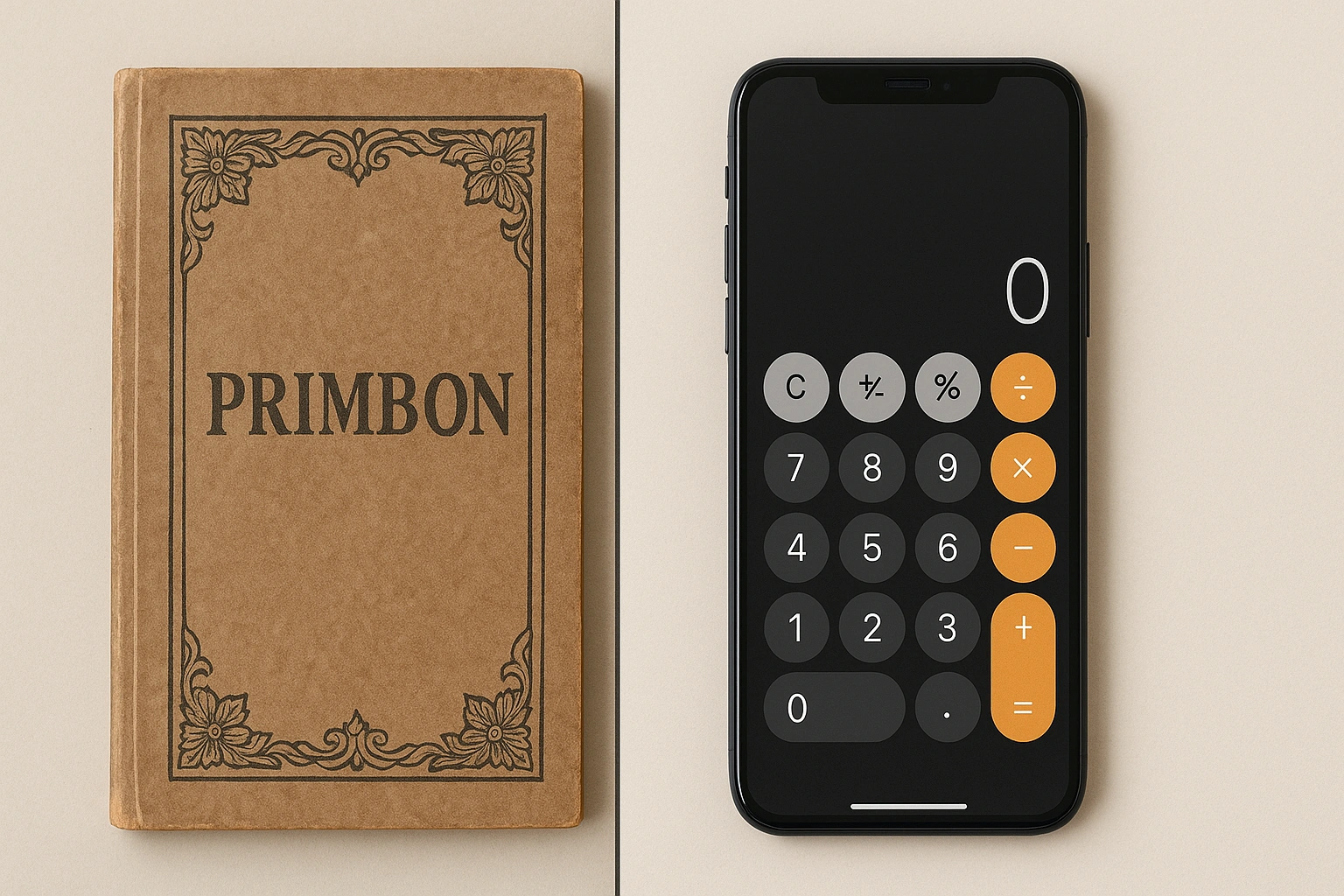
The Anatomy of a Reading: Two Worlds of Interpretation
Before we can judge them, we must understand them. Both methods aim to determine your Weton—the unique celestial signature formed by the intersection of the seven-day week (*dina*) and the five-day Javanese market week (*pasaran*). But how they arrive at their conclusions couldn’t be more different.
The Elder’s Method: A Living, Breathing Artform
This is a holistic, analog approach. It relies on memorized formulas, intricate knowledge of the 30 Wuku cycles and the ever-turning Pasaran, and a deep, intuitive understanding of the *neptu* (numerical values) that give each day its unique energetic weight. The interpretation is deeply personal, often tailored to the individual’s life context, family lineage, and even their current struggles and aspirations. An elder doesn’t just read a chart; they read the person.
The AI Calculator Method: The Science of Data
This is a purely computational approach. An **AI Weton calculator** uses sophisticated algorithms fed with vast datasets from digitized *primbon* texts and historical calendar data. It excels at pattern recognition and lightning-fast calculations, delivering a precise result based exclusively on the data it has been trained on. Our own Javanese Weton Calculator is a prime example of this technology, designed for speed and precision.
Round 1: The Quest for Accuracy – Calculation vs. Context
When it comes to pure mathematical **accuracy**, the AI has an undeniable edge. An algorithm eliminates human error. It will never forget a *neptu* value, miscount the days, or miscalculate the complex 35-day *wetonan* cycle. It delivers the correct Weton, *neptu*, and a list of associated traits with 100% precision according to its programming. For raw data, the machine is flawless.
However, accuracy in the Javanese worldview is more than just numbers. An elder’s reading is meaningful in ways an AI Weton calculator cannot fully capture. While an AI Weton calculator gives precise results, it cannot account for the time of birth, family context, or the energy they perceive from a person. Even using an AI Weton calculator, two people born on Rabu Pon might get very different guidance, something only an elder can provide. The AI Weton calculator is helpful for calculation, but the human touch—personalized wisdom—is irreplaceable.
The Elder (The “Why”)
- Holistic, contextual interpretation
- Personalized, actionable life advice
- Considers unquantifiable factors (rasa, lineage)
- Prone to human error in pure calculation
- Interpretation can be subjective or inconsistent
The AI Calculator (The “What”)
- Perfect mathematical precision and consistency
- Instantaneous, unbiased results
- Accessible to anyone, anywhere, anytime
- Lacks personal, emotional, and spiritual context
- Interpretation is generic, based on aggregated data
Round 2: The Reach of Knowledge – Accessibility vs. Authenticity
Here, there is no contest. The AI Weton calculator wins decisively on the front of accessibility. In a globalized world, the Javanese diaspora is spread across continents. A student in Amsterdam, a family in Suriname, or an artist in New York likely doesn’t have a village elder to consult. Technology heroically bridges this gap, making ancient Javanese wisdom available to anyone with an internet connection.
This accessibility is not trivial; it is vital for the preservation and dynamic evolution of Javanese culture. It allows a new generation to connect with their heritage in a way that feels native to their digital lives. The tech acts as a powerful gateway, sparking an interest that might otherwise lie dormant. A quick online search for a Weton can lead to a deeper exploration of Javanese philosophy, language, and art, ensuring the culture remains relevant and alive.
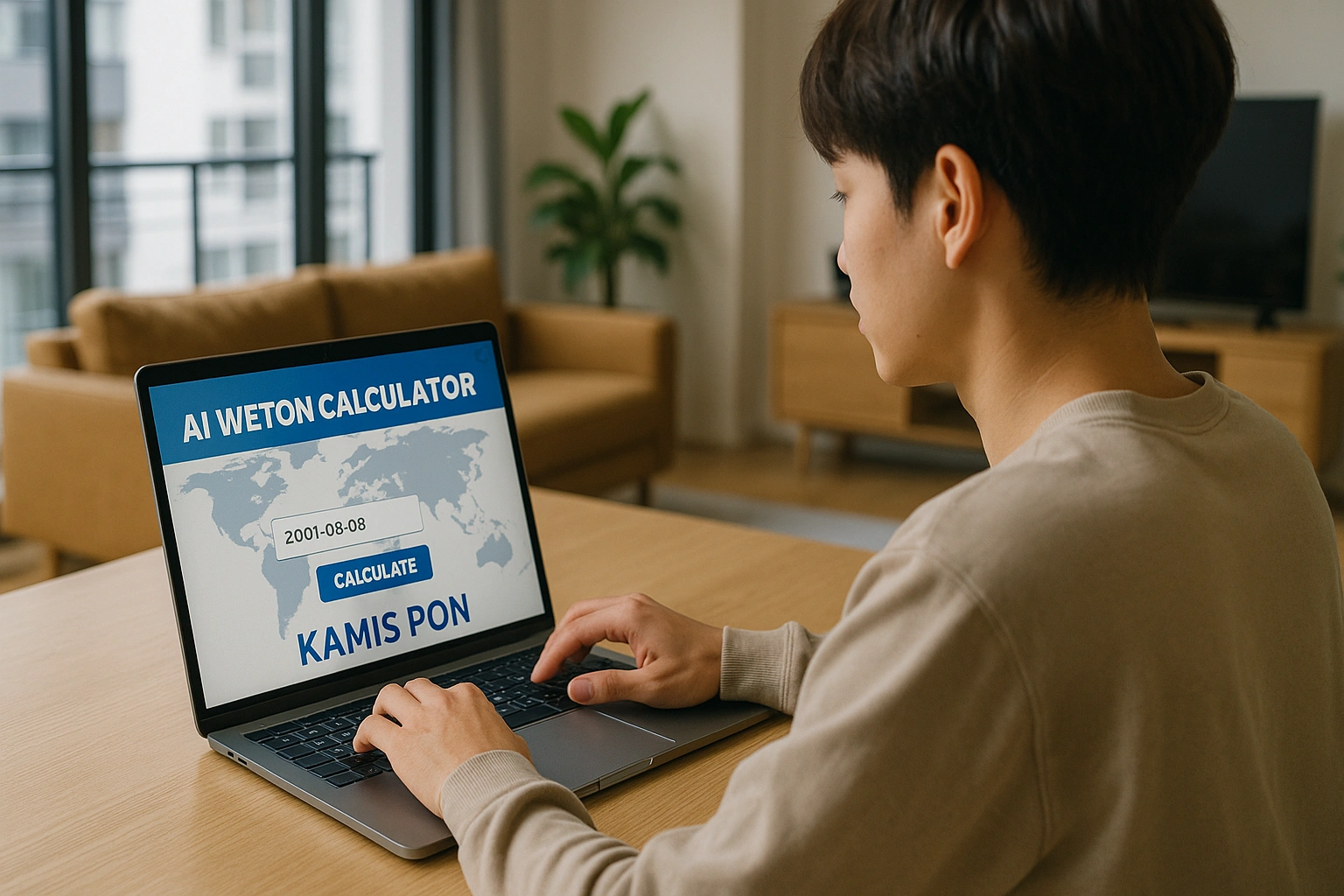
The Ethical Tightrope: What is Lost in Digital Translation?
The rise of AI in this deeply cultural space brings important **ethics** questions to the forefront. The primary concern among cultural purists is the risk of profound oversimplification. Weton is not a simple horoscope to be consumed like a daily news feed; it’s a complex system intended for self-reflection, understanding compatibility, and navigating life’s journey with awareness. When reduced to a quick online result and a bulleted list of traits, its immense depth can be flattened into a form of “spiritual entertainment” or cultural tourism.
The elder’s role is more than a human calculator—they are a storyteller and a living repository of wisdom. An AI Weton calculator can give the numbers, but it cannot replace this human connection. Using an AI Weton calculator helps start understanding your Weton, yet it cannot capture the ritual or warmth of an elder’s guidance. Even with an AI Weton calculator, nothing compares to a grandparent explaining what your Weton truly means for you.
A Partnership, Not a Battle: The Hybrid Future of Weton
Perhaps the “AI vs. Elders” framing, while dramatic, is ultimately flawed. The most powerful and realistic future is not one where tech replaces tradition, but one where they work in a synergistic partnership. Think of the **AI Weton calculator** as an incredible tool for establishing the “what”:
- “What is my precise Weton?”
- “What is my total neptu number?”
- “What are the general characteristics and potential strengths associated with my birth date?”
The elder, however, provides the crucial and irreplaceable “so what?”:
- “So what does this Weton mean for my specific desire to start a business this year?”
- “So what should I be mindful of in my relationship, given my partner’s Weton?”
- “So how can I use the strengths of my Weton to navigate this personal challenge I’m facing?”
The AI can be the entry point—the dictionary that gives you the correct definition. The elder is the literature professor who teaches you how to understand the poetry. Use the calculator to get your data accurately and instantly. Then, if you are able, use that information as a foundation to seek out a human conversation to explore its true meaning and application. This synergy of **tradition vs. tech** ensures that Javanese wisdom not only survives but thrives, remaining both globally accessible and profoundly deep in the 21st century.
Frequently Asked Questions
Can an AI Weton calculator predict my future?
No. This is a common misconception. Weton is not about fortune-telling. It is a system for understanding your innate character, potential, and the energetic quality of time. It provides a roadmap of your potential strengths and weaknesses, but you are always the driver. Both elders and ethical AI tools focus on character analysis, not fatalistic prediction.
Are all AI Weton calculators the same?
Not necessarily. While the basic calculation should be consistent, the quality of the interpretation can vary wildly. The best calculators are transparent about their data sources (which *primbon* texts they use) and avoid making sensationalist or overly deterministic claims. Look for tools that emphasize self-understanding over prediction.
If I don’t have an elder in my family, how can I get a deeper reading?
This is a challenge for many in the diaspora. Start by using your AI Weton calculator as a research topic to understand your Weton. Explore the insights provided by the AI Weton calculator and read about its meaning from reliable sources. Then, connect with cultural communities, both online and locally, to discuss what you’ve learned. Javanese cultural centers, embassies, or university programs sometimes host events or have experts you can consult. By combining guidance from an AI Weton calculator with real-world dialogue, you can move from raw data to meaningful understanding.