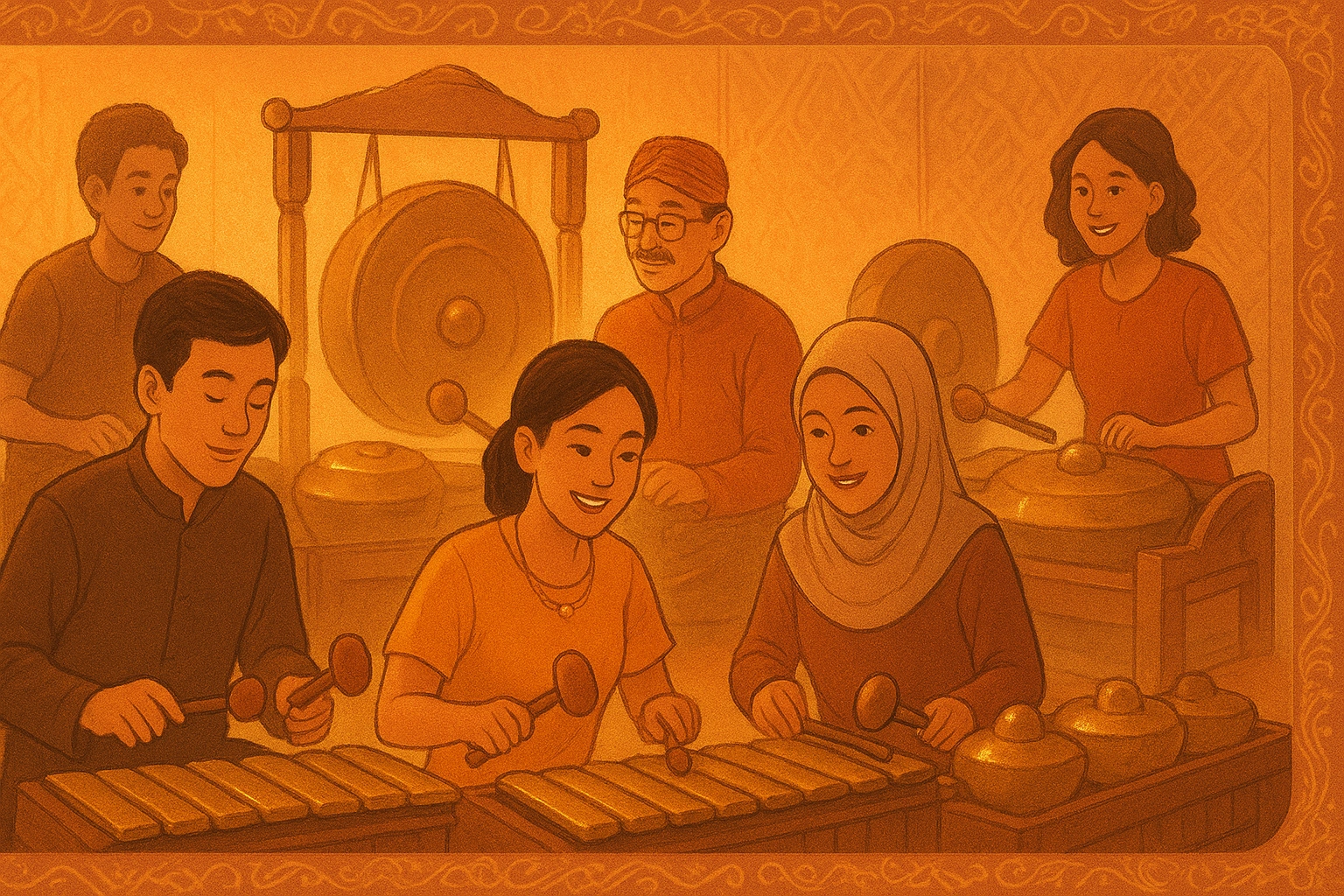
There’s a moment when you first hear a Javanese gamelan orchestra that is truly unforgettable. The shimmering sound draws you in, and many wonder if they could join in. Local Gamelan Groups welcome newcomers, making it easy to experience this music firsthand. These Gamelan Groups often teach through listening and playing, so beginners can participate right away. Exploring different Gamelan Groups near you is the first step on a rewarding journey into music, culture, and community.
Unlike a Western orchestra that can take years to join, the gamelan is a communal and accessible tradition. Many Gamelan Groups welcome beginners, so you don’t need to read music or have prior experience. Participating in Gamelan Groups is as simple as showing up with a willingness to listen and play. This guide helps you find your place among the many active Gamelan Groups across the United States and Europe, highlighting those that are beginner-friendly and offer regular classes or open rehearsals.
Why Join a Gamelan Ensemble? It’s Not Just About Music.
Playing gamelan is a unique experience, and joining Gamelan Groups brings benefits beyond learning an instrument. Many Gamelan Groups offer a holistic practice that engages the mind, body, and spirit. Being part of Gamelan Groups creates a communal setting where everyone contributes to the music. Through these Gamelan Groups, players connect deeply with each other and with the rich tradition of Javanese music.
- Radically Accessible for Beginners: The vast majority of gamelan music is taught through oral tradition. The teacher demonstrates a pattern (often by singing the numbers of the notes, called *kepatihan* notation), and the students repeat it. This “listen and play” method, combined with the fact that many instruments play simple, repeating patterns, means that absolute beginners can sit alongside experienced players and contribute meaningfully to the music from their very first session.
- A Meditative Practice: Gamelan music is cyclical. A piece is structured around a repeating cycle marked by the deep sound of the great gong. The act of focusing on your specific interlocking pattern while listening to how it fits into the whole creates a state of “group flow.” It’s a powerful tool for mindfulness and stress relief, forcing you to be present in the moment.
- A Built-in Community: A gamelan is not a collection of soloists; it’s a single, breathing entity. The music simply cannot be made alone. Every part is essential, from the simplest gong punctuation to the most complex improvisations. This fosters a strong sense of community, collaboration, and mutual reliance among the players. Many groups become a “second family” for their members.
- A Deep Cultural Connection: By playing gamelan, you are participating in a tradition that is centuries old and central to Javanese culture—accompanying dance, theater, and rituals. It’s a hands-on way to connect with a rich artistic heritage, something confirmed by the presence of gamelan ensembles in ethnomusicology programs at universities like Harvard University.
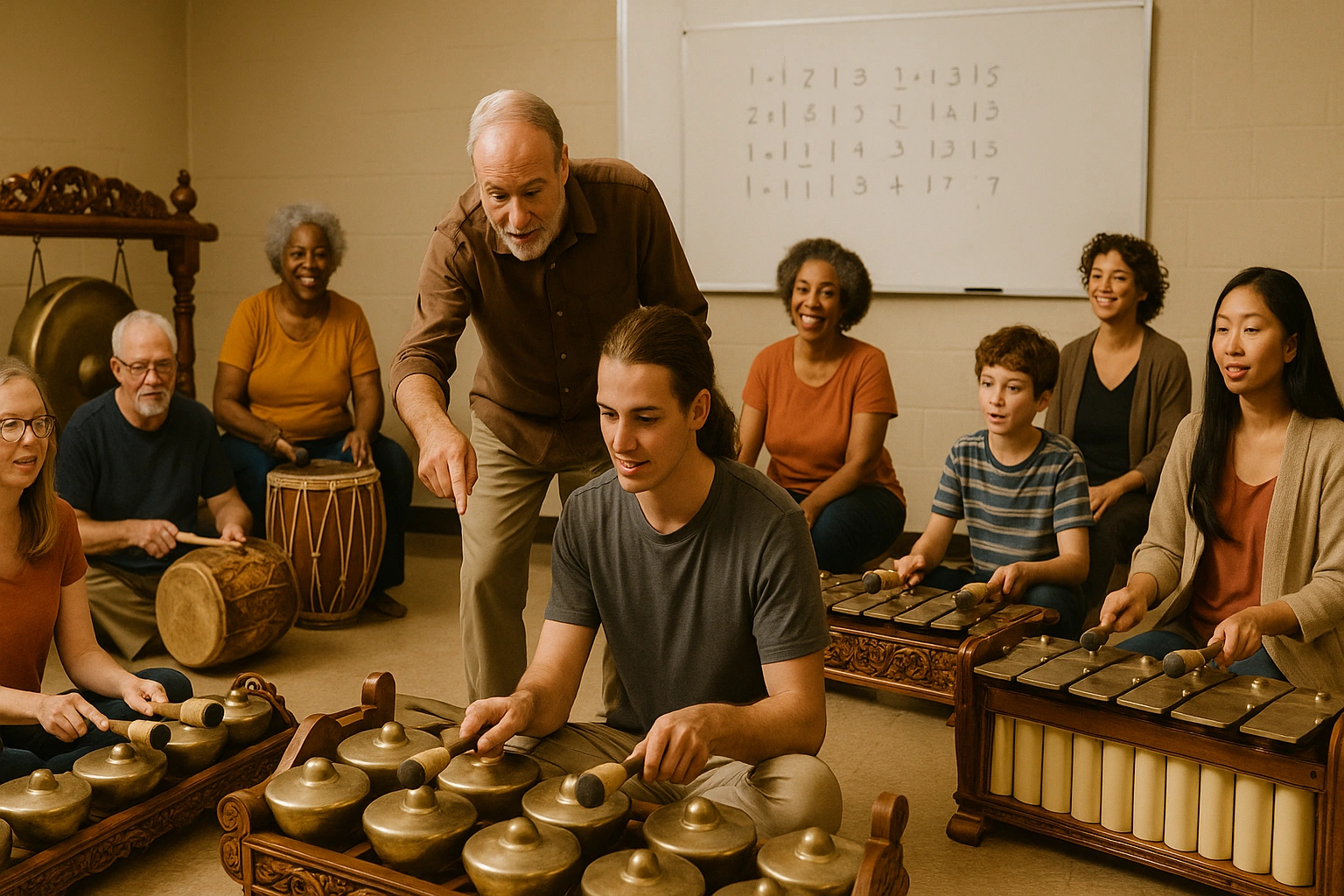
What to Expect in Your First Gamelan Class or Rehearsal
Walking into a room full of large, beautiful, and unfamiliar bronze instruments can be intimidating. Here’s what a typical first session looks like to ease your nerves:
- No Shoes, No Worries: You’ll likely be asked to take off your shoes. This is a sign of respect for the instruments and the cultural space.
- No Sheet Music: Don’t expect to see a conductor or sheet music. Everything is taught orally. The leader will guide you.
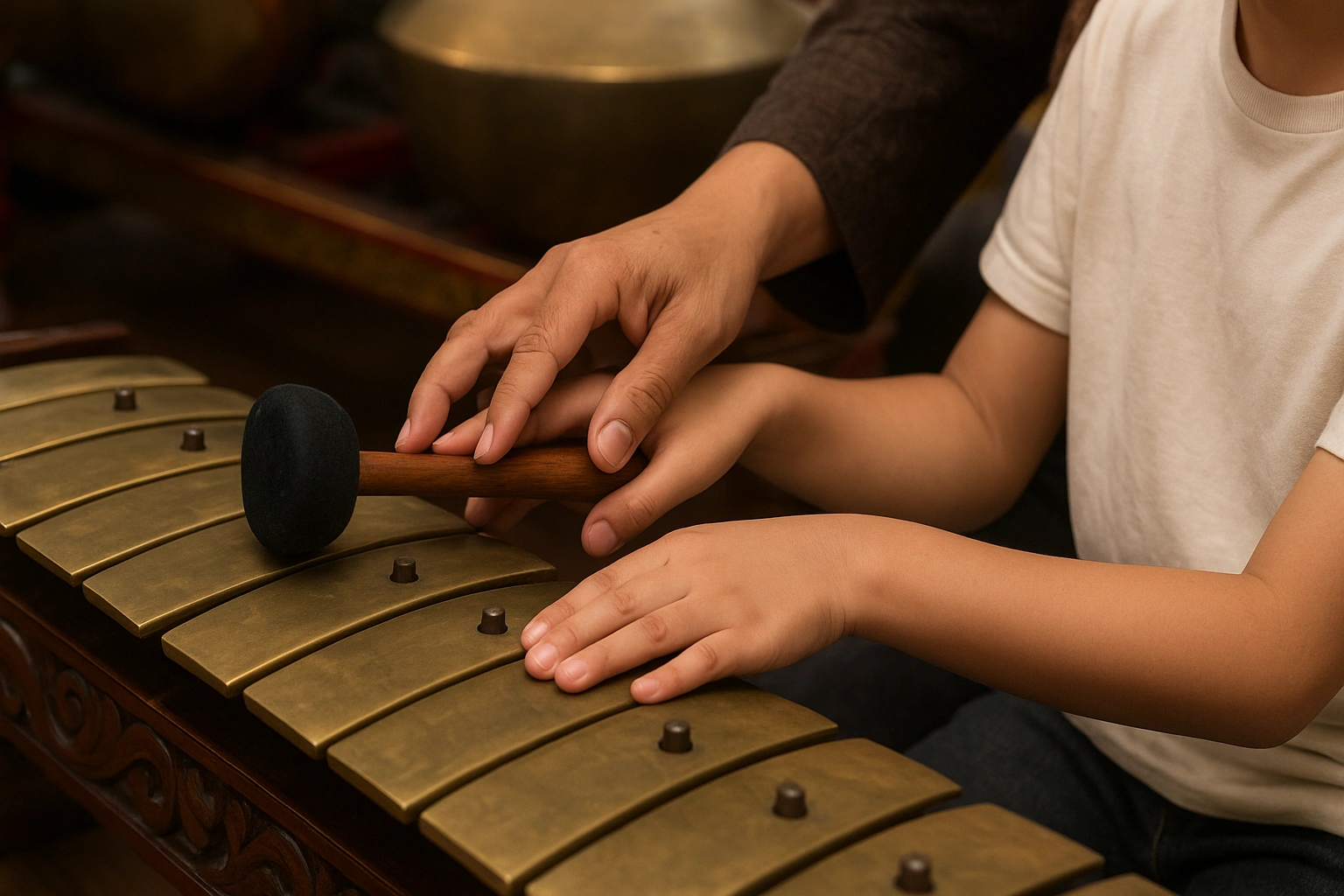
- Introduction to Damping: The most important technique you will learn on day one is how to “damp” the keys. Since the bronze keys have a long, beautiful resonance, you must silence the previous note with one hand at the exact moment you strike the new note with the other. This creates the clarity of sound that is essential to the music. It’s a coordination exercise that is the foundation of playing.
- Your First Instrument: You will probably start on one of the *saron* family of instruments. These are metallophones that play the core melody (the *balungan*). Your part will likely be a simple, repeating pattern.
- A Relaxed Atmosphere: Gamelan is not about individual virtuosity. Mistakes are expected and are part of the learning process. The atmosphere is almost always supportive and non-judgmental.
Directory of Gamelan Groups in the United States
The US has a surprisingly vibrant gamelan scene, with many Gamelan Groups based at universities and community centers. These Gamelan Groups often welcome beginners and offer regular rehearsals. Across the country, active Gamelan Groups connect players of all skill levels and keep the tradition alive. Here are some of the most established Gamelan Groups and ensembles you can explore.
East Coast
- Wesleyan University Gamelan (Middletown, CT): Home to one of the oldest and most respected gamelan programs in the US, often hosting master artists from Indonesia.
- Gamelan Kusuma Laras (New York, NY): A renowned community group based at the Indonesian Consulate, known for its high-quality performances.
- Gamelan Nyai Saraswati (UNC-Chapel Hill, NC): A long-standing university group that welcomes community members to its classes.
- University of Richmond Gamelan Raga Kusuma (Richmond, VA): An active group that holds regular performances and is open to the community.
Midwest
- Sumunar Gamelan Ensemble (Minneapolis, MN): A fantastic, community-focused group that offers regular classes for all levels and performs frequently with dance and wayang.
- Chicago Gamelan (Chicago, IL): A dedicated community ensemble that holds workshops and regular rehearsals.
- University of Michigan Gamelan Ensemble (Ann Arbor, MI): A large and very active university-based group with a beautiful set of instruments.
- University of Wisconsin-Madison Gamelan (Madison, WI): Another excellent university program with strong community outreach.
West Coast
- Gamelan Sari Oneng (UC Berkeley, CA): One of the oldest and most respected Javanese gamelan ensembles in the US.
- CalArts Gamelan (Valencia, CA): Housed in a world-renowned arts school, this group is known for both traditional and experimental performances.
- Gamelan Pacifica (Seattle, WA): A key community group in the Pacific Northwest, based at Cornish College of the Arts, known for commissioning new music for gamelan.
- Portland State University Gamelan (Portland, OR): The home of Gamelan Tegal Sari, another welcoming ensemble.
Directory of Gamelan Groups in Europe
Europe, particularly the UK and the Netherlands, has a deep and long-standing connection with gamelan music, with dozens of active groups.
United Kingdom
- Southbank Centre Gamelan Programme (London): The most famous and accessible program in the UK, offering regular beginner classes, workshops, and courses. A perfect place to start.
- University of York Gamelan Sekar Petak: A world-class ensemble that often performs with Wayang. Check their concert schedule.
- Oxford Gamelan Society (Oxford): A thriving community and university group that welcomes new members.
- Cambridge Gamelan Society (Cambridge): Another excellent university-based group with a strong community focus.
- And many more: There are active groups in Glasgow, Manchester, Dartington, and other cities. The UK scene is very strong.
The Netherlands
- Gamelan Ensemble Wiludyeng (Amsterdam): A long-standing and active community group.
- Irama Gamelan Group (various locations): A network of players that organizes events.
- University Ensembles: Check the music departments at universities in Leiden and Amsterdam.
Germany & France
- Germany: Several universities and music schools have gamelan ensembles. Check institutions in cities with strong music programs like Berlin, Cologne, and Hamburg.
- France: The Indonesian Embassy in Paris is the best starting point. They often sponsor or have information about active gamelan groups and performances, such as the group Pantcha Indra.
How to Find a Group if Your City Isn’t Listed
If you don’t see your city listed, don’t despair! Gamelan communities are often small but dedicated. Here’s a strategy to find them:
- Start with Universities: This is the most effective method. Search for “[Your City] university music department” or “[Your City] university ethnomusicology.” If they have a gamelan, it will be listed there. Email the director; many university groups are open to the public for a small fee or for free.
- Contact the Indonesian Embassy or Consulate: The cultural attaché at your nearest Indonesian diplomatic mission is an incredible resource. They will know about and often support local gamelan and dance troupes. Their websites and social media are a goldmine for cultural events.
- Use Specific Search Terms: Search for “community gamelan [your state/country]” or “learn gamelan [your city].” Use social media as well; search for hashtags like #gamelan or #gamelanensemble on Instagram, or search for public Facebook groups.
- The American Gamelan Institute (AGI): The AGI maintains a directory on its website, which is an invaluable (though sometimes slightly outdated) resource for finding groups across North America.
Conclusion: Your Invitation to Play
The shimmering sound of the gamelan is not something you just listen to; it’s something you become part of. Many Gamelan Groups welcome beginners and invite you to join their rehearsals, making it easy to start playing. These Gamelan Groups are some of the most communal and supportive musical communities in the world, where every participant contributes to the vibrant sound. By exploring local Gamelan Groups, you can take the first step toward joining a practice or class, and experience the joy of making music together. Participating in Gamelan Groups is an opportunity you won’t want to miss.
Once you’re part of the music, you may become interested in the stories it tells. Gamelan is the essential soundtrack for Wayang shadow puppetry, and you can learn more about finding Wayang in Europe or how to pronounce the characters’ names in our pronunciation guide.