
By Ky Tutur, Javanese Culturalist
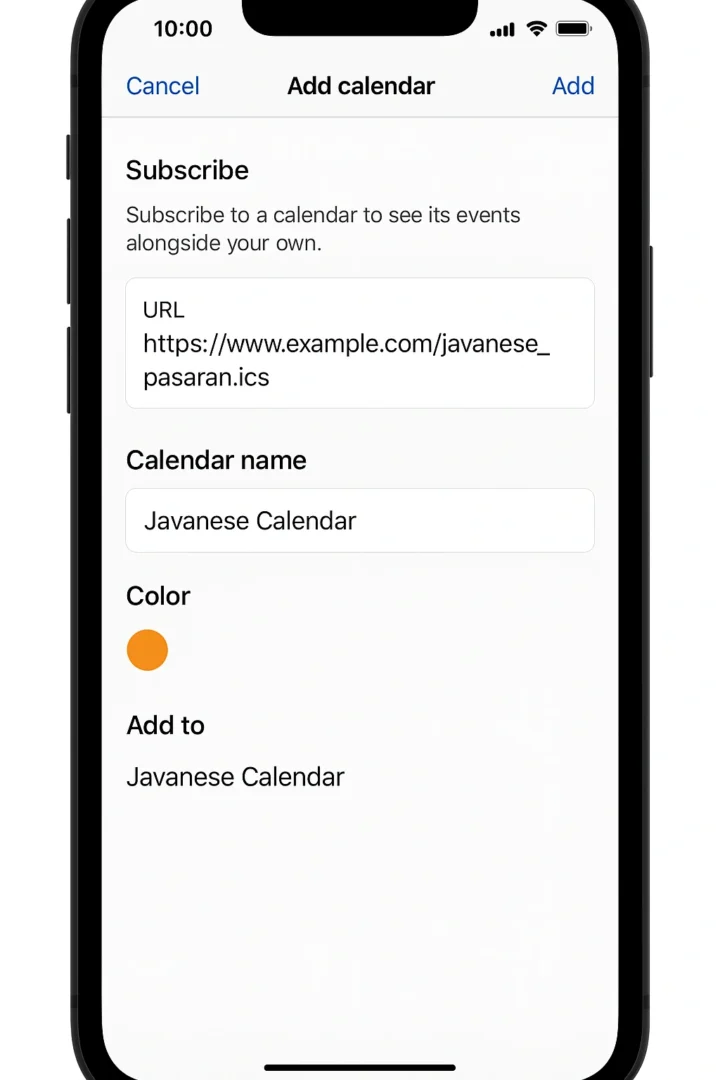
If you’re part of the Javanese diaspora, a student of culture, or simply someone who finds beauty in traditional systems, you’ve likely faced a challenge: how to keep track of the Pasaran days—Legi, Pahing, Pon, Wage, and Kliwon—while living in a world ruled by the Gregorian calendar. With Javanese Calendar ICS, that challenge becomes simpler, as Javanese Calendar ICS lets you blend tradition with modern tools. By relying on Javanese Calendar ICS, you can follow these cycles effortlessly wherever you are. More than a utility, Javanese Calendar ICS is a bridge that keeps cultural rhythms alive in everyday life.
For centuries, this five-day market cycle has been the heartbeat of Javanese society, influencing everything from market days to spiritual calculations for one’s *weton*. Manually calculating it is tedious and prone to error. But what if you could see the day’s Pasaran right next to your work meetings and appointments, automatically updated on your phone, tablet, and computer?
You can. By using a special link called a **Javanese Calendar ICS file**, you can subscribe to the entire Pasaran cycle and add it to your Google Calendar in less than two minutes. This guide will not only show you how but also delve into the rich philosophy behind this ancient system. No more manual counting, no more guessing. Here’s how to do it.
A Brief History: The Synthesis of Javanese Time
The Javanese calendar is not a single, monolithic system but a synthesis of cultures and beliefs. Its roots lie in the ancient Saka calendar, a Hindu lunisolar system, yet its most profound shift came in 1633 under Sultan Agung of Mataram, who fused it with the Islamic lunar calendar. This hybrid preserved Hindu-Buddhist traditions while embracing Islam, making it uniquely Javanese. Today, the Pasaran cycle—an indigenous creation tied to market rhythms—can be followed more easily with Javanese Calendar ICS. By using Javanese Calendar ICS, this blend of history becomes part of daily life. Javanese Calendar ICS ensures the cycle remains relevant beyond Java, while Javanese Calendar ICS turns ancient wisdom into a living rhythm for modern times.
The Heartbeat of Java: Understanding the Pancawara Cycle
Before we dive in, let’s explore the beautiful complexity of the *Pancawara*, or the five-day Pasaran week. It’s not just a list of names; it’s a cosmological map. Each day is associated with a cardinal direction, an element, a color, and a specific spiritual energy, forming a system that seeks balance and harmony.
- Legi (Manis): Associated with the East, the color white, and the element of air/wood. Legi represents beginnings, optimism, and the desire to explore. It’s a day of openness and potential.
- Pahing (Pahit): Associated with the South, the color red, and the element of fire. Pahing is a day of passion, ambition, and strong will. Its energy is dynamic, assertive, and sometimes volatile.
- Pon (Petak): Associated with the West, the color yellow, and the element of metal. Pon symbolizes strength, leadership, and groundedness. It’s a day of confidence and decisive action.
- Wage (Cemeng): Associated with the North, the color black, and the element of water. Wage is introspective, mysterious, and wise. It encourages contemplation and a deeper understanding of the self.
- Kliwon (Asih): Associated with the Center, a multi-hued or “mottled” color palette, and the element of earth. Kliwon is the spiritual pivot point where all energies converge. It is considered the most sacred and powerful day, a time of heightened spiritual sensitivity.
Weton and Neptu: The Mathematics of Javanese Destiny
The true magic happens when the seven-day week (*Saptawara*) and the five-day week (*Pancawara*) intersect. The combination of these two days is called a **weton**. For example, if you were born on a Sunday and the Pasaran day was Kliwon, your weton is *Minggu Kliwon*. This 35-day cycle (*selapan*) is fundamental to Javanese identity.
To quantify the energy of a weton, each day in both cycles is assigned a numerical value called a **neptu**. These values are central to the *Primbon*, the Javanese book of divination.
Neptu Values of the 7-Day Week (Saptawara)
| Day | Neptu |
|---|---|
| Sunday (Minggu) | 5 |
| Monday (Senin) | 4 |
| Tuesday (Selasa) | 3 |
| Wednesday (Rabu) | 7 |
| Thursday (Kamis) | 8 |
| Friday (Jumat) | 6 |
| Saturday (Sabtu) | 9 |
Neptu Values of the 5-Day Week (Pancawara)
| Pasaran Day | Neptu |
|---|---|
| Legi | 5 |
| Pahing | 9 |
| Pon | 7 |
| Wage | 4 |
| Kliwon | 8 |
By adding the neptu of the day and the Pasaran day, you get the total neptu of the weton. For example, *Minggu Kliwon* has a neptu of 5 (Minggu) + 8 (Kliwon) = 13. This number is then used to determine personality traits, marriage compatibility, auspicious days for planting crops, building a house, and much more.
Practical Magic: How Neptu is Used in Daily Life
The neptu value is not just an abstract number; it’s a practical tool. One common application is a five-stage fortune cycle used to predict the outcome of an endeavor, be it a marriage, a business, or a harvest. The neptu of the starting day is divided by five, and the remainder points to a specific outcome:
- Sri (Prosperity): Remainder 1. A blessed and prosperous outcome.
- Lungguh (Position): Remainder 2. An outcome of high status and respect.
- Gedhong (Wealth): Remainder 3. An outcome of material wealth and abundance.
- Lara (Sickness): Remainder 4. An outcome fraught with obstacles and hardship.
- Pati (Death): Remainder 0 or 5. A disastrous or failed outcome.
Therefore, a Javanese farmer would strive to begin planting on a day whose neptu, when divided by five, leaves a remainder of 1, 2, or 3. This deep integration of numerology into daily planning highlights why knowing the Pasaran is so important.
A Deeper Layer: The 210-Day Wuku Cycle
Beyond the Pancawara and Saptawara lies another layer: the Pawukon or Wuku cycle, a 210-day rhythm of 30 unique weeks, each tied to deities, symbols, and traits that shape destiny. While our ICS feed highlights the Pasaran, Javanese Calendar ICS helps keep this tradition alive in daily life. With Javanese Calendar ICS, the depth of timekeeping becomes easier to follow without losing its essence. Javanese Calendar ICS bridges heritage and technology, and through Javanese Calendar ICS, even the complexity of wuku cycles feels accessible.
The 2-Minute Solution: Subscribe via Javanese Calendar ICS Link
This is the easiest method. It must be done on a desktop computer, but it syncs everywhere after. Here are the detailed steps.
Open Google Calendar on Desktop
This process cannot be initiated from the mobile app. Navigate to calendar.google.com and sign in to your Google account.
Find “Other Calendars”
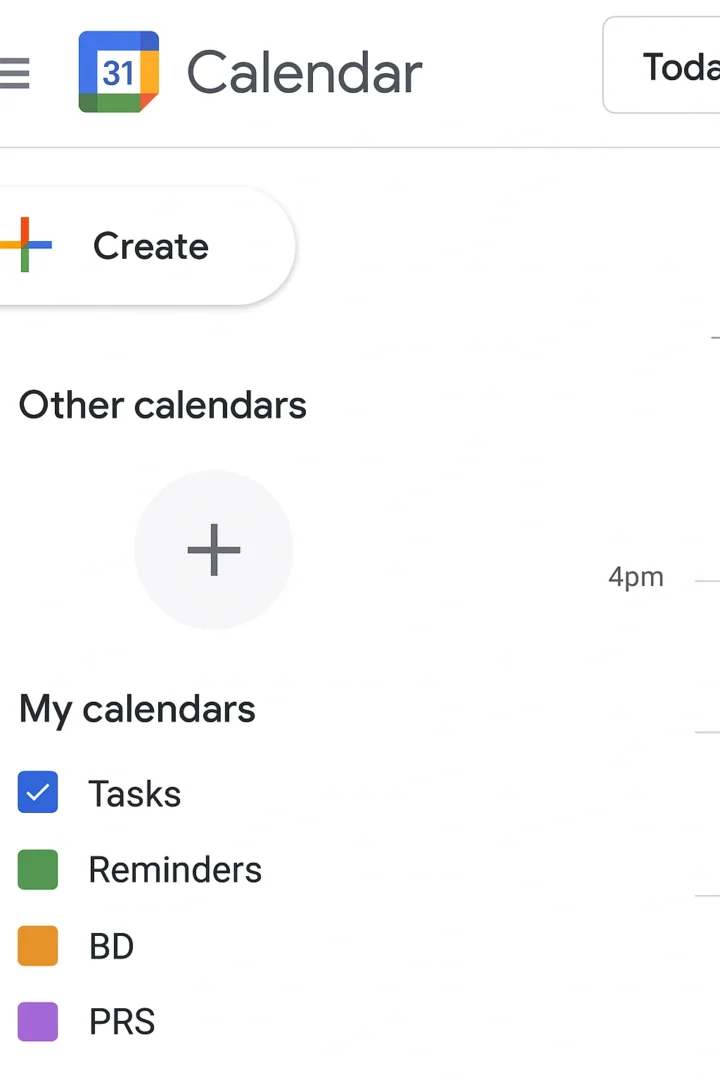
On the left-hand sidebar, scroll down until you see the “Other calendars” section. Click the small plus icon (`+`) right next to it to open a menu of options.
Select “From URL”
From the menu that appears, choose the option “From URL.” This is the key step that allows you to subscribe to an external calendar feed.
Paste the ICS Link
Here is the public ICS link for the Javanese Pasaran calendar, provided by Kaweruh Jawa. Copy the entire link below:
https://en.kaweruhjawa.com/calendars/javanese-pasaran.icsPaste this link into the “URL of calendar” field that has appeared on your screen.
Add Calendar & Sync
Click the “Add calendar” button. Google will import the calendar. It may take a few moments to appear, but you will soon see the Pasaran days (Legi, Pahing, etc.) as all-day events in your calendar view. It will automatically sync to your phone.
Subscribing on Other Platforms
The `.ics` format is universal. Here’s how to add it to other popular calendar applications:
For Apple Calendar (on Mac)
- Open the Calendar app.
- From the menu bar at the top of the screen, click “File”.
- Select “New Calendar Subscription…”.
- Paste the ICS link and click “Subscribe”.
- You can then configure the calendar’s name, color, and auto-refresh frequency.
For Outlook (Web Version)
- Navigate to your Calendar in Outlook on the web.
- In the left pane, select “Add calendar”.
- In the “Add calendar” window, select “Subscribe from web”.
- Paste the ICS link into the field.
- Enter a name for the calendar (e.g., “Javanese Pasaran”), choose a color, and click “Import”.
Troubleshooting & FAQ
Q: The calendar isn’t showing up on my phone. What should I do?
A: First, double-check that you see the Pasaran days on your desktop calendar. If they are there, open your Google Calendar mobile app, tap the menu (three horizontal lines), go to Settings, find the new “Javanese Pasaran” calendar, and make sure “Sync” is turned on. Syncing can sometimes take a few minutes to complete.
Q: What if the Pasaran day seems incorrect due to time zones?
A: The Javanese day traditionally begins at sunset. However, for modern digital convenience, this ICS feed defines the Pasaran day as an all-day event from midnight to midnight in the GMT/UTC time zone. For most users worldwide, this alignment works perfectly. If you are in a significantly different time zone (e.g., in the Americas), the changeover might appear to happen later in your day, but the sequence will remain correct.
Q: Can I change the color of the Pasaran events?
A: Absolutely. On the desktop version of your calendar app, find the “Javanese Pasaran” calendar in your list of calendars, click the options menu (usually three dots), and choose a new color. The change will sync to all your devices.
A Bridge Between Worlds
Technology at its best serves humanity not by erasing the past, but by making it more accessible, and Javanese Calendar ICS does exactly that. By adding the Pasaran cycle through Javanese Calendar ICS, you build a bridge between ancient rhythm and modern tools. Javanese Calendar ICS keeps cultural wisdom alive in your daily routine, ensuring that tradition is never lost. With Javanese Calendar ICS, heritage remains a living part of your world no matter where you are.
For more insights into Javanese traditions, explore our detailed look into the profound symbolism behind batik patterns.