
By Ky Tutur, Javanese Culturalist • Published on September 27, 2025
Have you ever been captivated by the graceful, flowing lines of Javanese calligraphy? Known as Aksara Jawa or Hanacaraka, this beautiful writing system is more than just a set of characters—it’s an art form. For centuries, Javanese calligraphy has been practiced by scribes who turned historical chronicles and epic poems into visual masterpieces. The tradition of Javanese calligraphy reflects both beauty and philosophy, making it a bridge between writing and art. And now, you too can begin exploring Javanese calligraphy and learn to create its timeless elegance.
Many people assume that learning Javanese calligraphy requires years of dedicated study with a master. While mastery certainly takes time, starting your journey is easier than you think. You don’t need expensive tools or special classes. All you need is a pen, some paper, and a desire to learn.
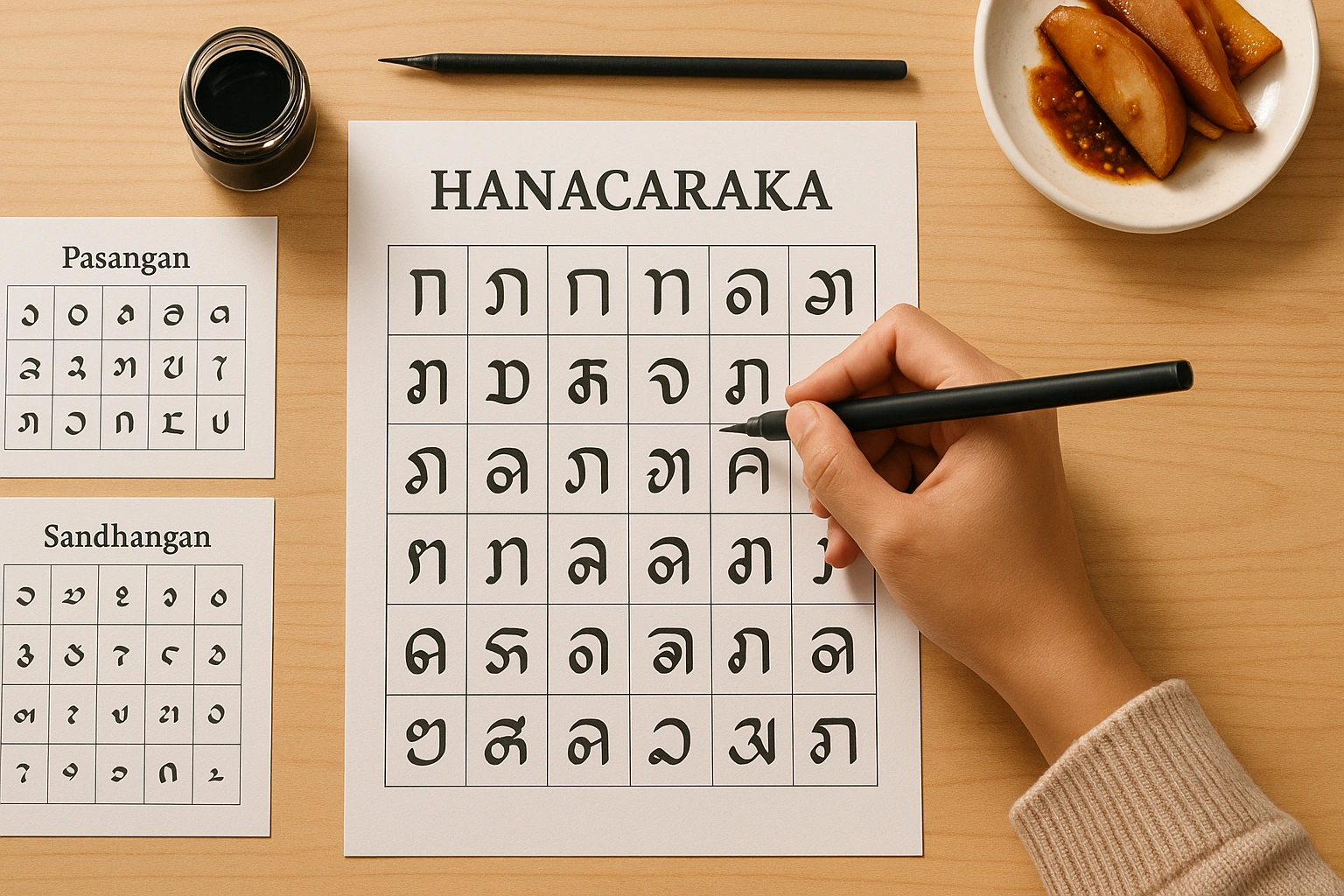
This guide is designed to be your very first step. We’ve created a series of free, printable worksheets to guide you through the foundational strokes of the script. You’ll get hands-on hanacaraka practice, learning the core characters and the principles of good form, all from the comfort of your home.
Why Learn Javanese Calligraphy?
Beyond its obvious beauty, practicing Javanese calligraphy is a deeply rewarding experience. It’s a meditative act that connects you to centuries of Javanese culture, philosophy, and history. Each stroke is a link to the past. It can help you:
- Connect with Your Heritage: For those with Javanese roots, it’s a powerful way to engage with your ancestral identity.
- Practice Mindfulness: The focus required to form the characters is a calming, meditative exercise that can quiet a busy mind.
- Develop a New Artistic Skill: You’ll be able to create beautiful, unique pieces of art, from greeting cards to framed quotes.
- Appreciate the Culture More Deeply: Understanding the script gives you a new appreciation for everything from ancient Javanese collections in museums to modern Javanese design.
Getting Started: Your Tools
You don’t need much. To start with our worksheets, all you’ll require is:
- A Printer and Paper: Standard A4 or letter-sized paper is perfect.
- A Good Pen: A simple ballpoint or gel pen is fine for beginners. As you advance, you might want to try a broad-nib calligraphy pen or even a traditional sharpened bamboo pen (*kalam*) to get thicker and thinner lines.
Printable Hanacaraka Practice Worksheets
Our worksheets are broken down into three core components of the Javanese script. We recommend starting with the first sheet and only moving on once you feel comfortable. Click the buttons to download the printable PDF files.
Worksheet 1: The Base Characters (Aksara Nglegena)
These are the 20 foundational syllables of the hanacaraka alphabet, from ‘ha’ to ‘nga’. This worksheet will guide you through the stroke order for each character, helping you build muscle memory for the correct forms.
Worksheet 2: The Vowel Diacritics (Sandhangan)
Once you’ve mastered the base characters (which all have an inherent ‘a’ sound), this worksheet will teach you the *sandhangan*, or diacritics, that change the vowel sound to ‘i’, ‘u’, ‘e’, ‘o’, and others. This is the key to writing almost any word.
Worksheet 3: The Subscripts (Pasangan)
The final core component is the *pasangan*. These are subscript forms of the base characters used to create consonant clusters (like ‘tr’ or ‘mp’). This worksheet provides hanacaraka practice with these essential but tricky forms.
Javanese Calligraphy Tips for Beginners
As you work through the sheets, keep these key principles of Javanese lettering in mind:
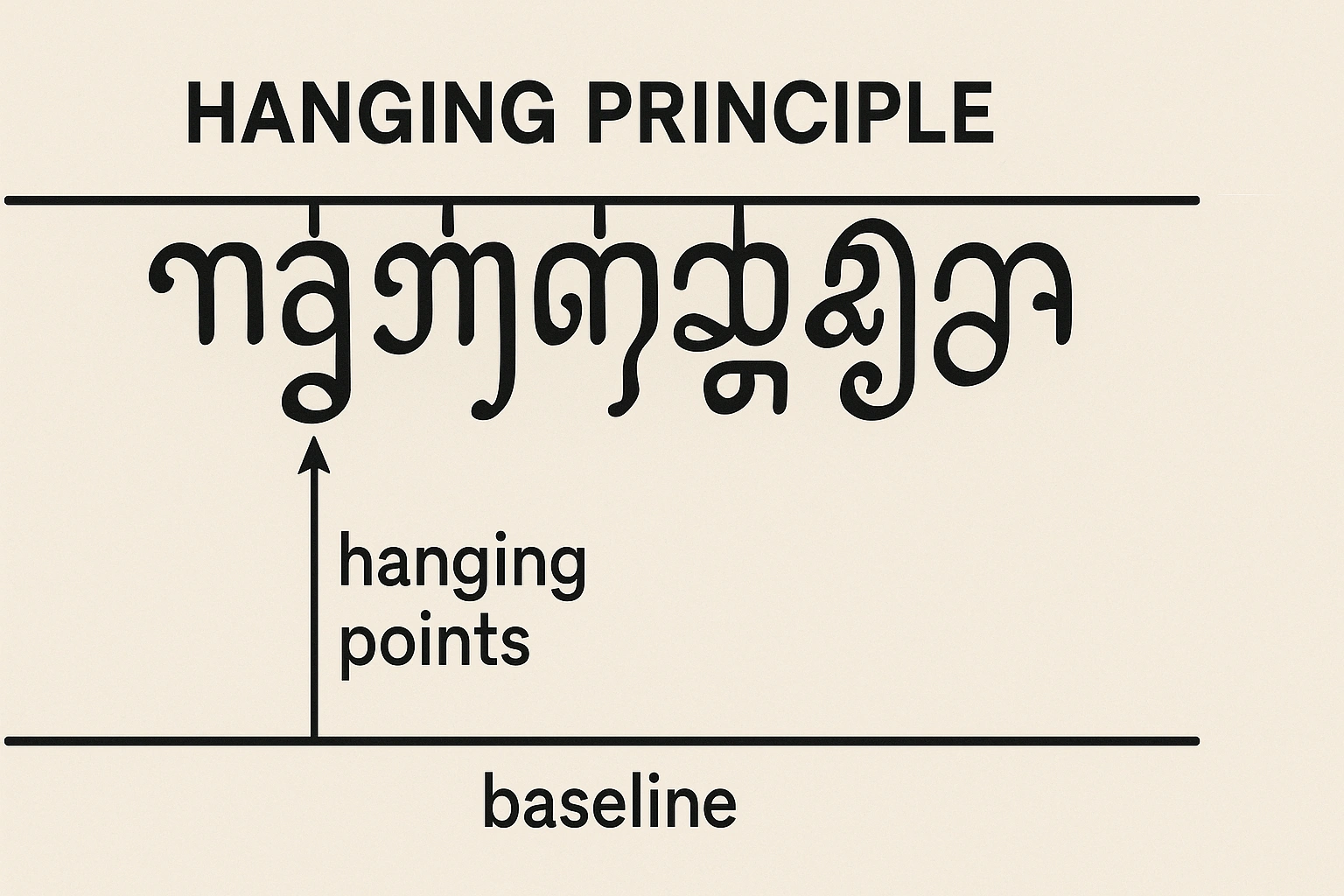
1. The “Hanging” Principle
Unlike Latin scripts that sit on a baseline, Javanese characters traditionally “hang” from an invisible top line. Imagine a clothesline—the main body of each character dangles from it. This is the most important aesthetic rule to remember.
2. Consistency is Key
Strive for consistency in the size and height of your base characters. They should all hang at the same level and be roughly the same width. This uniformity is what gives a line of Javanese text its pleasing rhythm.
3. Master the Curves
Javanese calligraphy is all about smooth, flowing curves, not sharp angles. Practice your strokes slowly at first, focusing on creating graceful arcs. Think of it as a dance your pen is doing on the page.
4. Respect the Spacing
Don’t cram your letters together. Leave a small, consistent amount of space between each character to allow them to breathe. Proper spacing is crucial for readability and achieving a balanced look.
Beyond the Worksheets: Your Next Steps
Once you are comfortable with the forms on the worksheets, it’s time to start creating on your own. Begin by writing your own name phonetically, or try simple Javanese words. A great place to start is with some classic Javanese proverbs, as they are often short, poetic, and beautiful when written out.
As you grow more confident, you can study examples of historical Javanese lettering from online manuscript collections, such as those held by the British Library, to inspire your own personal calligraphic style.
The journey into Javanese calligraphy is a marathon, not a sprint. Be patient with yourself, enjoy the process of learning, and celebrate the beauty of each character you form. Happy writing!