
By Ky Tutur, Javanese Culturalist • Published on September 26, 2025
Have you ever wondered what your name would look like in the elegant, flowing curves of Javanese script? Whether you’re exploring your heritage, appreciating the artistry of Javanese culture, looking for a unique tattoo design, or are simply fascinated by world languages, engaging with Javanese culture offers a new perspective.
The ancient Javanese script, known as Aksara Jawa or Hanacaraka, is more than just an alphabet—it’s a work of art and a window into the rich traditions of Javanese culture. Translating a modern name into this historic script is a way to connect with Javanese culture and experience its depth firsthand.
I’m Ky Tutur, and I’ve created this simple, instant Javanese name translator to help you see your name in a new light while celebrating Javanese culture. Below the generator, I’ll explain how it works, what to watch out for (especially for tattoos!), and the beautiful logic behind this writing system, reflecting the philosophy of Javanese culture.
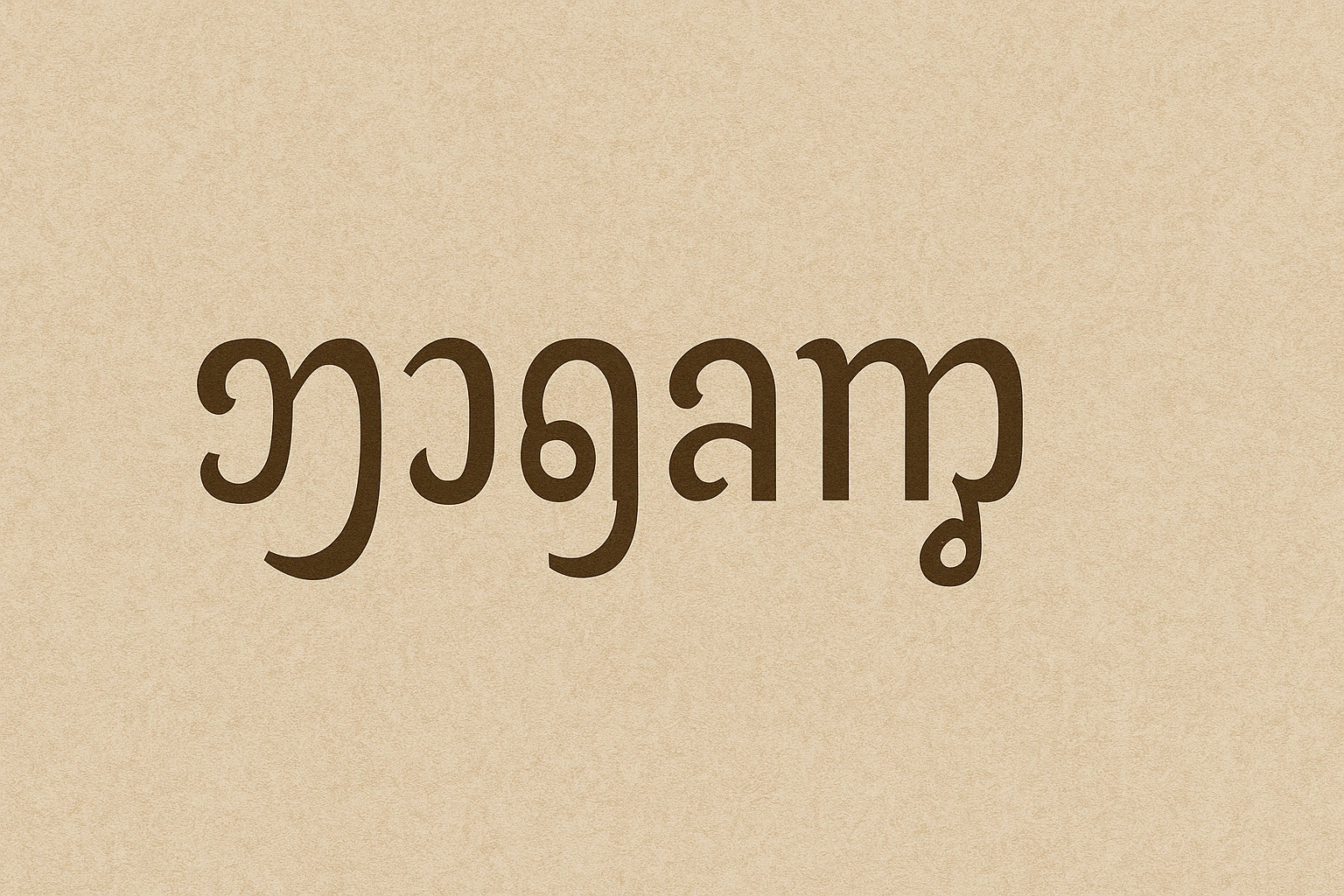
Javanese Name Generator
Enter your name in Latin letters below. For best results, use Javanese spelling (e.g., “j” for “y”, “u” for “oo”).
How Does This Work? The Secret of Hanacaraka and Javanese Culture
The first thing to understand is that Javanese script is not an alphabet like English. It is an abugida or syllabary, a distinctive feature of Javanese culture. Each base character represents a consonant with an inherent vowel ‘a’, reflecting the linguistic richness of Javanese culture. This unique system has been preserved over centuries and is a key element of Javanese culture, embodying both art and communication. Understanding this foundation allows anyone to appreciate the beauty and logic of Javanese culture.
For example, the character ꦤ is not just ‘n’—it’s the full syllable ‘na’. To change the vowel sound or remove it, we use special diacritics called sandhangan.
A Quick Example: The name “Bima”
- First, we take the base character for ‘ba’: ꦧ
- To change the vowel from ‘a’ to ‘i’, we add a vowel sign called a wulu above it: ꦧꦶ. This is now “bi”.
- Then, we take the base character for ‘ma’: ꦩ.
- Putting them together, we get “Bima”: ꦧꦶꦩ.
Our generator uses a phonetic transliteration model. It converts the sounds of your name into the closest Javanese syllabic equivalent. A study published in the Journal of Southeast Asian Studies highlights how these scripts have been adapted for modern use, which is exactly what our tool does.
Thinking of a Javanese Script Tattoo? Read This First!
Javanese script tattoos are beautiful, but a small mistake can change the meaning entirely. A machine translator is a fantastic starting point, but it’s not a substitute for human expertise. Before you get inked, please consider the following:
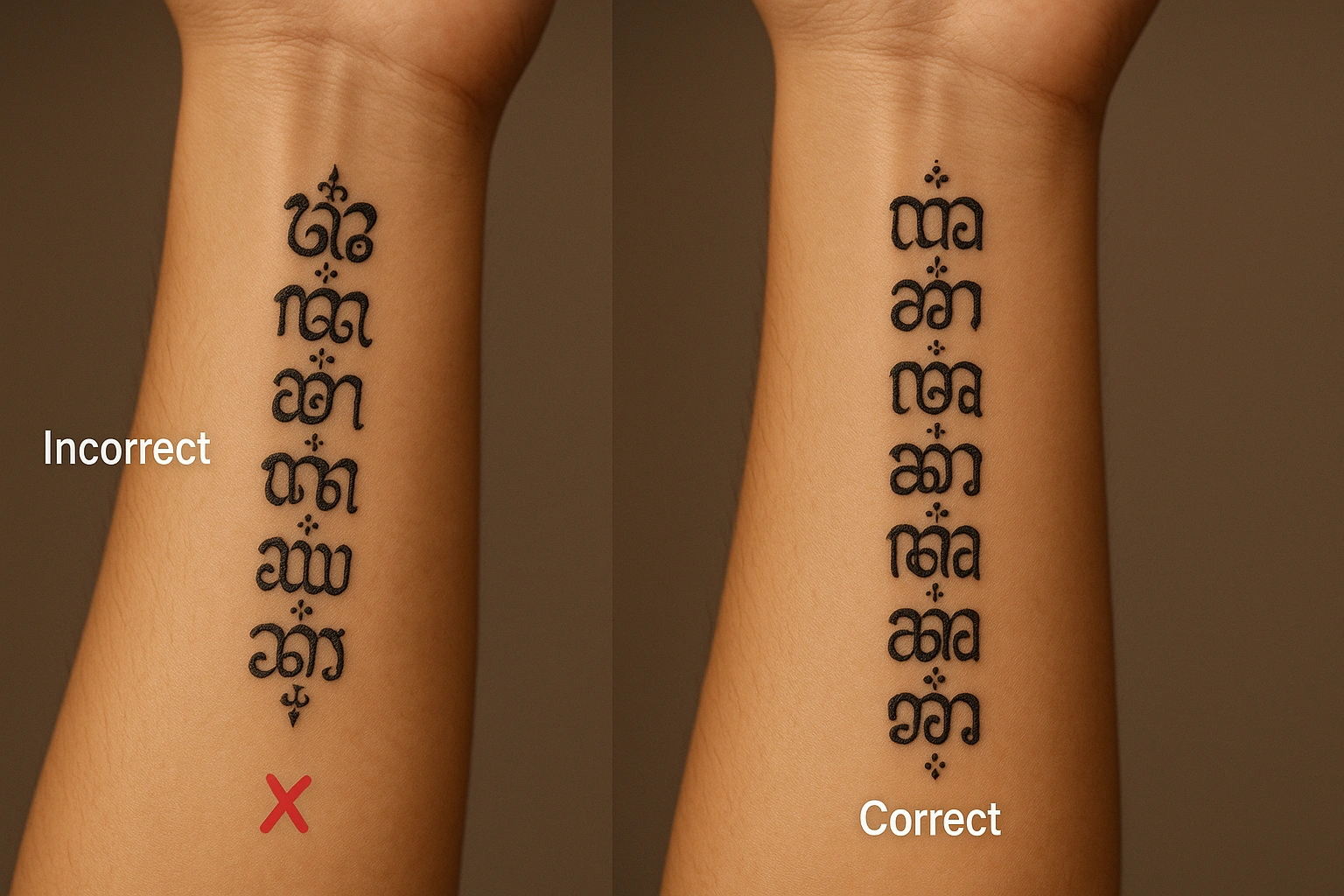
Tattoo Artist Checklist:
- Consult a Native Speaker: This is the most crucial step. Find a Javanese person or a scholar to double-check your transliteration. What looks right to a machine might feel unnatural to a native reader.
- Understand Phonetics: Names with sounds not native to Javanese (like ‘f’, ‘v’, ‘z’, or ‘x’) need special characters called aksara rekan. For example, “Victoria” would use ꦮ꦳ꦶꦏ꧀ꦠꦺꦴꦫꦶꦪ. Make sure your design uses the correct ones.
- The ‘H’ Problem: Silent ‘h’s (like in “Thomas”) should often be omitted, while pronounced ‘h’s need the ꦲ character. Context is key.
- Vowel Endings Matter: Javanese words rarely end in a hard consonant. The script uses a special “vowel killer” diacritic called the pangkon (꧀) to signify a consonant at the end of a word. Forgetting it is a common error. For example, “Chris” would be ꦏꦿꦶꦱ꧀ (Kri-s-pangkon), not ꦏꦿꦶꦱ (Krisa).
For more details on the script itself, our guide to 7 Fascinating Facts About Javanese Script is a great place to start.
A Living Piece of History
While the Latin alphabet is used for daily life, the Indonesian government and local communities in Central Java, East Java, and Yogyakarta actively work to preserve Aksara Jawa. It’s taught in schools and can be seen on street signs throughout the region.
By transliterating your name, you are participating in this living tradition. You are connecting with a writing system that has been used to record epic poems, royal decrees, and personal letters for centuries. It’s a beautiful way to appreciate the depth and artistry of Javanese culture.