By Ky Tutur, Javanese Culturalist • Published on September 27, 2025
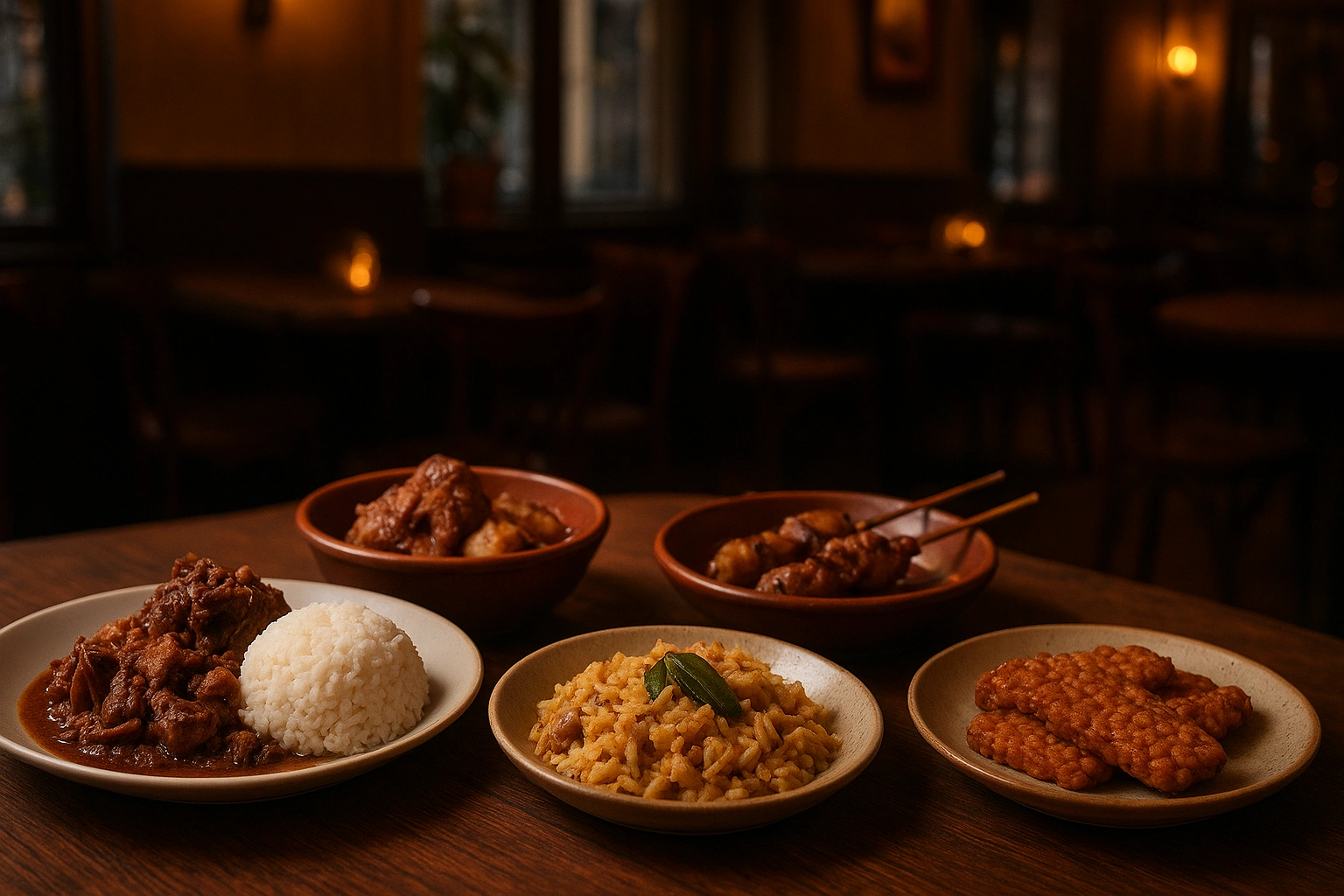
Picture this: you’re walking through the charming, cobbled streets of Amsterdam or The Hague. Thousands of miles from the lush volcanic landscapes of Java, a familiar, tantalizing aroma cuts through the cool European air. The scent hints at rich spices and coconut, a promise of authentic Javanese food. As you follow it, you realize you’re stepping into a world of Javanese food, where every dish tells a story. From the sweet and savory stews to the delicate, aromatic rice dishes, this is Javanese food at its finest. Even in Europe, the essence of Javanese food fills the air, making the experience utterly unforgettable.
For many, the idea of finding specific, regional Javanese food in Europe seems like a long shot. The continent is filled with generic “Asian” restaurants, but authentic Javanese food, with its deep, soulful flavors from Central Java, is much rarer. Yet, thanks to a centuries-long, complicated history, Europe—and especially the Netherlands—offers some of the best opportunities to taste true Javanese food outside Indonesia. This isn’t about fusion dishes; it’s about preserving and sharing Javanese food traditions that have traveled across oceans and generations.
This guide is your passport to discovering authentic Javanese food in Europe. We’ll explore the historical threads that brought Javanese food traditions across oceans and uncover the stories behind each dish. From the legendary rijsttafel to the sweet jackfruit stew of Yogyakarta, gudeg, this journey highlights the best Javanese food you can genuinely find outside Indonesia. Get ready to experience the rich flavors and soul of Javanese food in a way that surprises and delights every time.
A Tangled History: How Javanese Kitchens Came to Europe
To understand why you can find a perfect plate of nasi liwet in Leiden, you need to look back hundreds of years. The connection is rooted in the Dutch colonization of Indonesia, which lasted for over 300 years. During this period, Dutch colonists developed a taste for local cuisines, and a unique Indo-Dutch (*Indische*) culture emerged, blending European and Indonesian customs.
When Indonesia declared independence in 1945, a massive wave of migration occurred. Over 300,000 Dutch nationals and Indo-Europeans repatriated to the Netherlands, bringing their culture and, most importantly, their recipes with them. They opened restaurants, *tokos* (small shops), and catering businesses, not just to serve their own community, but to introduce these complex flavors to the Dutch public. This history is explored in depth by institutions like the Rijksmuseum, which documents the profound cultural exchange and painful colonial legacy between the two nations.
This mass migration is the primary reason why Javanese culture in the Netherlands is so vibrant, and it laid the foundation for the thriving culinary scene we see today. It’s a living history, served one delicious plate at a time.
The Gateway Dish: Rijsttafel, a Feast of Javanese Flavors
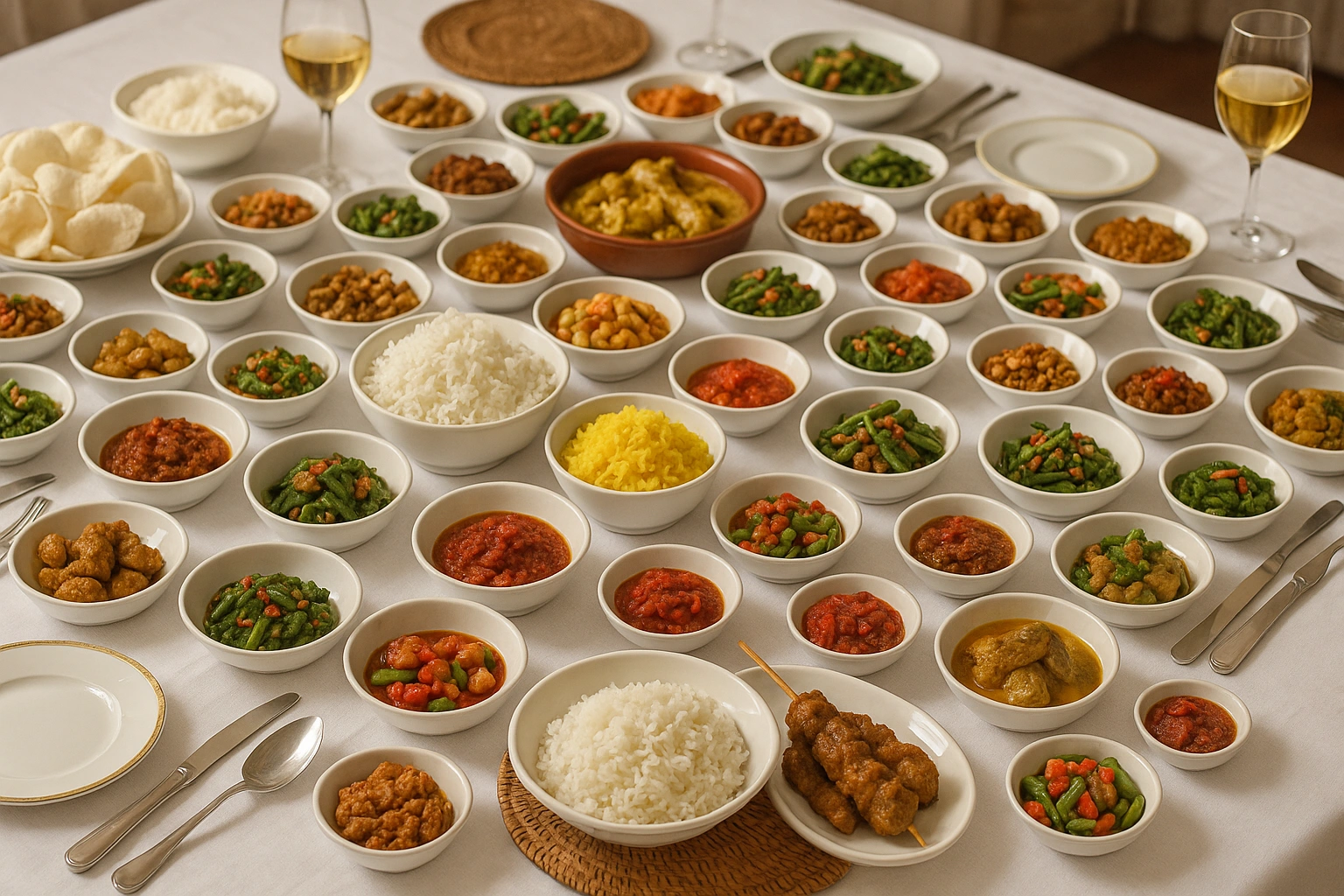
For most Europeans, the first encounter with Javanese food comes through the spectacular culinary theater known as the rijsttafel, or “rice table.” While the concept of the rijsttafel was a colonial Dutch invention, it was created to showcase the abundance and variety of Javanese food from across the archipelago. Each plate features authentic Indonesian dishes, with a strong focus on Javanese food classics that highlight the unique flavors and traditions of Java. For anyone new to Javanese food, this lavish meal is an unforgettable introduction to its richness and diversity.
A rijsttafel is not one dish but an elaborate banquet of dozens of small, shareable plates served with rice. It’s a symphony of flavors and textures, from sweet and spicy to savory and sour. While a full list of dishes can be extensive, you will almost always find these Javanese staples:
- Sate Ayam: Tender chicken skewers grilled over charcoal and drenched in a rich, sweet peanut sauce.
- Gado-Gado: A blanched vegetable salad with tofu, tempeh, and a hard-boiled egg, all tied together with the same delicious peanut sauce.
- Opor Ayam: Chicken braised in a mild, fragrant white curry of coconut milk, lemongrass, and galangal.
- Sayur Lodeh: A vegetable stew in coconut milk, a comforting and classic Javanese side dish.
- Orek Tempeh: A classic preparation of tempeh, diced and stir-fried in a sweet and spicy soy sauce glaze.
To experience one is to take a crash course in Javanese cuisine. You can learn more about its specific components in our guide to rijsttafel dishes. It is the perfect starting point for any culinary explorer in Europe.
Beyond the Feast: 4 Authentic Javanese Dishes to Hunt For
While the rijsttafel is a wonderful introduction, the true joy for a food lover is finding specific, regional dishes that tell a deeper story. Here are four authentic Javanese specialties that have found a home in Europe.
1. Gudeg: The Soul of Yogyakarta
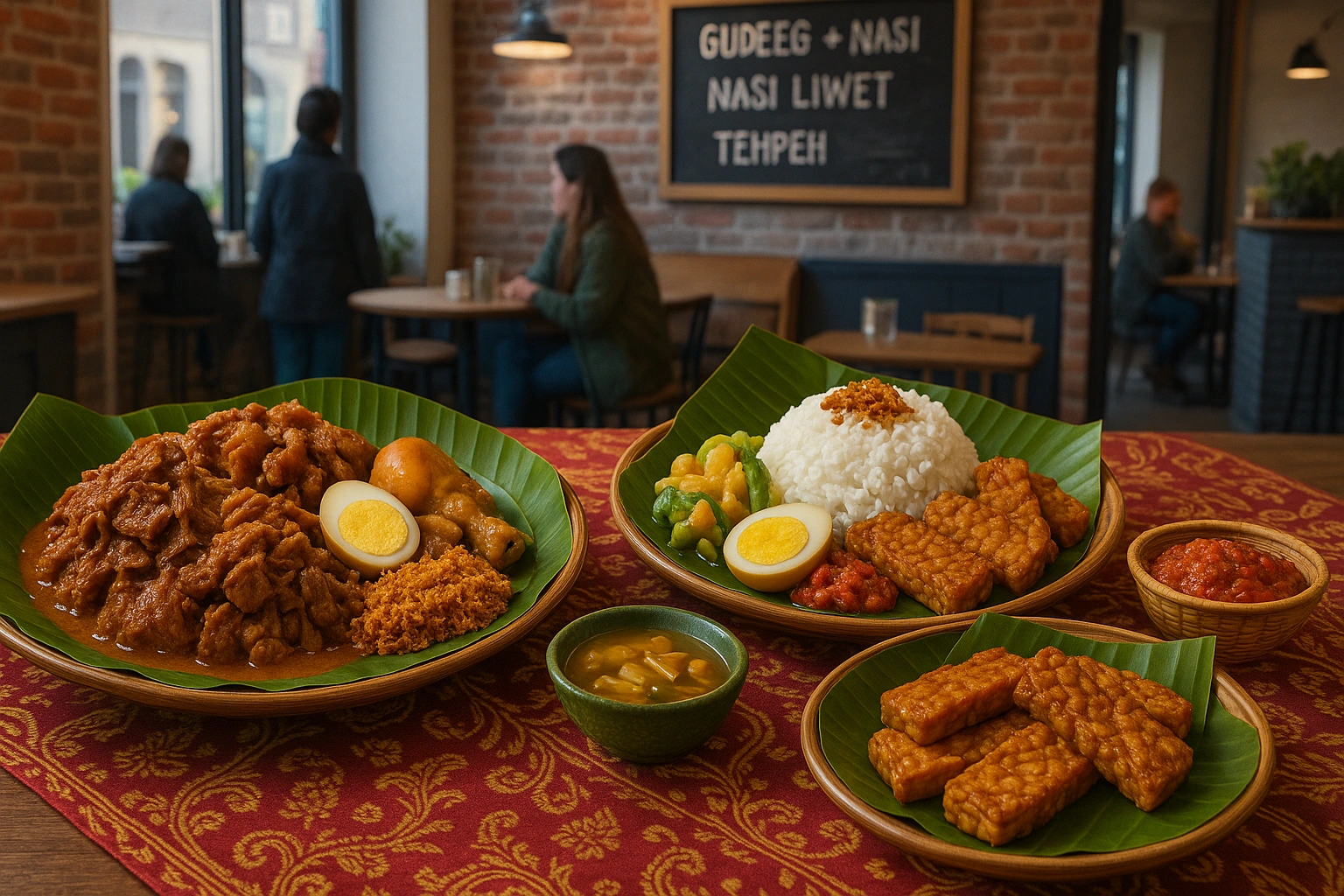
If you find gudeg on a menu in Europe, you’ve found a place that knows what it’s doing. This iconic dish is the culinary symbol of the royal city of Yogyakarta. It’s a sweet and savory stew made from young, unripe jackfruit, slow-cooked for hours—sometimes a whole day—in coconut milk and palm sugar. The result is a tender, dark, and intensely flavorful dish that is utterly unique.
How it’s served: Traditionally, it comes as part of a platter called *nasi gudeg*, served with rice, a thick coconut cream sauce (*areh*), spicy stewed beef skin (*krecek*), chicken curry (*opor ayam*), and a hard-boiled egg (*telur pindang*). Finding this complete set is the ultimate prize.
2. Nasi Liwet: The Savory Embrace of Solo
From Yogyakarta’s sister city, Solo (Surakarta), comes nasi liwet. While gudeg is defined by sweetness, nasi liwet is a celebration of savory (*gurih*) flavors. It is rice cooked in coconut milk, chicken broth, bay leaves, and lemongrass, giving the rice itself a rich, aromatic flavor. It’s Javanese comfort food at its finest.
How it’s served: It’s typically topped with shredded chicken, a savory omelet, chili, and a scoop of the same thick coconut *areh* used in gudeg. It is a more subtle but equally complex dish that showcases a different side of Javanese cooking.
3. Tempeh: The Javanese Superfood That Conquered the World
Yes, tempeh is available in almost every European supermarket now, but its soul is thoroughly Javanese. This fermented soybean cake is a protein powerhouse that originated in Java centuries ago. As documented by food science resources like ScienceDirect, its nutritional profile is remarkable.
However, the tempeh you buy in a package is just the raw ingredient. In an authentic Javanese restaurant, look for specific preparations:
- Tempeh Bacem: Tempeh marinated and braised in coconut water, palm sugar, and spices, then lightly fried. It’s sweet, savory, and addictive.
- Orek Tempeh: Thinly sliced and fried until crispy, then tossed in a sweet and spicy soy sauce glaze.
- Mendoan: A thin slice of tempeh dipped in a spiced rice flour batter and quickly fried so it remains soft and tender on the inside.
4. Soto Ayam: The Golden Chicken Soup
Soto is a traditional Indonesian soup found in countless variations, but the clear, golden-yellow chicken soto (*Soto Ayam*) from Java is one of the most beloved. Its distinct color comes from turmeric, and the broth is infused with lemongrass, galangal, and other aromatics. It’s the kind of soup that feels like it can cure anything.
How it’s served: A bowl is typically filled with shredded chicken, rice vermicelli, bean sprouts, and celery, then the hot broth is poured over. It’s often served with a side of rice, a hard-boiled egg, fried shallots, and a spoonful of spicy *sambal* for those who like a kick.
Finding Your Javanese Feast: A Quick Guide
So, where do you begin your search? Your best bet is in cities with a significant Indonesian or Indo-Dutch population. The Netherlands is the epicenter, particularly in cities like:
- The Hague: Often considered the “Indonesian capital” of the Netherlands.
- Amsterdam: Home to many famous and long-standing Indonesian restaurants.
- Leiden & Utrecht: University cities with vibrant Indonesian communities.
When searching online or walking around, look for keywords like “Indisch Restaurant,” “Warung,” or “Toko.” And don’t be afraid to ask if they serve specific Javanese dishes. Mentioning “gudeg” or “nasi liwet” will signal that you’re looking for something beyond the standard fare.
More Than a Meal: A Taste of Home
Discovering authentic Javanese food in Europe is more than just a culinary adventure. Each bite of Javanese food is a taste of history, a story of migration, and a celebration of a culture that has thrived thousands of miles from its origin. From the complex rijsttafel to a simple piece of tempeh bacem, every dish of Javanese food connects you to the deep, soulful spirit of Java. Even in a European setting, Javanese food brings warmth, nostalgia, and an unforgettable flavor that captures the heart of the island.
So next time you’re in Europe, look past the pasta and pastries for a day and seek out a Javanese kitchen. You’ll be rewarded with flavors that are rich, complex, and utterly unforgettable.