Javanese Pawukon: Ancient Wisdom on Time as a Living Cycle
“Ngger… do not think that time is merely the turning hands of a clock. Time is alive. It breathes, it speaks, and it knows when we have strayed or when we are walking a path of light.”
— Kyai Tutur
In this modern era, our lives are often dictated by the numbers on a digital clock, linear calendars, and relentless deadlines. We chase time, feeling as if it is an enemy that always outpaces us, a resource constantly slipping through our fingers. However, did you know that the Javanese ancestors held a profoundly different view? For them, time was not a straight line to be conquered, but a living, breathing cycle to be embraced.
For the ancient Javanese, time was not an entity to be pursued. Instead, it was a pulse of life that one must harmonize with. They did not just want to know the date; they sought to understand the subtle waves of life hidden behind each day’s turn. They lived in a more natural rhythm, where the universe was considered the greatest teacher. This deep listening to the cosmos gave birth to a profound legacy for reading, understanding, and aligning with time—a system far removed from the solar-based Gregorian or lunar-based Hijri calendars.
Thus, this unique system flourished only in the Nusantara archipelago. It is a spiritual technology, a cosmic map, and a guide for the soul. That system is called: the Javanese Pawukon. It teaches us that every moment is alive, imbued with meaning, and can serve as a compass for both our spiritual journey and our practical, everyday life. Understanding the Pawukon is therefore essential for anyone seeking a more harmonious existence.
The Javanese Pawukon: 210-Day Cycle and Spiritual Meaning
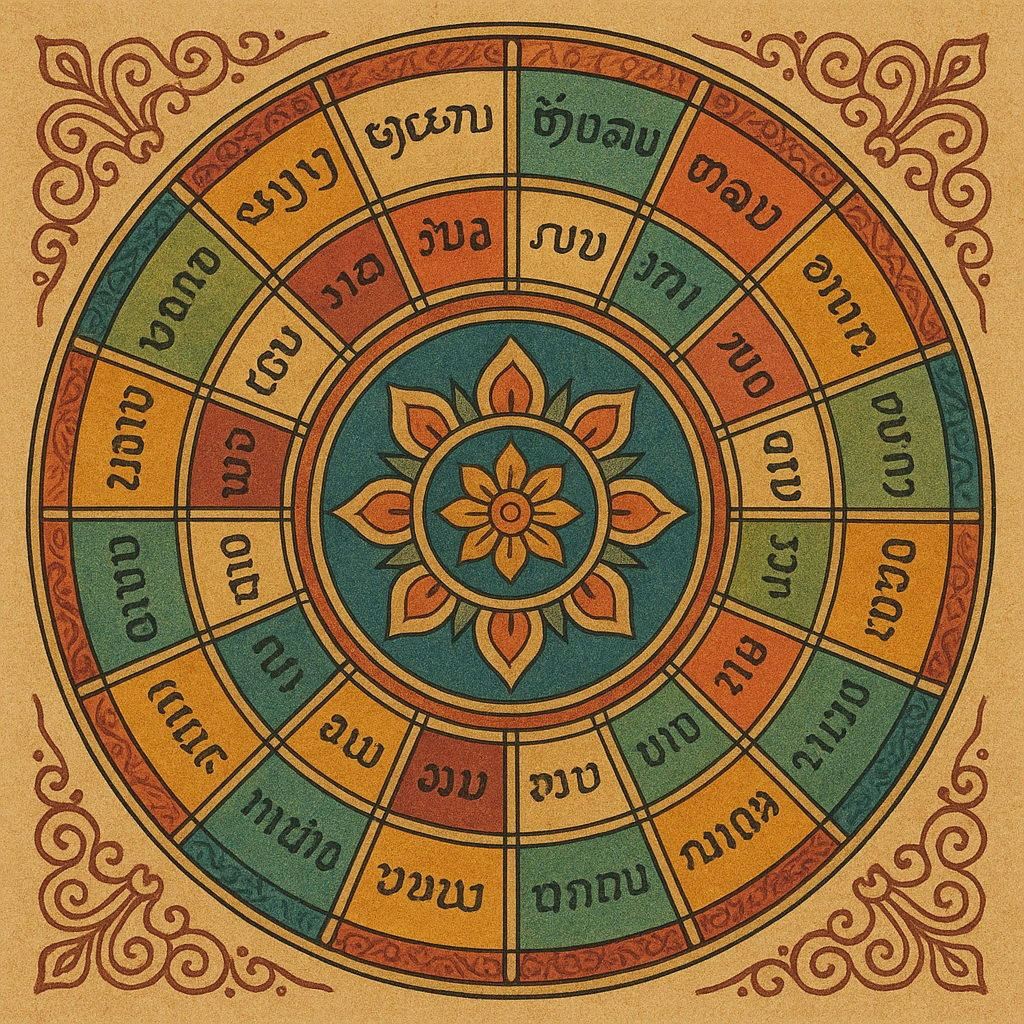
The term Pawukon comes from the root word “wuku.” It literally means a system formed from the wuku (a seven-day cycle), of which there are 30. Each lasts for 7 days, forming a full cycle of 210 days. This 210-day cycle is fundamental, repeatedly serving as the basis for calculating many aspects of Javanese life, from agricultural cycles to personal destiny.
Unlike common linear calendars that march forward into an unknown future, the Pawukon is cyclical. It turns like the wheel of life, returning to its starting point after 210 days, signifying the repetition of patterns and energies. This concept reflects a view of the universe as dynamic and revolving, not merely moving forward in a straight line. It suggests that life is a series of recurring lessons and opportunities for growth.
The uniqueness of the Pawukon lies in its psychological and spiritual depth. It is not merely for marking planting seasons or market days for trade. Instead, it is widely used to read character, identify one’s inner energy, understand one’s potential for fortune, and determine a suitable life path or spiritual rituals. It is, in essence, an intricate map of life, a comprehensive system far beyond a mere calendar.
The Intricate Structure of the Pawukon Calendar
To understand its complexity, we must look at its layers. The system divides days into three main interacting layers, creating a unique combination for every moment:
- The 7-Day Week (Saptawara): The universal cycle of Sunday to Saturday, each with its own character and numerical value (neptu).
- The 5-Day Market Week (Pancawara): The distinct Javanese cycle of Legi, Pahing, Pon, Wage, Kliwon. Each of these days possesses a different energetic quality and profoundly influences one’s character and destiny.
- The Wuku (30 Cycles): The core of the system. There are 30 wuku names, from Sinta to Watugunung, creating the 210-day cycle. Each has philosophical meaning, a guardian deity (Betara), and symbols like a specific tree and bird.
When these layers combine, they create a highly personalized and nuanced reading of time. A person is not just born on a “Monday,” but on a “Monday-Legi” within the specific energetic field of a particular wuku. This intricate system provides a unique dimension for analyzing personality and life potential, making every birth feel special and cosmically significant.
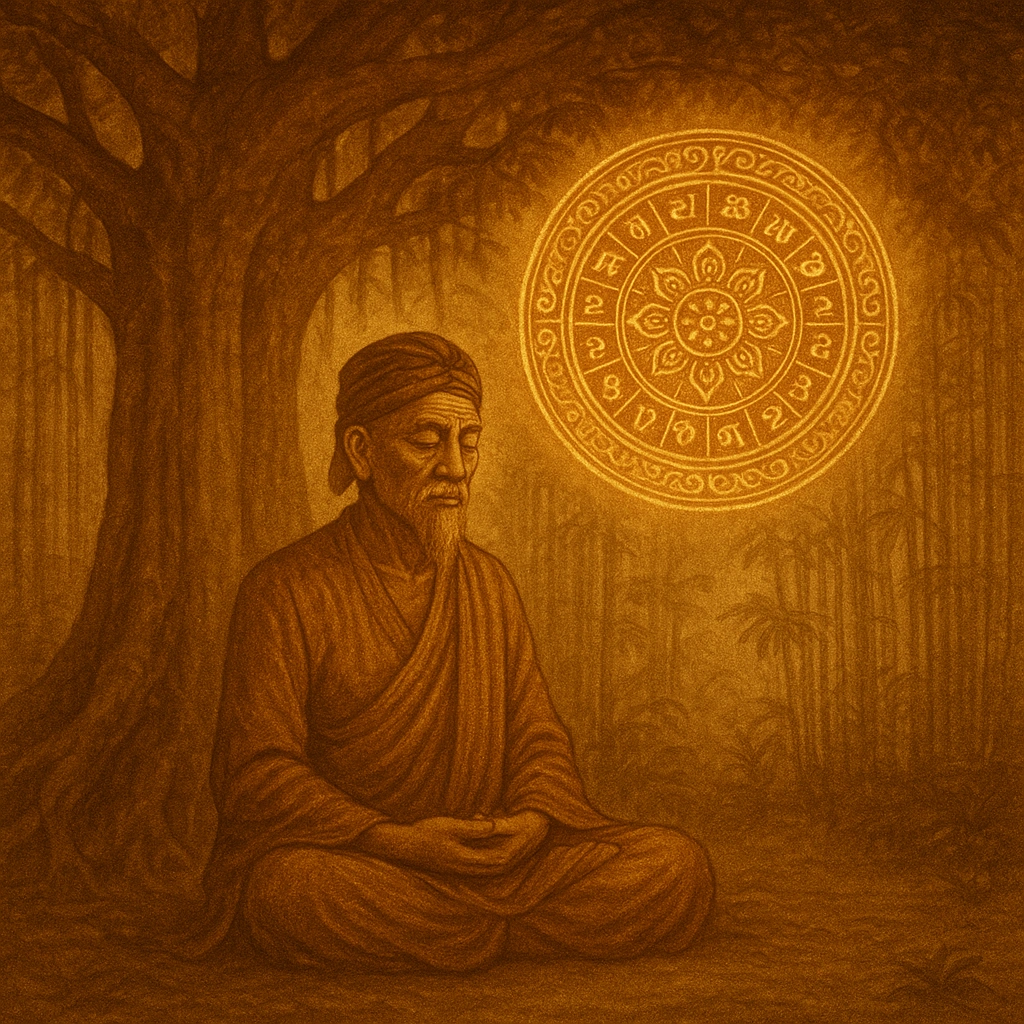
The Meaning of the 30 Wuku: A Story of Character and Life Lessons
Each wuku is a representation of a cosmic story rooted in ancient Javanese mythology, particularly the tale of King Watugunung’s 30 children. Each child, and thus each wuku, carries a unique character, tendency, and life lesson. Understanding the wuku of our birth is like holding a mirror to our innate character.
Wuku Tolu
Characterized by a strong, intelligent, and ambitious nature. Those born in this wuku have great leadership potential. Guarded by Betara Bayu, the god of wind, it symbolizes a powerful force that can be creative or destructive if uncontrolled. It teaches the lesson of managing ego and ambition with wisdom.
Wuku Galungan
Closely associated with the Galungan ceremony, which celebrates the victory of Dharma (goodness) over Adharma (evil). Individuals born in this wuku tend to be steadfast, unyielding, and have a strong fighting spirit for truth and justice. However, they can also be stubborn and find it difficult to accept other viewpoints.
Wuku Watugunung
The final and most majestic wuku. It symbolizes the eldest child, who is strong, patient, and has high spiritual potential, but often carries a deep inner restlessness or a heavy life burden. It marks the end of a cycle and the beginning of profound introspection, a time for looking inward before a new cycle begins.
Weton: The Meeting Point of Cosmic Energies
In the Pawukon system, the most personal meaning of time is embodied in the weton. It is the unique combination of the 7-day week, the 5-day market week, and the wuku at the moment of one’s birth. This combination yields a specific neptu (numerical value) and a highly specific character profile.
“Weton is not a prophecy, ngger. It is a mirror. It does not determine your fate but invites you to look within, to cultivate yourself, and to find the path of light.”
— Kyai Tutur
For example, a person born on **Jumat Kliwon** is influenced by the sacred, reflective energy of Friday (Jumat) and the highly intuitive, spiritually sensitive energy of the market day Kliwon. If this birth occurs within Wuku Tolu, the individual might be a visionary and spiritual leader, but must contend with the challenges of ego and stubbornness. Understanding your weton is key to seeing yourself not just as an individual, but as part of a larger cosmic energy that revolves continuously.
Pawukon: Not Superstition, but a Mirror of Ancient Science
Many modern observers dismiss the Pawukon as mere superstition. However, if we look deeper, the system was built upon systematic, multi-generational observation, much like an ancient science. The ancestors noted recurring patterns between birth times and character traits, between seasons and life events, and between certain days and a collective psychological or spiritual “vibe.”
It is a kind of “Nusantara astrology,” but with a local narrative basis more connected to the daily life of the Javanese people—the farmer relying on nature, the artist sensitive to feeling, and the warrior who understands energy. It is not about occultism, but about the science of living in harmony with the universe and oneself. It teaches balance, cycles, and how each individual is a thread in a larger cosmic tapestry.
Good and Bad Days in the Pawukon: Not Fate, but Harmony
For the old Javanese, major activities like marriage, moving house, or starting a business could not be done haphazardly. They had to consult the Pawukon to find an auspicious day. This was not born of fear, but a pragmatic approach to ensure success and blessings. The logic is not superstitious but rhythmic: is the energy of your action “in tune” with the wave of time?
It is like sailing; you check the wind and waves, not just the date. The ancestors were masterful navigators of time. Choosing a good day means choosing a moment when the universe’s energy supports your intention, giving your efforts a strong foundation and a smoother path forward. This is a form of applied spiritual and environmental intelligence.
Pawukon and Spiritual Practice: The Path to Inner Harmony
Beyond worldly activities, the Pawukon is a crucial foundation for Javanese spiritual practices (laku), such as meditation and fasting. These practices are often timed according to one’s weton or the current wuku to enhance their effectiveness. The goal is not to gain supernatural powers, but to align the inner self with the universe, quiet the ego, sharpen intuition, and achieve tranquility.
The Pawukon helps one know when to be still (to contemplate), when to move (to act), and when to balance the two. It is a map for the soul, a guide to achieving eling lan waspada (mindfulness and awareness), and ultimately, a more peaceful and meaningful life.
Relevance of the Pawukon in the Digital Age
In an age of information overload and constant pressure, the Pawukon is not obsolete. On the contrary, it can serve as a much-needed inner compass. We can use it not as a rigid prediction of fate, but as a tool for self-reflection and personal growth. It’s a form of ancient psychology that helps us understand our innate strengths and weaknesses.
By understanding our weton‘s energy, we can become more sensitive to our intuition, making decisions that are aligned with our core being rather than being swayed by external pressures. It can guide us to know when to push forward with a project, when to rest and recharge, and when to reflect. Reviving the Pawukon today means integrating this ancient wisdom into our modern lives to achieve greater balance and purpose.
FAQ on Javanese Pawukon
Q: What is the Javanese Pawukon calendar?
A: The Pawukon is a traditional Javanese calendar system based on a 210-day cycle made up of 30 wuku (weeks), each lasting 7 days. It combines the 7-day week, the 5-day market week, and the wuku cycle to reveal deeper spiritual and personal meanings of time.
Q: How is the Pawukon different from the Gregorian calendar?
A: Unlike the linear Gregorian calendar, which moves forward endlessly, the Pawukon is cyclical. It emphasizes repeating patterns, cosmic energies, and life lessons, helping people align with nature and spiritual balance.
Q: What is a weton in Javanese tradition?
A: Weton is the unique combination of your birth day (7-day week), market day (Pancawara), and wuku. It reflects your character, spiritual energy, and life potential, often used to choose auspicious days for marriage, rituals, or personal growth.
Q: Why is the Pawukon still relevant today?
A: In the digital age, the Pawukon serves as an ancient wisdom tool for self-reflection. It helps individuals understand their strengths, align with natural rhythms, and make decisions in harmony with the universe.
Conclusion: Time is Not an Enemy, It is a Mirror of the Soul
The Javanese Pawukon is not a tool to be feared or deified. It is a profound cultural heritage, a mirror of time’s soul, that can help us understand why we were born at a specific point, with a certain character, and on a particular mission in this universe. It is an invitation to live not by the digital clock alone, but by the cosmic clock within our own hearts.
In a world that is fast-paced and demanding, the Pawukon offers a pause. It invites us to stop, reflect, and align ourselves with the greater rhythm of nature. Understanding it means realizing that life is not a race, but a dance of harmony with time.
“Because life is not about who is fastest, but who is most precise in reading time, and who is most in harmony with the pulse of the universe.”
— Kyai Tutur