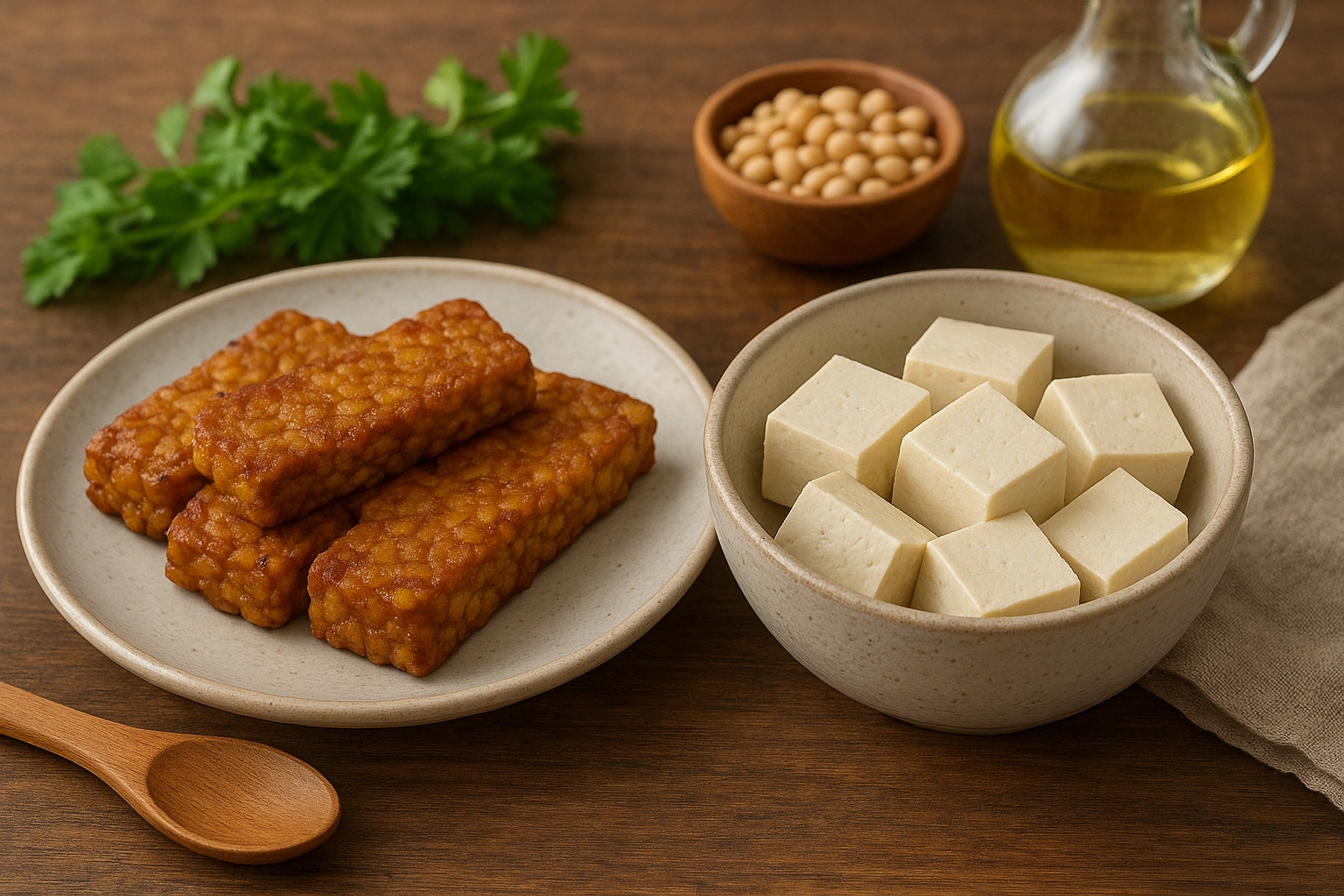
In the world of plant-based proteins, the tempeh vs tofu discussion often sparks curiosity. Understanding tempeh vs tofu helps you see the differences in texture, flavor, and nutritional benefits. This guide explores tempeh vs tofu side by side, showing how each can shine in different dishes. By learning about tempeh vs tofu, you’ll confidently choose the right soy-based protein for every meal.
Walk down any modern supermarket aisle, and the tempeh vs tofu trend is impossible to miss. At the heart of this movement is the tempeh vs tofu choice, two versatile, protein-packed staples from soybeans. Tofu, with its smooth texture, often serves as the familiar introduction, while tempeh brings a nuttier, heartier option. Understanding tempeh vs tofu helps you decide which one suits your meals best, making the tempeh vs tofu debate less confusing and more delicious.
The tempeh vs tofu question isn’t about which is better, but which works best for you and your recipe. Exploring tempeh vs tofu reveals two very different soy-based proteins, each with unique nutritional benefits and culinary uses. This guide breaks down tempeh vs tofu, comparing their textures, flavors, and when to choose tofu versus tempeh in your cooking. By understanding tempeh vs tofu, you’ll gain confidence to shop, prepare, and enjoy both as versatile, delicious staples in your diet.
What is Tofu? The Smooth Chameleon
Tofu, which originated in China over 2,000 years ago, is essentially a “cheese” made from soy milk. The process is remarkably similar to making dairy cheese: fresh, hot soy milk is curdled (coagulated) with a salt or acid, and the resulting curds are then pressed into blocks. The amount of water pressed out determines its firmness.
- Texture: Tofu’s texture is its defining feature. It ranges from creamy and custard-like (silken tofu) to soft, medium, firm, and extra-firm. This variety makes it incredibly versatile.
- Flavor: By itself, tofu is famously bland. It has a very neutral, slightly beany flavor. This is its greatest strength. It acts like a culinary sponge, readily absorbing the flavors of whatever marinade, sauce, or broth it’s cooked in.
- How it’s made: The choice of coagulant affects the final product. Calcium sulfate yields a tender, slightly brittle tofu, while magnesium chloride (nigari) produces a smoother, more delicate texture.
What is Tempeh? The Hearty Javanese Original
Tempeh is a completely different product that originated in Java, Indonesia, centuries ago. Instead of using soy milk, tempeh is made from whole soybeans that are cooked, slightly dehulled, and then fermented with a specific mold culture, *Rhizopus oligosporus*. This culture grows a dense, white, cottony mycelium that binds the beans together into a firm, sliceable cake. This is a whole food, containing all the fiber and nutrients of the original soybeans.
- Texture: Tempeh is dense, firm, and chewy. You can see the individual soybeans in the block. It has a hearty, satisfying bite that many people describe as “meaty.”
- Flavor: Because it’s a fermented food, tempeh has a distinct flavor profile. It’s nutty, earthy, and has a slight mushroom-like umami. It’s not a blank slate like tofu; it brings its own delicious character to a dish.
- How it’s used: Tempeh is excellent when you want a protein with a substantial texture that can stand up to grilling, crumbling like ground meat, or being the “star” of a sandwich.

Nutritional Showdown: Tempeh vs Tofu Head-to-Head
This is where the differences become most striking. While both are healthy, tempeh generally boasts a more robust nutritional profile, primarily because it’s a whole, fermented food. Let’s compare a standard 100g (about 3.5oz) serving, using data from the USDA FoodData Central as a baseline.
| Nutrient | Tempeh (~100g) | Extra-Firm Tofu (~100g) | The Winner |
|---|---|---|---|
| Protein | ~20g | ~17g | Tempeh |
| Fiber | ~9g | ~3g | Tempeh (by a landslide) |
| Probiotics/Prebiotics | Yes (fermented) | No | Tempeh |
| Iron | ~2.7mg (15% DV) | ~2.7mg (15% DV) | Tie |
| Calcium | ~111mg (9% DV) | ~350mg (27% DV) *if calcium-set* | Tofu (if fortified) |
| Manganese | ~1.3mg (57% DV) | ~0.6mg (26% DV) | Tempeh |
The Bottom Line on Nutrition:
For overall nutritional density, tempeh is the clear winner. The combination of higher protein, significantly more fiber, and the benefits of fermentation make it a gut-friendly powerhouse. The fermentation process also breaks down the phytic acid in soybeans, making minerals like iron and zinc more bioavailable. However, if your main goal is to increase your calcium intake, calcium-set tofu is an excellent choice.
The Ultimate Cooking Guide: When to Use Tempeh vs. Tofu
The choice between tempeh and tofu in the kitchen should be driven by texture and flavor.
Choose Tofu When You Want…
- A Silky, Creamy Texture: Silken tofu is unbeatable for smoothies, vegan desserts like chocolate mousse or cheesecake, and creating creamy sauces.
- A Soft Scramble: Firm or extra-firm tofu, when crumbled and seasoned, makes a fantastic substitute for scrambled eggs.
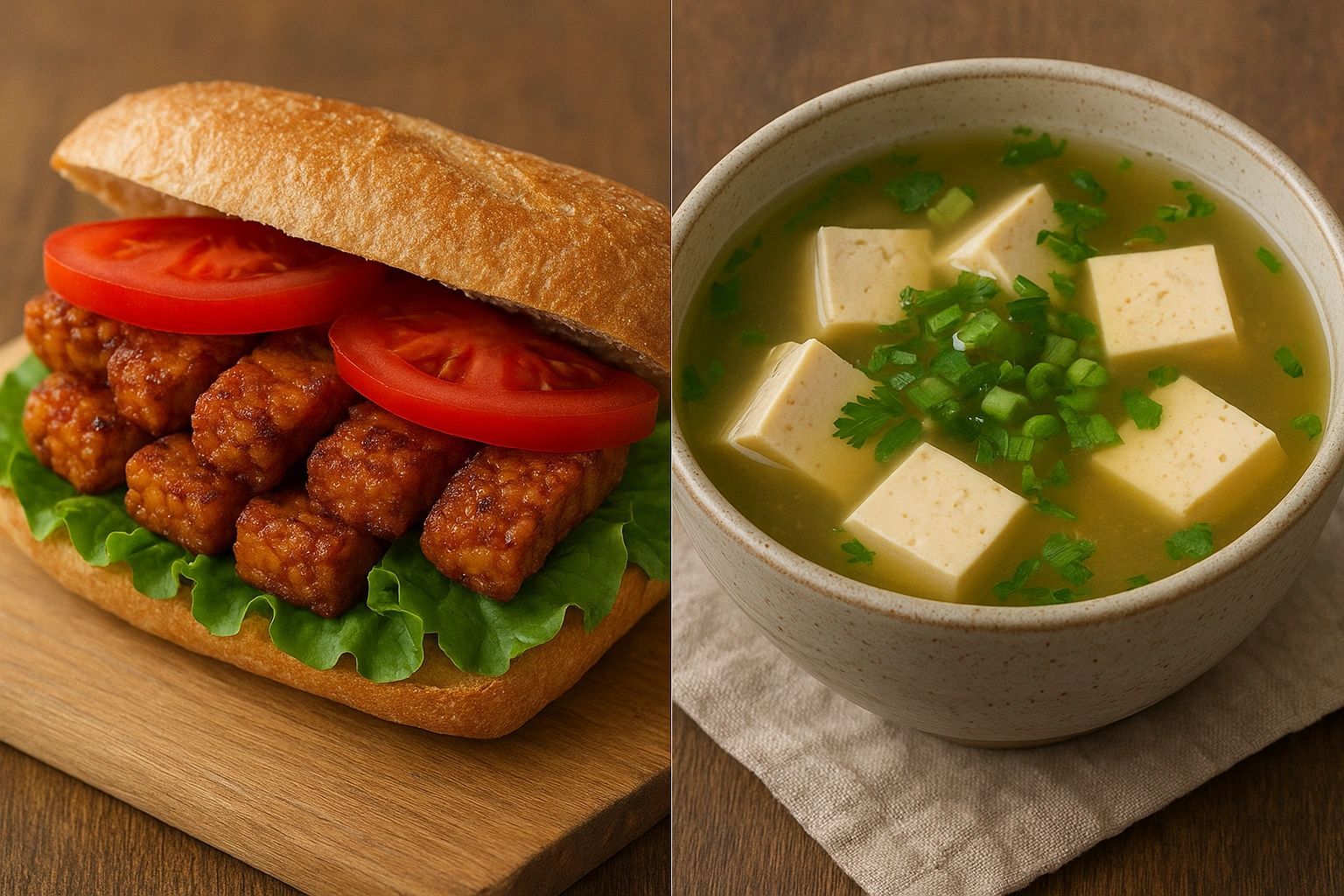
- A Flavor Sponge: In a flavorful broth like a miso soup or a spicy Thai curry, soft or medium tofu will absorb all the delicious flavors around it.
- Crispy, Light Cubes: Extra-firm tofu, when pressed well and fried or baked, can become wonderfully crispy on the outside while remaining light and airy on the inside.
Pro Tip for Tofu: Pressing is not optional for most recipes! Place your block of firm or extra-firm tofu between two plates, with a heavy object on top, for at least 30 minutes. This removes excess water, leading to a firmer texture and better flavor absorption.
Choose Tempeh When You Want…
- A Firm, “Meaty” Bite: Sliced into planks and pan-fried, tempeh is an amazing sandwich filler (think a T.L.T. or a tempeh Reuben). It’s also perfect for grilling on skewers.
- A Crumbled Ground Meat Substitute: Crumbled tempeh holds its texture beautifully, making it the ideal base for vegan chili, bolognese sauce, or “taco meat.”
- To Add a Nutty, Savory Flavor: Tempeh’s natural umami flavor adds depth to dishes. It doesn’t just absorb flavor; it contributes its own.
- Something That Won’t Fall Apart: Because of its dense structure, tempeh is much more forgiving than tofu in stews, stir-fries, and on the grill.
Pro Tip for Tempeh: As we detail in our guide to crispy tempeh, steaming or simmering the block for 10 minutes *before* marinating is the secret to removing bitterness and allowing it to soak up flavor.

Conclusion: The Winner is Your Plate
In the end, the tempeh vs tofu discussion isn’t about picking one over the other. Understanding tempeh vs tofu helps you appreciate their different textures, flavors, and nutritional benefits. Whether you’re exploring tempeh vs tofu in stir-fries, salads, or sandwiches, both offer unique culinary possibilities. The real winner in the tempeh vs tofu debate is the cook who can enjoy and use both to create delicious, plant-based meals.
Use tofu when considering tempeh vs tofu for a smooth, absorbent ingredient that blends seamlessly into any dish. Use tempeh when exploring tempeh vs tofu for a firm, nutty protein that stands out as the star. Understanding tempeh vs tofu lets you enjoy both textures and flavors, adding variety and nutrition to your meals. By mastering tempeh vs tofu, you embrace a global culinary tradition from ancient China to the islands of Java.