
Your Character is Not a Label, It is a Spectrum of Weton Character Traits.
My dear child…
Many misunderstand when delving into the nature of weton (a traditional Javanese system of divination, representing the meeting of various cosmic energies on one’s birth day) characters. They seek a single label: “hot-tempered,” “patient,” “extravagant.” They seek a box to fit themselves into.
Your uncle is here to whisper a truth: Your character is not a box; it is a palace with many rooms. Your character is not a label; it is a spectrum of colors formed from the blending of various energies of heaven and earth.
Today, your uncle will give you the key to unlock every room within that palace of yours. We will learn to unravel the mosaic of your being, layer by layer.
The Elements Forming Weton Character Traits
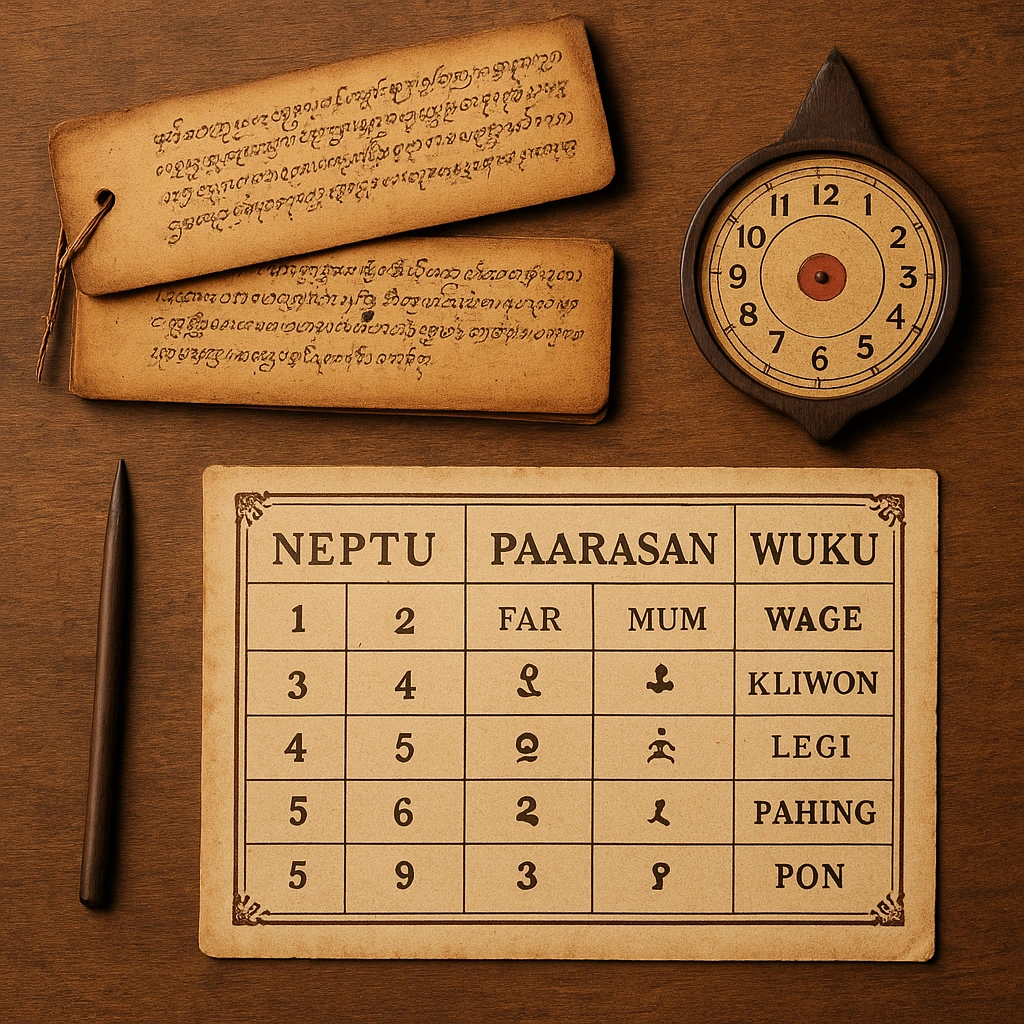
A person’s character in Primbon Jawa is shaped not by one factor but by the synergy of key elements: Neptu (numerical day values), Paarasan (personality classification), Rakam (destiny and fortune), and Wuku (week in the 210-day Pawukon cycle). Understanding these gives a fuller picture of oneself.
Dissecting the Layers of Character (Case Study: Jumat Kliwon)
To understand how all these elements dance together, let’s dissect the Self-Map of a sample birth: Jumat Kliwon.
1. Basic Energy (Dino, Pasaran & Neptu)
- Dino Jumat (Neptu 6): Imparts energy of intelligence, creativity, independence, and captivating charm, but on the other hand, also stubbornness.
- Pasaran Kliwon (Neptu 8): Grants good speaking ability, cheerfulness, and ambition. However, can sometimes be careless. Possesses the aegis of good fortune and safety.
This total Neptu of 14 gives rise to the core character of Paarasan: Lakuning Rembulan (literally “the journey of the moon,” a Javanese personality type characterized by a calming aura, the ability to illuminate without dazzling, and being a comforting presence for others). This means the individual possesses a calming aura, is able to illuminate their surroundings in a non-blinding way, and becomes a confidant for others.
2. Lines of Fortune’s Destiny (Rakam & Saptoworo)
- Its Saptoworo (a classification of birth characteristics based on a seven-day cycle, indicating aspects of fortune) is Wasesa Segara (literally “authority of the ocean,” signifying vast fortune, generosity, and social spirit): This is a blessing of abundant fortune, as vast as the ocean. They are also forgiving, possess a high social spirit, and enjoy helping others.
- However, its Rakam is Demang Kadhuruwan (a Javanese concept indicating a challenging aspect of one’s destiny, often associated with a tendency towards conflict or stubbornness): This is its challenge. They possess high vigilance, which if not managed, can lead to a tendency to argue and easily become involved in disputes.
3. Hidden Inner Layers (Hastoworo, Sadworo & Padangon)
- Its Hastoworo (a Javanese system of character traits based on an eight-day cycle) is Yama: Indicates a soul that is fundamentally calm and forgiving, but tends to pay less attention to neatness.
- Its Sadworo (a Javanese system of character traits based on a six-day cycle) is Paningron: Imparts a layer of hesitancy, lack of self-confidence, and a tendency to be easily deceived due to overthinking.
- Its Padangon (a Javanese system of character traits based on a nine-day cycle, representing one’s inherent nature) is Dangu: Reinforces its stubborn nature. They tend to be quiet and very firm in holding to principles.
The Soul’s Climate: The Important Role of Wuku Tolu
The entire spectrum of characters above is then shaded by Wuku Tolu, which is influenced by Bethara Bayu (a deity in Hindu-Javanese mythology, representing the God of Wind, known for strength and unwavering spirit). This soul’s climate imparts a very strong color to the canvas of Jumat Kliwon’s character:
- Positive Influence: Grants strength, relentless spirit, and steadfastness. It encourages the “Lakuning Rembulan” not just to remain calm and soothing, but also to move freely and become a driving force.
- Aral (Obstacle/Warning): Its warning is “Bitten by fangs or sting.” This is a counsel to always be vigilant against sudden dangers or “attacks” from others.
- Laku Spiritual (a spiritual practice, conscious action, or disciplined effort in Javanese tradition aimed at cultivating desired virtues or achieving spiritual harmony): To mitigate this Aral, the recommended spiritual practice is to give alms of Nasi Uduk Dang-dangan (a special kind of fragrant rice dish in Javanese tradition, often used in rituals or offerings) and chicken side dishes.
- Pantangan (Prohibition/Taboo): For the 7-day cycle of Wuku Tolu, it is advised to avoid traveling in the Northwest direction.
Look, my dear. How complex and beautiful the mosaic of a human being is when dissected with this wisdom. Fully understanding the character of weton means seeing all these layers working together.
Now, It’s Your Turn to Read Your Own Self-Map
Your uncle has shown you how to read the map. Now, it’s time for you to see your own map with all its unique layers, which are even deeper than the example above.
Look at the example of a complete analysis for a Jumat Kliwon birth, September 14, 1990, to see how all elements are woven together.
Discover All the Layers of Your Character Here
Don’t just know the name of your Weton. Understand every spectrum of energy that forms your unique self, from its Neptu to its Rakam and Wuku.
FAQ on Weton Character Traits in Primbon Jawa
Q: What is Weton in Javanese tradition?
A: Weton is a traditional Javanese system of divination that combines the day and market day of birth to reveal a person’s character, destiny, and spiritual guidance.
Q: How is character determined in Primbon Jawa?
A: Character is shaped by four main elements: Neptu (day values), Paarasan (personality type), Rakam (fortune and destiny), and Wuku (calendar week cycle). These layers form a complete self-map of one’s nature.
Q: What makes Jumat Kliwon unique in Weton?
A: Jumat Kliwon has a Neptu of 14, giving rise to the Paarasan Lakuning Rembulan—symbolizing a calming aura and supportive nature, along with unique blessings, challenges, and spiritual practices.
Q: Can Weton predict fortune and relationships?
A: Yes, weton provides insights into fortune, relationships, and challenges, but it should be seen as spiritual wisdom for reflection, not as a fixed prediction.
Q: Why should I learn about my Weton?
A: Knowing your weton helps you understand your strengths, weaknesses, and inner layers. It is a path to self-awareness, acceptance, and spiritual growth according to Javanese tradition.
From Character to Consciousness
My dear child…
Understanding character is not about judging yourself or others. It is the first step towards making peace with oneself. By knowing where the “mountains” and “valleys” within you lie, you can begin the practice of Olah Rasa (a Javanese spiritual concept referring to the cultivation and refinement of inner feelings, intuition, and empathy)—accepting every side of yourself, managing its shortcomings, and maximizing its strengths.
This is the path to growing into the best version of your authentic self. To delve deeper, you can contemplate our manifesto on the True Meaning of Klenik (a Javanese term for esoteric knowledge, mystical practices, or hidden wisdom, often associated with traditional Javanese spirituality).
About the Author
This wisdom is conveyed by Ky Tutur—a symbolic figure representing noble Javanese values such as wisdom, simplicity, and compassion. These writings are compiled by the KaweruhJawa.com team (a platform dedicated to preserving and translating Javanese cultural wisdom), composed of cultural researchers, academics, and spiritual practitioners dedicated to preserving and translating Javanese local wisdom into a relevant language for the current generation.
We believe that ancestral heritage is not merely a relic, but a compass for life. Every article is written through a process of research, cross-generational discussion, and deep contemplation, to ensure the accuracy and sublimity of the values contained within.
Learn more about our writing team and philosophy →