
Wuku Kurantil
The Wuku of Uncertainty and Resilience
Bethara Langsur: Understanding the God of Change and Trials
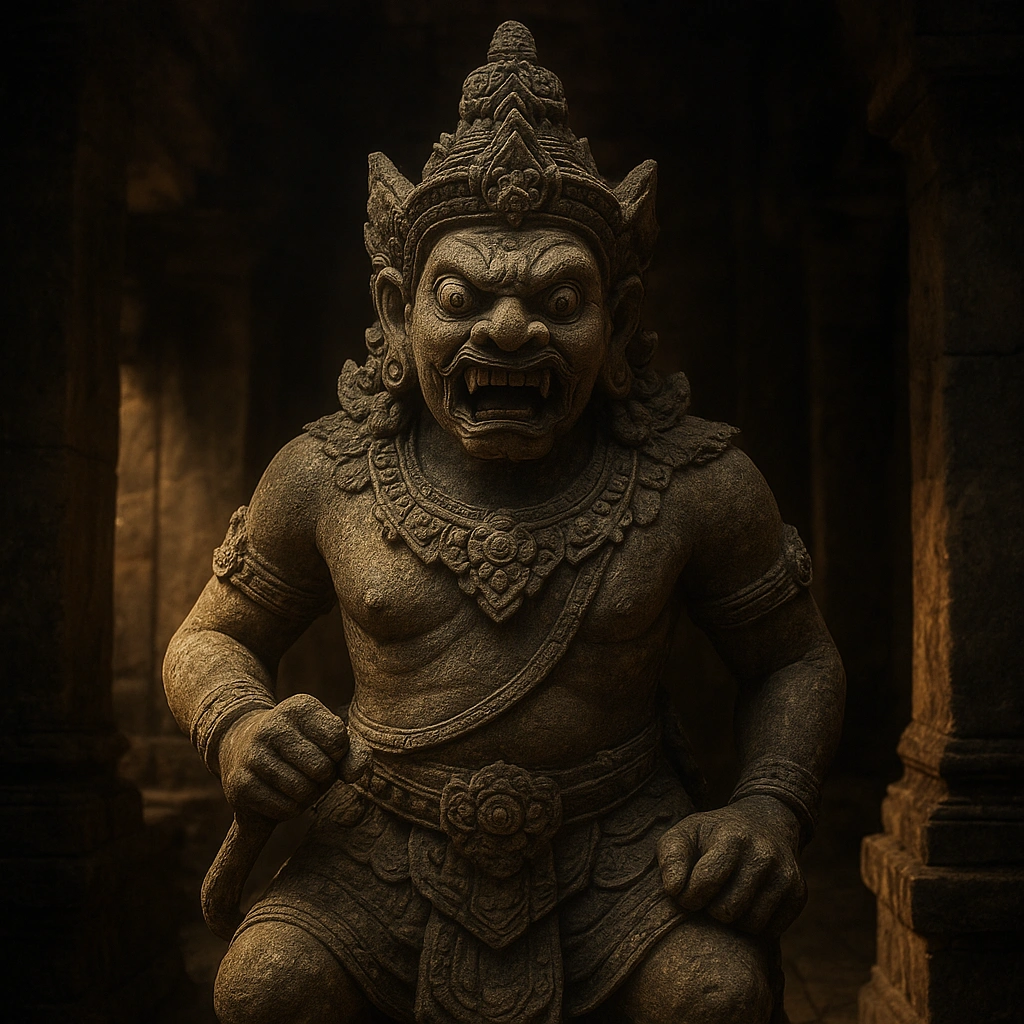
To truly grasp the soul of Wuku Kurantil, we must first understand the complex character of its unique guardian deity: Bethara Langsur. He is not a comforting, protective figure like Bethara Mahayekti of Wukir. Instead, Bethara Langsur is the very embodiment of the force of change itself—unpredictable, stern, and quick to alter his disposition. In the cosmic drama, he is the Divine Catalyst, the “Tough Teacher” who pushes souls beyond their perceived limits.
His role can be understood through powerful metaphors. Bethara Langsur is the storm that comes not to destroy indiscriminately, but to fell the old, rotten trees, allowing the younger, stronger saplings to finally receive the sunlight they need to grow. He is the wildfire that sweeps through a dry meadow; an event that initially appears catastrophic, but ultimately clears away the dead undergrowth and enriches the soil, paving the way for a greener, more vibrant new beginning. His energy is the universe’s antidote to stagnation. The name “Langsur,” meaning “to glide swiftly” or “to rush,” symbolizes a life that must remain dynamic, passionate, and in constant motion.
Those born under the influence of Wuku Kurantil are infused with a spark of this dynamic, alchemical energy. Their lives are rarely flat or monotonous. They are destined to navigate a path marked by frequent changes, unexpected trials, and pervasive uncertainty. It is crucial, however, to understand that the trials presented by Bethara Langsur are not punishments. They are a forging. Imagine a master empu (sacred bladesmith) at his work. He takes a piece of raw iron and subjects it to intense fire, repeatedly hammering and folding it upon itself. The process is violent and painful, yet its purpose is noble: to burn away all impurities and to transform the raw material into a pusaka—a sacred blade that is sharp, immensely strong, and unbreakable. The true, indomitable mental strength of a Kurantil individual is born from this sacred, painful forging process.
Portrait of a Kurantil Person: Strong, Vocal, and Dynamic
The sophisticated Javanese wuku system paints the character of a Kurantil person through a series of powerful and unflinchingly honest symbols. These symbols reveal a complex, passionate, and deeply resilient individual, shaped by the very challenges they are destined to face.
Pohon Inggas: Strength Grown from Isolation
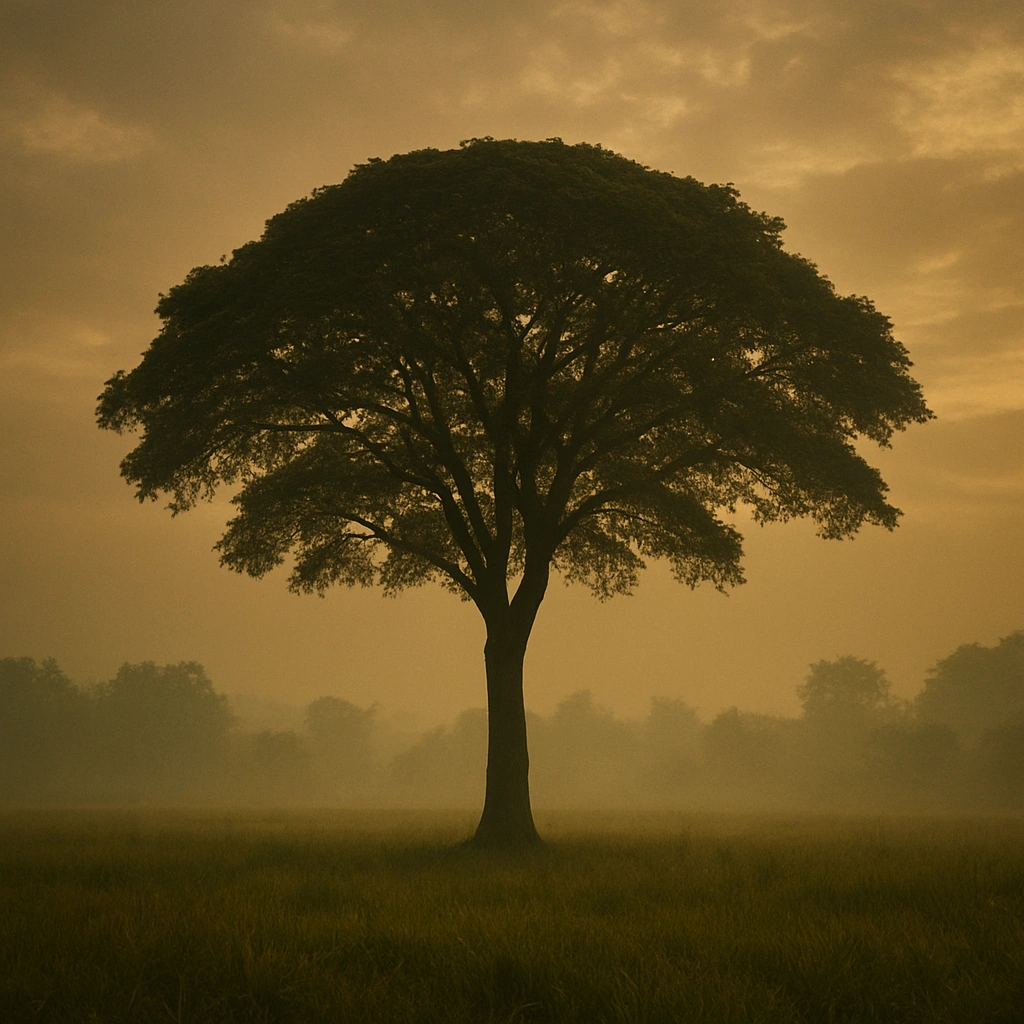
The Inggas tree is known in nature for its sap, which can cause irritation or rashes for some people. Symbolically, this illustrates that Kurantil individuals often possess defensive “thorns.” They can be intensely vocal, sharply critical, or have a personality that others find abrasive, causing people to keep their distance. Consequently, they often experience feelings of being misunderstood or isolated. Yet, just as the Inggas tree grows strong and tall despite being avoided, herein lies their unique strength. This isolation forges them into fiercely independent individuals who do not rely on the approval of others. They develop the profound capacity to stand on their own two feet, even in the most adverse conditions. They are true survivors whose greatest strengths are born from their perceived limitations and the solitude it brings.
Burung Slindhitan (The Swiftlet): Agile Intellect Needing Wise Control
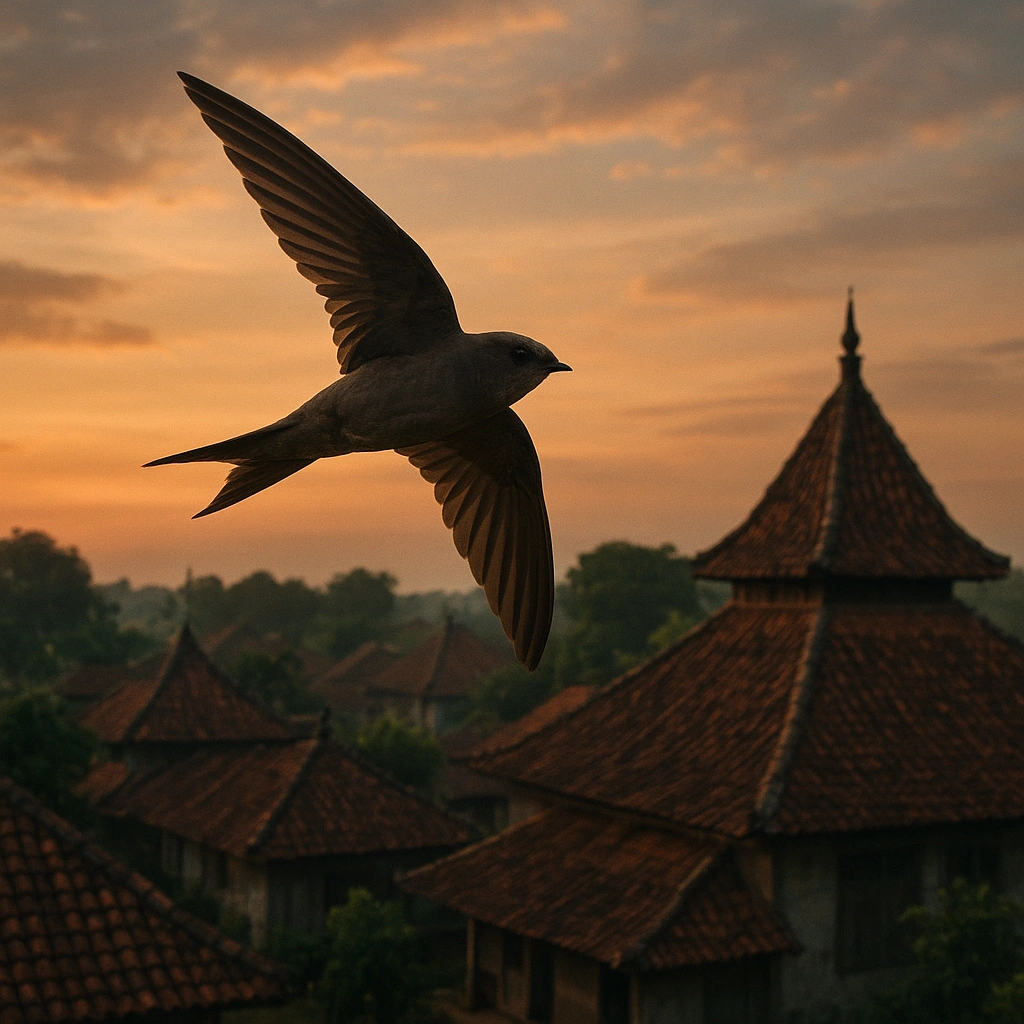
The Slindhitan, a type of swiftlet or swallow, is a symbol of incredible speed, agility, and intelligence. This perfectly describes the mind of a Kurantil person, which operates at a remarkable pace. They are agile thinkers, capable of connecting disparate ideas in unconventional ways. They are unafraid to be vocal, often championing radical, original opinions that challenge the status quo. However, this mental velocity is a double-edged sword. When harnessed correctly, it makes them brilliant innovators and problem-solvers. But if it is not tempered with self-control and careful consideration, this same speed can lead to recklessness, impulsive decisions, and words spoken without thought, ultimately causing harm to themselves and others. Their greatest life challenge is to learn how to harmonize their quick thinking with deep wisdom.
Angiwakake Banyu (Like a Fish in Water): Navigating the Currents of Desire

This poetic symbol, “like a fish in water,” beautifully depicts the Kurantil soul, which is always “flowing” and possesses a tremendous passion for life. They are individuals easily carried away by the currents of emotion, new desires, and temptations of the heart. This doesn’t necessarily imply negative traits like infidelity, though that can be a manifestation if not managed. More broadly, it symbolizes a soul that abhors boredom and stagnation. They are easily tired of routine, always seeking new experiences, thrilling adventures, and their curiosity is never quenched. This makes their lives vibrant and colorful, but also filled with risk. The key for them is to build a strong moral anchor, a set of core principles (paugeran), so that no matter how strong the currents of desire become, they will not be swept away into a destructive ocean.
The Philosophy of ‘Topsy-Turvy’ and ‘Falling’

The symbols of an overturned granary (gedhong terbalik) and the primary life obstacle (aral) of “falling” are often what make people fear this wuku. However, from the perspective of ilmu titen, these are not curses but the very source of their greatest strength. A life where plans often go awry forges an incredibly adaptive, flexible, and innovative personality. Falling is not their fate; it is their curriculum in the sacred art of bouncing back stronger and wiser than before. They become masters of resilience precisely because they have had so much practice in getting back up.
The Paradox of Wuku Kurantil: The Best Time to Find a Soulmate
Herein lies the most unique and profound wisdom of the ancient Javanese
primbon.
Why would a wuku defined by chaos, upheaval, and the experience of “falling”
be considered an auspicious time to seek and commit to a lifelong partner?
This is when one should perform a
cek jodoh
Why the Storm Reveals the Strongest Trees
The answer lies in the uncompromising concept of authenticity. During difficult times, in the midst of life’s storms—
which is the core energy of Wuku Kurantil—all forms of social masks, pretense, and curated self-images tend to erode and fall away.
A person’s true character is revealed under pressure. Selfishness, disloyalty, or indifference become glaringly obvious.
Conversely, sincerity, steadfastness, and genuine care shine their brightest.
Therefore, if you meet or begin a relationship with someone under the influence of Kurantil’s energy,
you are far more likely to see their “true face” from the very beginning, not the idealized version they present when life is easy.
A Bond Forged in the Crucible
Furthermore, a commitment or relationship that is successfully built during a period filled with challenges
tends to have a much stronger and deeper emotional foundation.
Such a bond is not built on fleeting euphoria or superficial pleasures.
It is forged in the crucible of shared adversity, built upon the ability to support each other through the storm
and lift each other up after a fall.
A relationship born from and able to withstand the “forging fire” of Wuku Kurantil is a relationship that has been tested from its inception.
It possesses a level of resilience and depth that a relationship that has only known calm seas and sunny skies may never have the opportunity to develop.
Weton in the Wuku Kurantil Cycle
Of course, the specific character of one’s weton will add a unique color and nuance to the volatile dynamics of Kurantil. Here is the 7-day cycle within Wuku Kurantil:
Minggu Pon: A courageous and vocal leader whose resilience is tested and proven.
Senin Wage: A loyal and hardworking individual who finds stability amidst chaos through sheer determination.
Selasa Kliwon: A charismatic and intuitive soul whose social charm is tempered by life’s trials.
Rabu Legi: A wise and adaptable thinker who can find simple solutions in complex problems.
Kamis Pahing: A passionate and ambitious spirit whose fiery energy is channeled by overcoming obstacles.
Jumat Pon: A calm and thoughtful person who provides a grounding presence in turbulent times.
Sabtu Wage: A skilled and independent planner who learns to master the art of improvisation.
FAQ about Wuku Kurantil
Q: What is Wuku Kurantil in the Javanese calendar?
A: Wuku Kurantil is the fourth cycle in the Javanese pawukon calendar, symbolizing uncertainty, transformation, and resilience. It teaches adaptability and inner strength in the face of trials.
Q: Why is Wuku Kurantil considered good for marriage?
A: Even though it represents chaos and challenges, Wuku Kurantil reveals true character during hardship. Relationships begun in this period are believed to be more authentic, strong, and resilient.
Q: Who is the deity of Wuku Kurantil?
A: The guardian of Wuku Kurantil is Bethara Langsur, the God of Change and Trials. He embodies transformation and the forging of strength through challenges.
Q: What are the traits of people born in Wuku Kurantil?
A: Individuals born in Wuku Kurantil are known to be strong, independent, and vocal. Though often facing challenges, they emerge as adaptive and courageous personalities.
Q: What is the life philosophy of Wuku Kurantil?
A: The philosophy teaches that falling or facing uncertainty is not a curse, but a lesson. It is through these trials that true resilience, wisdom, and inner strength are forged.
Conclusion: Embracing Uncertainty
Wuku Kurantil offers a profound and valuable lesson: not everything that appears negative on the surface is truly so. It is the wuku of “forging,” a tough but supremely effective teacher in the development of authentic inner strength, boundless creativity, and genuine resilience. It teaches us not to fear change, but to see the opportunity within chaos. It encourages us to learn the sacred art of rising each time we fall, not with bitterness, but with greater wisdom and a stronger foundation. To embrace the energy of Kurantil is to embrace life itself, in all its unpredictable, challenging, and ultimately beautiful uncertainty. By understanding this energy map, we can learn to navigate life’s inevitable storms with greater wisdom and courage.