
Wuku Tolu
The Breath of the Wind God
Dissecting Bethara Bayu: The Intelligent, Powerful, and Free God of Wind
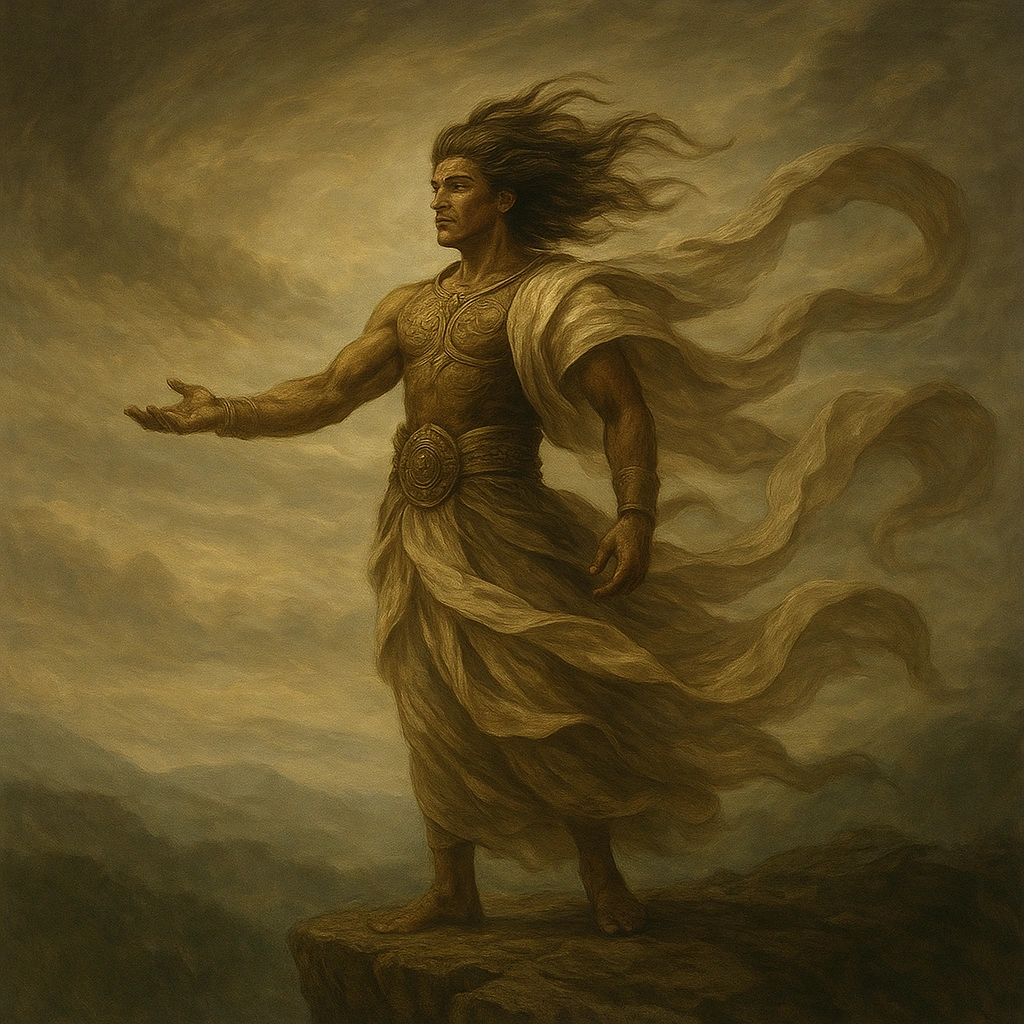
To understand the soul of Wuku Tolu, we must delve into the essence of its guardian deity. Bethara Bayu is not merely a personification of the wind; He is the principle of movement itself.
The Mover of Life and Father of Warriors
In Javanese philosophy, Bayu is prana, the first and last breath of life. Without his gust, fires would not ignite, seeds would not scatter, and life would freeze in stillness. This nature flows into Tolu individuals; they are dynamic, difficult to confine to routine, and always the driving force in their groups. This power is reflected in his most famous son from the Mahabharata epic, Werkudara (Bima), whose unparalleled strength and uncompromising defense of truth are a direct inheritance from his father.
The Other Side of the God: Intellectual Charm and the Arrogance of Power
Like the wind, the intelligence of a Tolu person is sharp, swift, and capable of moving great ideas. Their charm is like a gentle breeze that captivates and soothes, making them well-liked. However, their most fundamental trait—being “unstoppable” and “free-moving”—can manifest as arrogance. An unwise Tolu individual may find it difficult to accept criticism, believing their own unfettered thoughts to be the purest, sometimes dismissing others’ views as too rigid or slow.
A Thorough Analysis of the Tolu Birth Character
The symbols attached to Wuku Tolu in the complete Javanese pawukon paint a fascinating portrait, showing a blend of solid internal strength and a free external expression.
Pohon Walikukun: Strength Hidden Within
The Walikukun tree is known for its incredibly strong and resilient wood. This is a perfect metaphor for the Tolu person. Behind their flexible, sociable, and free-spirited appearance, they possess a core of immense inner strength and unshakeable principles. Their strength is not for show; it is an internal foundation that makes them difficult to topple under pressure.
Burung Branjangan (The Lark): The Soaring Spirit of Freedom
The Branjangan, a type of lark, is famous for singing while soaring high in the sky. This symbolizes the soul of a Tolu individual: intelligent, free, and full of spirit. They are visionaries with high aspirations whose minds are always seeking new ideas. However, a bird that flies too high without a clear direction will only tire and fall. Tolu individuals must balance their freedom of thought with discipline to reach tangible peaks.
Gedhong di Depan (Granary in Front): Open Goodness
This pattern, seen in the early wuku, signifies a positive basic character. The open granary symbolizes generosity and unconcealed intentions. Tolu people, for all their strength and intelligence, are fundamentally kind-hearted and dislike deceit. They tend to show their good intentions openly.
Umbul-umbul di Belakang (Banners are Behind): Power Without Fanfare
This symbol beautifully balances the “arrogant” side of Bethara Bayu. The banners of their greatness are carried behind them, not in front. It’s a metaphor for a person who is powerful but does not like to show off. They have great influence but prefer to work behind the scenes. Their impact is strongly felt, yet they often remain simple and out of the spotlight.
Interpreting the ‘Graveyard of the Wuku’
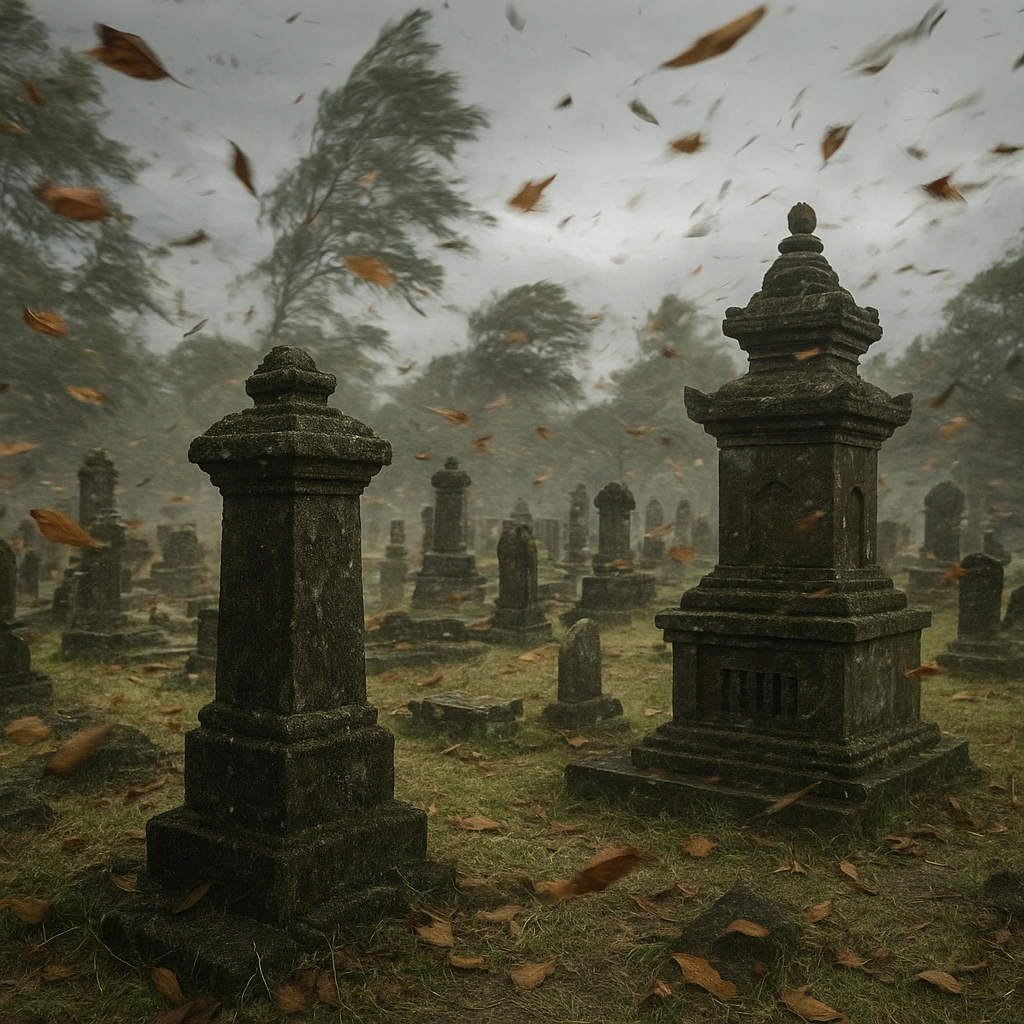
This is the most frequently misunderstood and feared aspect of Wuku Tolu.
The term Pasarean here is not a literal graveyard.
It is a profound metaphor for a cosmic “cleansing” or “reset” period.
The powerful winds of Bethara Bayu that blow during this week will
“topple” and “clear away” everything that is old, weak, fragile,
and no longer fit to be maintained.
This can be a bad habit, a toxic relationship, an irrelevant business,
or false beliefs that hinder spiritual growth. Wuku Tolu is a week
of “creative destruction,” where the old must “die” and be “buried”
so that the ground is cleared for the growth of something new and stronger.
This is why it is considered prone to “disaster,” as this cleansing process
often feels drastic and painful for those unprepared to let go of the old.
Practical Guidance, Marriage, and Weton in the Tolu Cycle
Aral (Obstacle): The Unexpected Bite and Sting
The obstacle for Tolu people is “being bitten by a fang or sting.” This is a metaphor for danger that comes suddenly and sharply. Often, it is not a physical attack but a betrayal from a trusted person or a piercing criticism that wounds the heart. This is the risk of the wind’s nature to move freely everywhere; sometimes it unknowingly enters a dangerous “nest.”
Auspicious Day for Marriage: A New Beginning After the ‘Cleansing’
Herein lies the beautiful paradox of Wuku Tolu. A wedding (Mantu) is considered auspicious during this wuku. Why? Because a marriage initiated during this cosmic “cleansing” period is considered to be born in the purest state. It symbolizes a truly new beginning, having passed through the “death” of the individual egos and pasts of each partner. The household built is expected to have a clean foundation and a powerful new spirit.
Weton in the Wuku Tolu Cycle
The weton adds specific nuances to the dynamic Tolu character. Here is the 7-day cycle within Wuku Tolu:
Minggu Kliwon
Senin Legi
Selasa Pahing
Rabu Pon
Kamis Wage
Jumat Kliwon
Sabtu Legi
FAQ about Wuku Tolu
What is Wuku Tolu in the Javanese calendar?
Wuku Tolu is the fifth cycle in the Javanese pawukon calendar, guarded by Bethara Bayu, the god of wind. It symbolizes freedom, intelligence, and transformation.
Why is Wuku Tolu called the “graveyard of the wuku”?
The term “Tolu Pasarean” does not mean a literal graveyard. It represents a period of cleansing, where old and weak aspects of life are cleared away to make room for renewal and growth.
Is Wuku Tolu good for marriage?
Yes. Despite its name, Wuku Tolu is considered auspicious for weddings because it symbolizes a pure new beginning after the cosmic cleansing process.
What are the key traits of people born in Wuku Tolu?
People born in Wuku Tolu are intelligent, dynamic, free-spirited, and strong at heart. However, they must balance their independence with humility and discipline.
How does Weton affect Wuku Tolu?
The weton (day of birth) within Wuku Tolu adds specific nuances to a person’s character, creating unique variations in personality and destiny.
Conclusion: Embracing the Winds of Change
Wuku Tolu is a lesson in dynamic power, intellectual freedom, and the necessity of transformation. It teaches us that sometimes, old things must be torn down to make way for something better. It is a reminder not to fear the “winds of change” in life, for it is the wind that carries new seeds. To embrace the energy of Tolu is to embrace the movement of life itself.